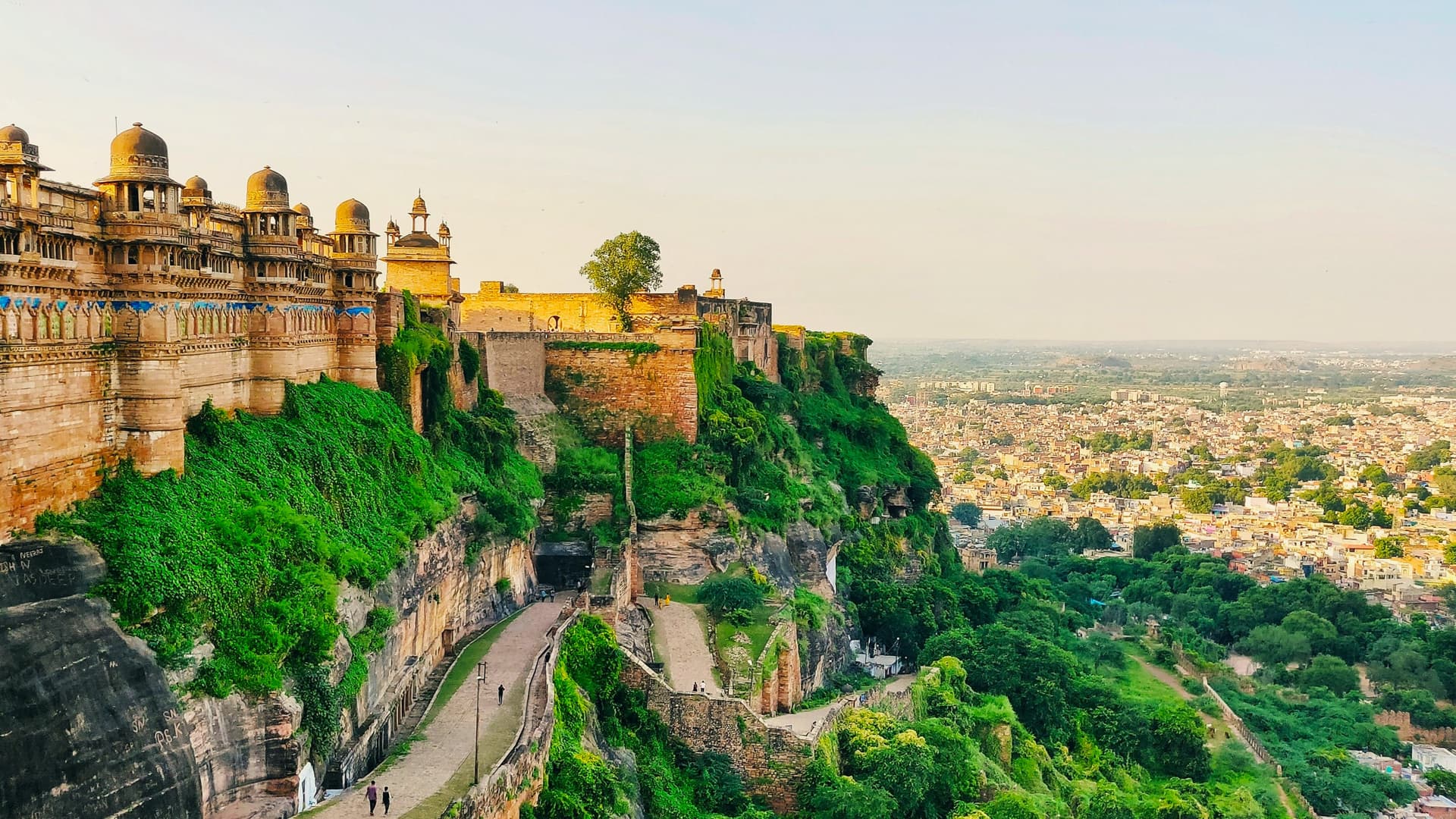
Central India and Madhya Pradesh
Central India's plateau brings together the Chandela temples of Khajuraho, the Bundela palaces of Orchha, and the country's highest concentration of wild tigers.
Madhya Pradesh occupies the geographic heart of India, a plateau of dry forests and slow-moving rivers that separates the Ganges plain from the Deccan highlands. Our team based in Delhi has been organizing journeys through this region for around fifteen years—a destination English-speaking travelers still rarely venture through, despite its concentration of some of the subcontinent's best-preserved heritage sites and the highest density of wild Bengal tigers.
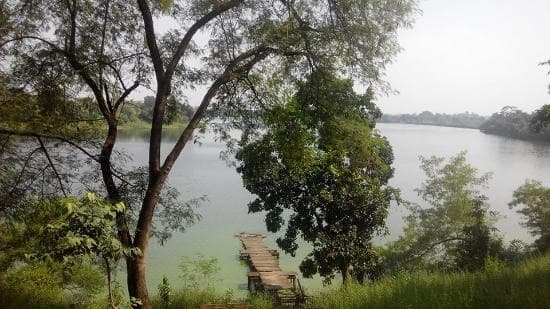
The terrain remains moderate, between 300 and 600 metres in elevation, with the Vindhya and Satpura ranges shaping the landscape. The Betwa, Narmada, and Ken rivers irrigate a mix of teak, sal, and bamboo forests, interspersed with farming villages where wheat, millet, and lentils are cultivated. The region also carries an older industrial memory around Jabalpur and Bhopal, and a dense political history: capital of the sultanate of Mandu in the 15th century, Bundela fiefs at Orchha and Datia, then Bhopal under female governance for over a century, under the Begums, between 1819 and 1926.
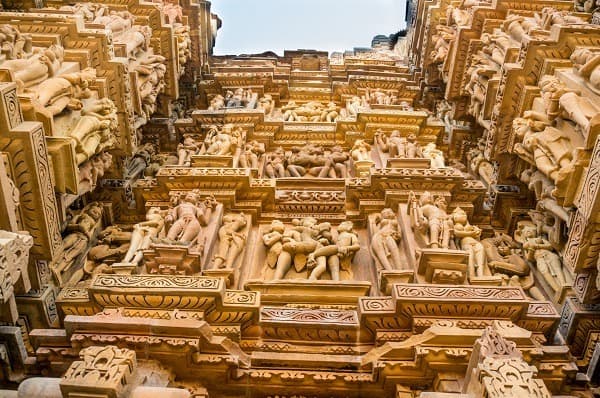
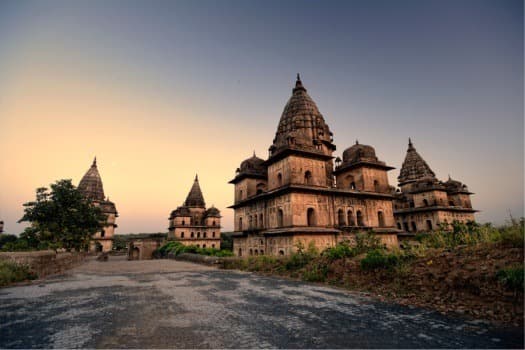
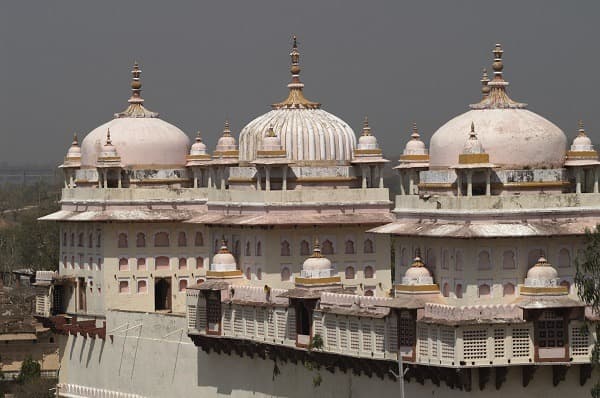
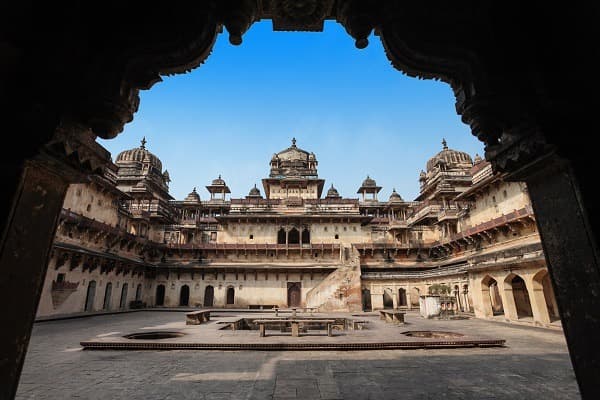
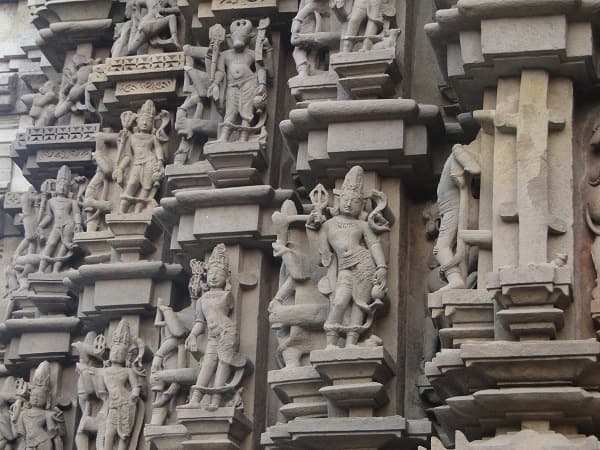
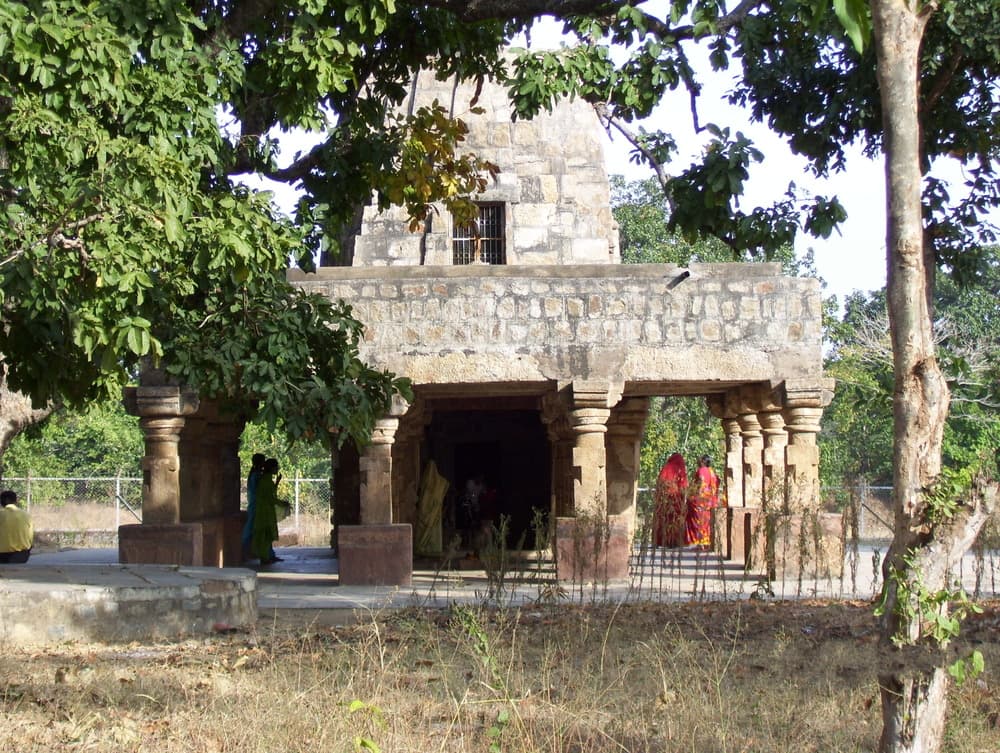
Khajuraho gathers around twenty nagara temples built between 950 and 1050 by the Chandela dynasty, whose sculpted friezes combine court scenes, divinities, and an erotic register that actually accounts for less than 10% of the total iconography. The site is best visited early morning for the raking light on the chamois-coloured sandstone. Orchha, 180 kilometres to the west, preserves a 16th-century palatial complex set on a bend of the Betwa, with the cenotaphs of the Bundela kings lined along the riverbank, frequented at dawn by the griffon vultures that nest there.
To the south, the national parks of Bandhavgarh, Kanha, and Pench form a triangle of protected forests where the tiger population exceeds 250 individuals according to the latest census. Bandhavgarh, the smallest, offers the best sighting ratios, around 70% over three days of safaris in dry season. Kanha, larger and more forested, inspired Kipling for The Jungle Book and also harbors the barasingha, an endemic deer saved from extinction in the 1970s. Safaris take place in open jeeps, in four-hour sessions at dawn and late afternoon, with a naturalist and a park tracker.
Madhya Pradesh cuisine remains little known outside the country. In Bhopal, Mughal heritage appears in rezala, a yogurt-braised lamb stew, and charcoal-grilled kebabs from the streets of Chowk. In Indore, the region's gastronomic capital, the nocturnal Sarafa Bazaar market opens around 10 p.m. and runs until 2 a.m.: poha with fried onions, bhutte ka kees made from corn grated in milk, crispy jalebi fresh from the deep fryer. Local festivals like Lokrang in Bhopal in January or Khajuraho's dance festival in February offer precious windows into the region's living arts.
To Discover
Khajuraho temples at sunrise. Visit the Western and Eastern groups between 6:30 a.m. and 9 a.m., when oblique light reveals the depth of the sandstone friezes. Allow half a day to explore both main complexes without rushing.
Safaris at Bandhavgarh and Kanha. Two daily jeep outings with a naturalist, covering the Tala and Magadhi zones at Bandhavgarh, Mukki or Kisli at Kanha. Permit reservations six months in advance for peak season from March to May.
Orchha and the cenotaphs of the Betwa. Jahangir Mahal and Raj Mahal palaces at the site's centre, then walk along the river to the fourteen chhatris of the Bundela kings, where griffon vultures nest from November to March.
Sarafa Bazaar in Indore at night. Food market that sets up around 10 p.m. in the lanes of the old jewellery quarter. Around thirty stalls serve the street-food classics of Malwa late into the night.
Stupas of Sanchi. Buddhist complex commissioned by Emperor Ashoka in the 3rd century BCE, 45 kilometres from Bhopal. The four sculptured toranas of the great stupa illustrate the previous lives of the Buddha.
When to Go
The travel season extends from mid-October to late March for cultural visits, with daytime temperatures between 22 and 28°C and nights dropping to 8-12°C in December and January, particularly at Khajuraho and Orchha. For wildlife safaris, the useful window runs from November to June, but the best sightings concentrate from April through mid-June, when vegetation thins and animals converge at watering holes, with temperatures rising to 40-44°C midday. Parks close entirely from 1 July to 15 October for the monsoon.
July through September brings between 900 and 1200 mm of rain to the plateau, with secondary roads regularly cut and humidity making outdoor site visits difficult. We advise against this period except for specifically urban stays in Bhopal or Indore.
Practical Advice
We recommend a minimum of ten days in the region to combine heritage and wildlife: three nights in Khajuraho with an excursion to Orchha, then three nights in one park and three in another, knowing that transfers between parks take four to six hours by road. Logistics typically begin in Delhi with an internal flight to Khajuraho, or through Jabalpur which serves Bandhavgarh and Kanha directly. Returning from Nagpur to the south opens the option to combine with Pench.
Madhya Pradesh combines well with Uttar Pradesh and the Ganges by heading toward Varanasi and Agra by road or train, or with Rajasthan via Gwalior. Comfort levels are solid in heritage towns, with some restored havelis in Orchha and chain hotels in Khajuraho, and good in safari lodges, often run by independent naturalists. The region suits contemplative travelers, enthusiasts of medieval Indian architecture, and families with children from age eight onward for safaris, provided you accept 5 a.m. wake-ups and long days in a jeep.