Shiva Temple at Kachnar
Shiva Temple at Kachnar
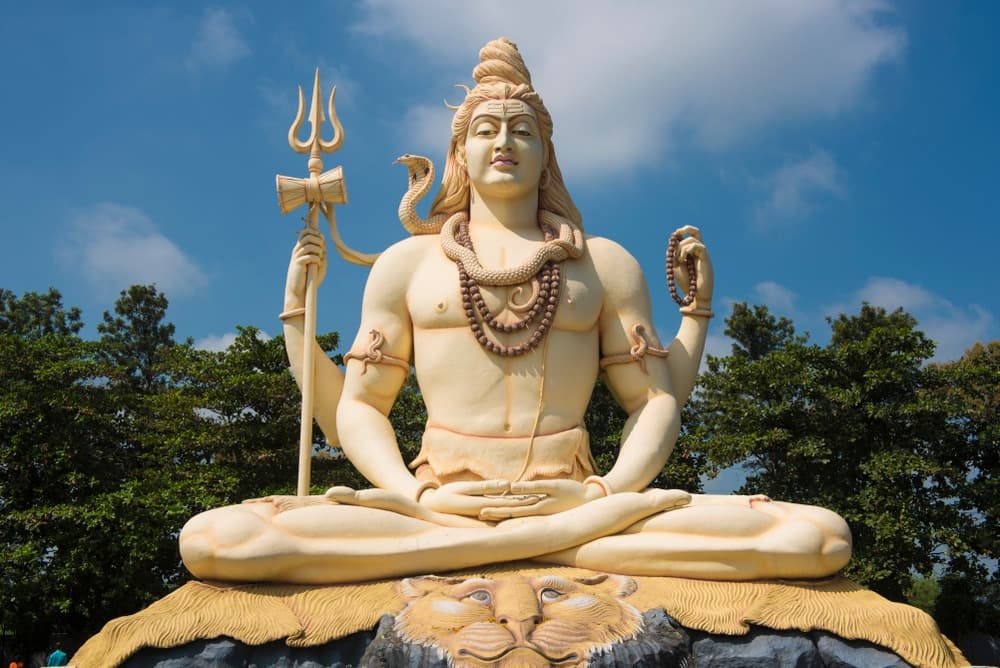
At Kachnar, on the outskirts of Jabalpur, a 24-metre statue of Shiva overlooks a cave housing the twelve Jyotirlingas gathered in a single location.
Away from the centre of Jabalpur, in Madhya Pradesh, the town of Kachnar — nicknamed "Vijayanagar" — brings together several Hindu structures around a monumental statue of Shiva. The complex, opened to the public since 2006, attracts devotees and visitors who come to observe replicas of the twelve Jyotirlingas gathered in one place.
Why visit the Shiva Temple at Kachnar
- A 24-metre-high statue of Shiva, visible in the open air, set above a cave accessible to visitors.
- The twelve Jyotirlingas, replicas of lingams collected from the principal Shaivite sanctuaries across India, brought together on a single site.
- A contemporary architectural ensemble (2001–2004) that complements visits to Jabalpur's historic sites well.
- Daily ceremonies and two major annual fairs, during Shivratri and Makarsankranti.
- Free admission, easy access from the city.
History of the site
Construction of the Shiva Temple at Kachnar began in 2001 under the direction of architect Arun Tawari. Work was completed in 2004, but the site was not officially opened to the public until 15 February 2006. The complex stands apart from ancient temples in Madhya Pradesh by its contemporary character: it was designed as a pilgrimage destination bringing together, within a single complex, the principal symbols of Shiva worship usually dispersed across the subcontinent.
What to see on site
The Shiva statue and the twelve Jyotirlingas
The centrepiece of the site is the Shiva statue, standing 24 metres high, erected in the open air above a cave. Inside this cave are the twelve Jyotirlingas, replicas of lingams collected from Shaivite sanctuaries scattered across India — from Kedarnath in the Himalayas to Rameshwaram in the far south. This symbolic concentration allows devotees who cannot undertake the great pilgrimage of the Jyotirlingas to perform an equivalent circumambulation in a single place.
Nandi, Ganesh and Saptarishi
Facing the Shiva statue stands that of Nandi Maharaj, the bull mount of the god, and a fountain. The complex also houses idols of Ganesh and the Saptarishi, the seven sages of Vedic tradition. The layout remains simple and well-maintained, with clear pathways that facilitate movement during busy periods.
The evening Arti ritual
At the end of the day, priests perform the Arti (or Arathi), a Hindu ritual in which oil lamps are presented to the deity, accompanied by chanting and bells. Witnessing this ceremony provides a concrete glimpse of daily devotion without requiring prior knowledge of the ritual.
When to visit
Jabalpur's climate makes visiting more pleasant from October to March, when temperatures remain moderate and monsoon rains have passed. April to June are hot; July to September are humid.
Two periods attract particular crowds:
- Shivratri (February–March according to the lunar calendar): the night dedicated to Shiva, marked by a fair and vigils at the temple.
- Makarsankranti (mid-January): harvest and solstice festival, accompanied by a second fair on the site.
These two festivals offer an intense atmosphere but involve large crowds; for a calmer visit, choose a weekday morning.
Practical information
- Opening hours: daily from early morning to early evening. Best to check on arrival for exact times that day.
- Admission: free entry.
- Duration of visit: allow 1 to 1.5 hours to tour the complex without hurrying.
- Dress code: shoulders and legs covered, shoes to be removed before approaching sanctuaries.
- Photography: generally permitted outdoors; confirm for interior areas.
How to get there
Kachnar is located on the outskirts of Jabalpur, accessible by rickshaw or taxi from the city centre in about twenty minutes depending on traffic.
- By air: Dumna airport, about twenty kilometres from Jabalpur's centre, is connected to New Delhi, Mumbai, Hyderabad and Bhopal.
- By train: Jabalpur's main railway station has connections with Mumbai, New Delhi, Chennai, Kolkata, Ahmedabad, Hyderabad, Bangalore and Nagpur, among others.
- By car or bus: Jabalpur is connected by road to Nagpur, Bhopal, Jaipur, Raipur, Hyderabad and Bangalore. Public and private buses serve the city from these major towns.
What to see in the area
Jabalpur serves as a base for exploring central India. To extend an itinerary dedicated to Indian architecture and heritage, several sites can complement the visit:
- The City Palace of Udaipur, a palatial ensemble in Rajasthan.
- The Ajit Singh Memorial, a memorial site in northern India.
- The Basilica of Bom Jesus in Goa, testament to Indo-Portuguese heritage.
- The Beas River, in Himachal Pradesh, for a contrast of landscapes.
Frequently asked questions
Frequently asked questions
No. Access to the complex is free, as with most Hindu temples in India. A voluntary donation remains possible.
One to two hours are sufficient to tour the statue, descend into the cave housing the twelve Jyotirlingas and observe the other sanctuaries in the complex.
October to March, when heat and monsoon have passed. The Shivratri and Makarsankranti festivals offer a more festive experience but attract larger crowds.
By rickshaw, taxi or private driver. The journey takes about 20 to 30 minutes depending on traffic.
As in any Hindu temple, it's best to cover shoulders and legs and bring shoes that are easy to remove before entering sacred areas.
Include Kachnar in a trip to India
The Shiva Temple at Kachnar fits well into an itinerary connecting Madhya Pradesh to the major destinations in northern or western India. To build a tailor-made route including Jabalpur and its neighbouring sites, consult our India travel suggestions.
Interested in this visit?
We can include it in your personalised itinerary.