Bhoramdeo
Bhoramdeo
Dubbed the Khajuraho of Chhattisgarh, Bhoramdeo Temple reveals tantric sculptures and medieval architecture in the heart of rural India's lesser-known landscape.
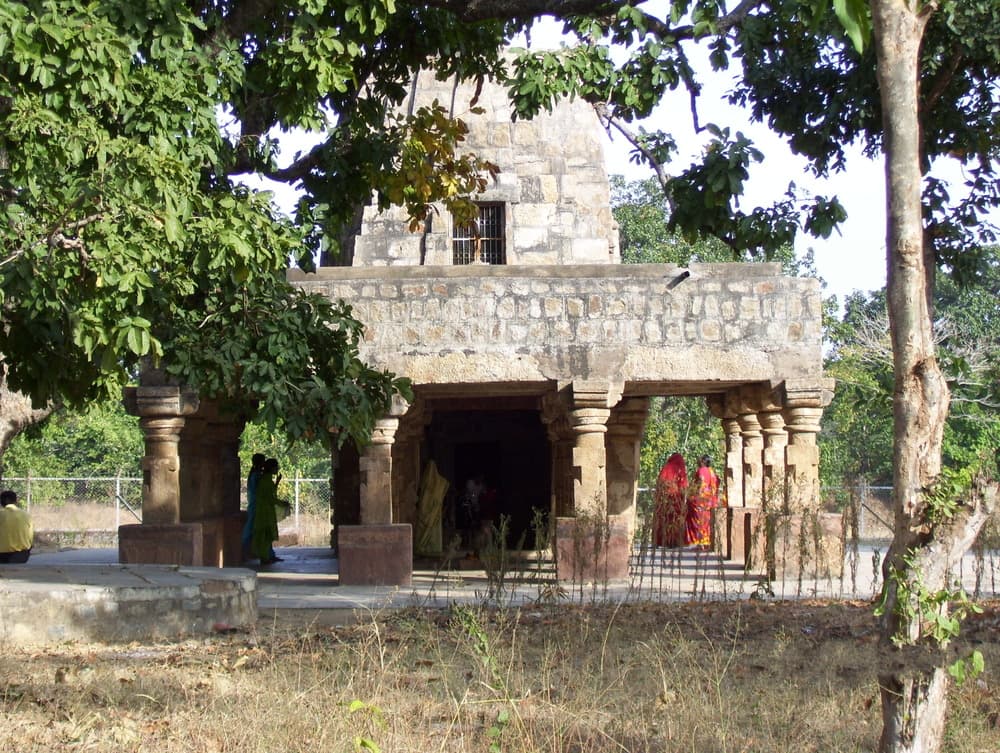
Nestled within verdant hills and dense forests deep in Chhattisgarh, Bhoramdeo Temple stands as a hidden jewel of Indian heritage. Known as the "Khajuraho of Chhattisgarh," this mystical site captivates visitors with the delicacy of its erotic sculptures and the rich symbolism of its architecture. Dedicated to Shiva, it encompasses a unique complex of 4 temples—the oldest constructed in brick, while the main temple, carved from stone, exemplifies the apex of medieval Hindu artistry. Far removed from the bustle of mainstream tourism, Bhoramdeo offers a journey through time where spirituality, beauty, and serenity converge.
History and Origins
Construction of Bhoramdeo's main stone temple is attributed to Laxman Dev Rai and Gopal Dev of the Phani Naga dynasty, who ruled the Chakrakota region—now known as Chhattisgarh—between the 7th and 12th centuries.
Described as "shimmering poetry in stone," Bhoramdeo bears witness to the influence of the Naga kings of Chakrakota, who were devotees of tantrism. The complex, rich in erotic sculptures and refined architectural details, echoes the temples of Khajuraho and the Sun Temple of Konark, hence its epithet as the "Khajuraho of Chhattisgarh." These sculptures reveal strong influence from the Kalachuri dynasties, who ruled central India between the 10th and 12th centuries.
Inscriptions discovered in Bhoramdeo's mandapa and at the neighboring Madwa Mahal reference Gopaladev, an 11th-century Naga king. While some historians attribute the temple's construction to 14th-century sovereigns, the architectural style clearly points to an earlier origin. The name "Bhoramdeo" derives from local Gond tribes, who revered Shiva under this appellation.
An Architectural and Sculptural Masterpiece
Bhoramdeo Temple follows a saptaratha plan, featuring seven wall projections. Oriented toward the east, it comprises:
- An ardhamandapa (entrance portico)
- A mandapa (prayer hall)
- An antarala (antechamber)
- A garbhagriha (inner sanctum) housing a Shiva Linga
The structure rests upon a platform 1.5 meters in height, adorned with sculptures depicting various Hindu deities. The upper portion of the temple is characterized by a tower rising in diminishing tiers, crowned by an ancient shekhari-style shikhara embellished with spiral projections (urusringas) and a crescent-shaped chandrasala. Notably, this chandrasala, which covers the antarala, lacks a central sculptural element.
Erotic and Spiritual Sculptures
As at Khajuraho, Bhoramdeo's temple walls are adorned with erotic sculptures that transcend mere physical representation—they embody a tantric philosophy wherein the body serves as a vehicle for spiritual elevation. These finely carved sculptures depict scenes of daily life, Hindu mythology, and floral motifs, illustrating the cultural and religious practices of the age. They are distributed across multiple levels of the tower, ranging from 60 cm at the base to 30 cm toward the summit.
A Tapestry of Hindu Iconography
The temple's iconography is diverse, reflecting the integration of Shaiva (Shiva-related) and Vaishnava (Vishnu-related) traditions. At the sanctuary entrance, one may admire sculptures of Vishnu's ten avatars, alongside images of Shiva and Ganesh. The interior and exterior walls are decorated with numerous mythological scenes, depicting deities such as Nataraja, Chamunda, and Lakshmi, often accompanied by creatures like elephants and lions. A six-armed Ganesh statue adorns the south façade, while scenes from the Ramayana are carved into the walls.
The temple's base, decorated with friezes of lions and elephants, also features mythological figures and creatures such as makaras adorning the portico roofs. Upon the entrance door's lintel rest representations of the goddesses Ganga and Yamuna, two sacred rivers, adding further ornamentation to the site.
Within the temple, decoration is more restrained. Pillars feature square bases, hexagonal shafts, and circular capitals. The entrance portico's ceiling is adorned with star motifs framing a twelve-petaled flower.
The Bhoramdeo Temple Complex
The Bhoramdeo temple complex extends beyond a single structure, encompassing several remarkable architectural edifices, each possessing distinctive stylistic and historical characteristics.
The Istaliq Temple
Situated near the main temple, the Istaliq Temple, constructed between the 2nd and 3rd centuries, remains largely in ruins. This temple, built from fired or sun-dried brick, today preserves only its main sanctum without an entrance hall. The sanctum's tower is partially intact, with an emerging wall section known as "Allinda" still visible. Within, a Shiva Linga is venerated, accompanied by sculptures depicting Uma-Maheswar and figures of a king and queen in devout postures. Despite its advanced state of deterioration, this temple remains precious testimony to the architecture and spirituality of its era.
The Madwa Mahal
Madwa Mahal, situated approximately 1 km from Bhoramdeo's main temple, is a unique structure commemorating the marriage of Nagavanshi king Ramchandra Deo and Haihaya queen Ambika Devi in 1349. Also known as "Dullhadeo," it is constructed in the form of a pandal—an open wedding structure symbolizing a wedding tent. Oriented westward, it houses a Shiva Linga placed atop 16 pillars. A statue of Nandi, Shiva's sacred bull, stands in reverent adoration before the linga. The temple's exterior walls display 54 erotic sculptures depicting Kama Sutra postures, reflecting the tantric influence of the Nagavanshi dynasty.
The Cherki Mahal
Cherki Mahal, the complex's final temple, proves difficult to locate, situated within a forested zone northeast of the site. Local tradition holds that this temple was dedicated to Shiva and constructed in the 14th century by a Naga chief. It is also associated with shepherd communities called "Cherki," who sought refuge and shade within this sanctuary. The temple is built from brick and stone, lacking significant exterior ornamentation, and features a Garbhagriha (main sanctum). The pyramidal tower overlooking the temple exhibits ancient, simple Nagara style with vertical projections. The sanctum's roof displays a lotus motif, while the entrance portico is decorated with traditional patterns.
The Open-Air Museum
On the Bhoramdeo site, an open-air museum displays various archaeological objects discovered in the region, dating from the 2nd and 3rd centuries. Among the exhibited pieces are sati pillars adorned with sculptures depicting couples in the amorous alingana-mudra posture, votive plaques, a stele carved with a sword, friezes illustrating Nandi and Shiva Lingas, and a small partially ruined brick temple. At the complex's exit stand a modern red temple dedicated to Hanuman and a Kal Bhairava sculpture, marking the end of one's journey.
Bhoramdeo Today
Bhoramdeo is far more than a relic of antiquity—it remains an active place of worship. Each year during Mahashivratri, thousands of devotees flock here to pay homage to Shiva. The atmosphere becomes electrifying, blending religious fervor, traditional music, and ritual processions.
Bhoramdeo also serves as a gateway to rural India, deeply rooted in its ancestral traditions. The site is surrounded by villages inhabited by Baiga and Gond tribes, whose time-honored customs remain vibrantly alive. It offers an opportunity to discover alternative lifestyles, unique gastronomy, and fascinating tribal dances.
The nearest airport to Bhoramdeo Temple is located in Raipur, 134 km away. This city also hosts a major railway station, facilitating site access. Multiple roads connect Raipur to Kawardha, including a primary 116 km route. Bhoramdeo Temple is easily accessible from Kawardha, with regular transport from neighboring towns. It sits within a peaceful natural setting near an artificial lake, surrounded by the Maikal mountains. A path lined with bamboo and trees leads to the site, offering picturesque views of colorful Gulmohars and a central fountain.
Practical Information
Bhoramdeo is accessible daily from 05:00 to 12:00 and from 16:00 to 21:00. Admission is free, as it is a religious site open to all. The ideal period for a visit falls between October and February, when the cool winter climate makes the experience particularly pleasant, with moderate temperatures.
Want to discover this destination?
Our local advisors design your tailor-made trip.