Amravati
Amravati
At the heart of Vidarbha, Amravati opens the door to Marathi temples, Deccan forts and the tigers of Melghat. An India that is quiet and authentic.
Amravati, a gem of the Vidarbha region, invites you to discover its history and vitality. As an administrative centre, the city is a vital crossroads for the districts of Akola, Buldhana, Washim and Yavatmal. Ranked as the ninth largest city in Maharashtra and included in the Smart Cities Mission programme, Amravati blends modernity with tradition. Explore its many facets and immerse yourself in the vibrant soul of this historic city.
History
Amravati, whose history dates back to the eleventh century, is marked by significant events. Human presence in the region is attested to by a marble statue of the Jain tirthankara Rishabhanatha, installed in 1097. In the thirteenth century, the city was governed by the Hindu king of Devagiree. A famine in the fourteenth century led to the exodus of inhabitants to Gujarat and Malwa. Consequently, it took many years for the population to return.
In the sixteenth century, Aurangzeb granted the Jamia Mosque to Aurangpura, demonstrating coexistence between Muslims and Hindus in the region. In 1722, Amravati was granted to Shri Ranoji Bhosle by Chhatrapati Shahu Maharaj. The city flourished under his reign following the treaties of Devgaon and Anjangaon Surji.
During the eighteenth century, Amravati experienced significant political changes. The British captured Gavilgad Fort in 1803, whilst the Pindāri invaded it in 1805. In 1983, Amravati became the second municipality of Vidarbha. At that time, the area administered by the municipality covered 121.65 km². It encompassed the former municipal councils of Amravati and Badnera as well as eighteen revenue villages. Currently, the total area of the city is 270 km², of which 181 km² are included within municipal limits. As for the remaining 89 km², they lie outside these limits.
What to Visit in Amravati?
Amravati offers a rich variety of attractions that reflect its cultural, spiritual and natural heritage. Here are some of the must-see places to discover during your visit:
- Amaraligeswara Swamy Temple: This ancient temple dedicated to Lord Shiva is the spiritual centre of Amaravati and is remarkable for its captivating architecture.
- Amaravati Mahachaitya Stupa: A relic from the 3rd century BCE, this stupa bears witness to the city's rich Buddhist heritage.
- Amaravati Heritage Centre and Museum: This museum immerses you in local history with its varied exhibitions on the art and heritage of Amravati.
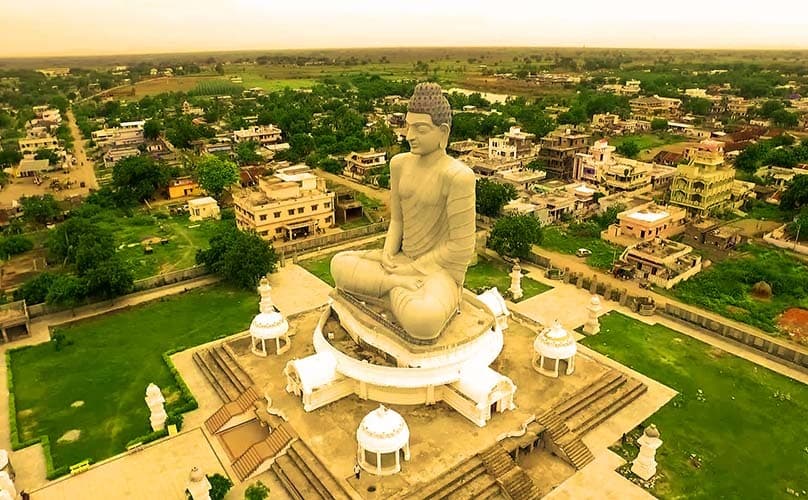
- Dhyana Buddha Statue: A serene representation of Buddha, perfect for those seeking tranquillity and spiritual connection.
- Undavalli Caves: These rock-cut caves offer a fascinating blend of natural beauty and human artistry with their elaborate sculptures.
- Uppalapadu Bird Sanctuary: A peaceful refuge for birdwatching enthusiasts, rich in avian diversity for an unforgettable bird-watching experience.
- Sri Panakala Narasimha Swamy Mangalagiri Temple: Recognised for its unique jaggery water-pouring ritual, this destination attracts both devotees and curious visitors.
- Skondaveedu Fort near Amravati: Explore this historic fort for its spectacular panoramas and historical significance.
- Bhattiprolu Buddhist Stupa Site: Discover this archaeological site which illustrates Amravati's Buddhist past with its fascinating remains.
Culture and Festivals
The Navaratri festival in Amravati is celebrated with great devotion and enthusiasm. During these nine days, inhabitants honour the goddess in nine different forms. A grand fair is organised for the occasion, and local dances such as Dandiya and Garba are performed, enlivening the nights with prolonged festivities. Women from the region also perform Lavani, a traditional dance and music characterised by intense and fast rhythms, derived from the word "laavanya" which means "beauty". In addition to Navaratri, other festivals such as Holi, Makarsankranti, Deepawali, Eid-ul-Fitr and Eid-ul-Azha are also celebrated with joy in Amravati.
Climate
Amravati Division has a hot and dry desert climate (BWh) according to the Köppen-Geiger classification. Throughout the year, the average temperature in Amravati Division is 27.5°C and average rainfall is 664.1mm.
When to Visit?
The best time to visit Amravati extends from November to February, during the winter months. During this period, the climate is cool and pleasant, ideal for exploring the city and enjoying outdoor activities. To escape the intense summer heat, it is recommended to plan your trip during these cooler months.
To reach Amravati from Nagpur, you have several modes of transport at your disposal:
- By bus: A quick option, with a journey of approximately 3 hours.
- By train: Comfortable and economical, the journey takes approximately 3 hours and 15 minutes.
The choice of transport affects the cost and duration of the journey. The bus is ideal for a quick journey, whilst the train is preferable for a more relaxed trip.
Once in Amravati, several means of transport facilitate your movements:
- Buses and coaches: Offer extensive coverage throughout the city and to nearby destinations.
- Trains: Include suburban, intercity and long-distance services, with international options.
- Trams and light rail: Operate on dedicated routes in major cities, ideal for avoiding traffic.
- Car rental: Allows you to hire a vehicle for a set period, with or without a driver, depending on your needs.
Want to discover this destination?
Our local advisors design your tailor-made trip.