Jai Vilas Palace
Jai Vilas Palace
A princely residence of the Scindia in Gwalior, Jai Vilas Palace blends European architecture with Indian splendor. Museum, monumental chandeliers and rare collections.
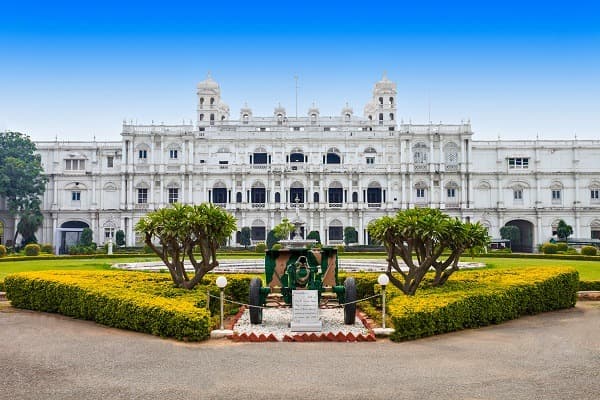
The Jai Vilas Palace, also known as Jai Vilas Mahal, stands in Gwalior, Madhya Pradesh. Built in 1874 on the orders of Maharaja Jayajirao Scindia, it combines a Tuscan-style façade with Corinthian and Baroque interiors. Part of the building remains inhabited by descendants of the Scindia family; the other section, converted into a museum, opens more than thirty rooms to the public.
Why visit Jai Vilas Palace
The palace offers a rare testament to Indian princely architecture infused with 19th-century European influences. It houses collections accumulated by a dynasty that ruled Gwalior for two centuries: European furniture, Persian carpets, porcelain, ancient weapons, uniforms and period vehicles. Its banquet hall and two crystal chandeliers weighing 3.5 tonnes each—among the most imposing ever created—make it the museum's most celebrated feature.
The site logically complements a visit to Gwalior's historic center and its fort.
History
The palace was erected in 1874 at the command of Maharaja Jayajirao Scindia, who sought to affirm the prestige of his lineage and mark Gwalior with a structure worthy of the great European capitals. The design was entrusted to Lieutenant-Colonel Sir Michael Filose, who drew inspiration from the architectural canons in vogue during the Victorian era.
The exterior façade adopts a sober and massive Tuscan style, while the interiors deploy a Corinthian and Baroque vocabulary, enriched with gilded stucco and European woodwork. This blend reflected the Scindia's political strategy: to embrace Western codes while maintaining their autonomy vis-à-vis the British Empire.
Over generations, the palace welcomed foreign dignitaries, viceroys and neighboring princes. Part of it remains today the private residence of the Scindia family's descendants; the other has been opened to the public as a museum dedicated to the dynasty's history.
What to see
The Jiwajirao Scindia Museum
More than thirty rooms present the family's collections: Persian carpets, Sèvres and Meissen porcelain, European furniture, paintings, sculptures, ancient weapons, uniforms and diplomatic mementos. The ensemble offers a concrete understanding of daily life in an Indian princely court at the turn of the 20th century.
The banquet hall and chandeliers
The grand reception hall houses two crystal chandeliers, each weighing 3.5 tonnes, suspended from an ornately decorated ceiling. According to local tradition, elephants were reportedly hoisted onto the roof to test its strength before the chandeliers were installed. The set table, several meters long, recalls the banquets organized in honor of foreign guests.
Art galleries and vintage car collection
Several rooms display European paintings, royal portraits and rare decorative objects. A section is devoted to vintage cars that belonged to the maharajas, testament to the family's enthusiasm for symbols of modernity.
Architecture and gardens
The exteriors combine European symmetry with Indian landscaping. The pathways, fountains and bright façades provide a coherent setting for the ensemble.
Practical information
- Opening days: Tuesday to Sunday, closed Mondays. Hours typically cover morning and afternoon; check updated times before your visit.
- Admission: paid entry, with separate pricing for Indian and foreign visitors. Expect a modest fee, ticket including access to the museum and main rooms.
- Visit duration: allow 1.5 to 2 hours to explore the collections at a leisurely pace.
- Photography: permitted in most rooms, sometimes subject to an additional fee.
When to visit
Madhya Pradesh's climate is marked by extremely hot summers (April to June, temperatures often exceeding 40°C) and active monsoons from July to September. The most comfortable period for visiting Gwalior and its palace extends from October to March, with dry days and manageable temperatures. December and January can be cool in the morning but offer the best visiting conditions.
How to get there
The palace is located a few kilometers from Gwalior's center. Taxis and auto-rickshaws serve the site without difficulty from the railway station and major hotels; expect about twenty minutes depending on traffic. Gwalior is connected by train to Delhi, Agra and Bhopal, and also has a small regional airport.
Nearby
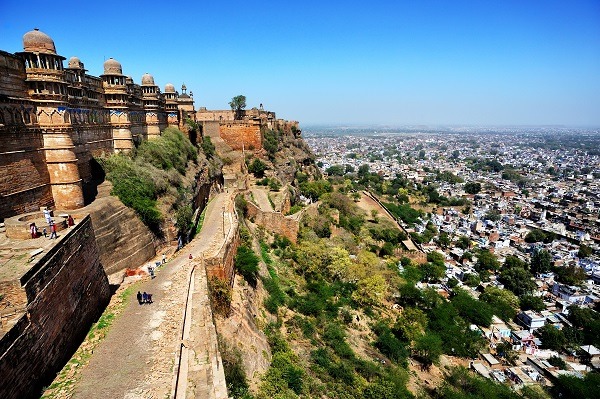
- Gwalior Fort: citadel perched on a rocky plateau, housing palaces, temples and ramparts.
- Sas Bahu Temple: 11th-century Hindu sanctuary, remarkable for its sculptures.
- Tansen's Mausoleum: tomb of the Mughal Emperor Akbar's court musician, a site of musical pilgrimage.
- Surya Mandir: modern temple dedicated to the Sun, inspired by the Konark temple.
To extend your itinerary to other palaces and fortresses in northern India, consult our guides to the City Palace of Alwar, Fort Jaigarh or the city of Chanderi.
Frequently asked questions
Frequently asked questions
Yes. Part of the palace remains the private residence of the Scindia family's descendants. Only the wings converted into a museum are open to the public.
Allow 1.5 to 2 hours to explore the main rooms and the vintage car collection. History and art enthusiasts may extend to 3 hours.
October to March, when Madhya Pradesh's climate is dry and mild. Avoid the hot season (April-June) and the monsoon (July-September).
Yes, both sites can be visited on the same day. The fort takes the morning and the palace the afternoon, or vice versa.
Plan your visit
Jai Vilas Palace naturally fits into a northern India circuit covering Delhi, Agra, Gwalior and Rajasthan. To build a customized itinerary incorporating this stop, consult our India tours.
Interested in this visit?
We can include it in your personalised itinerary.