Gwalior
Gwalior
At the gateway to Madhya Pradesh, Gwalior unveils its colossal fort, Scindia palaces and ancient temples, far from Agra's crowds.
Gwalior is dominated by massive fortifications bearing witness to the glory of the dynasties that once ruled it. Today, cultural traditions continue to flourish in a city experiencing rapid growth.
History
While the fort of Gwalior owes its foundation to Maharaja Suraj Sen, the city itself has passed through the hands of numerous dynasties throughout its existence.
In the 6th century BC, the region was governed by the Naad dynasty of Pataliputra. During the first century AD, it was the turn of the Naga dynasty to take control. A sculpture discovered at Pawaya suggests that the Kushanas also dominated the city until the 3rd century AD. The Guptas came next and established their rule until 467 AD.
The Kannauj dynasty of Gurjar-Pratihara marked Gwalior's history in the 5th century. The city was then the capital of Kannauj from 700 to 740 and was called Gopal Giri. Later, the Kachwahas settled there. Around 1195, Muhammad Ghori attempted to conquer the city, without success. In 1231, Iltutmish managed to capture Gwalior and ruled it until the 13th century.
In 1375, control of Gwalior was taken by Raja Veer Singh of the Tomar dynasty. For a short period, the city was ruled by the Mughals, then the Marathas. During the 1730s, the Scindias seized power. Gwalior remained a princely state during the British period.
When the region came under attack, Rani Lakshmibai of Jhansi fought valiantly against the English. After India's declaration of independence, the city joined the Indian Union at the instigation of Maharaja Jivajirao Scindia.
Today
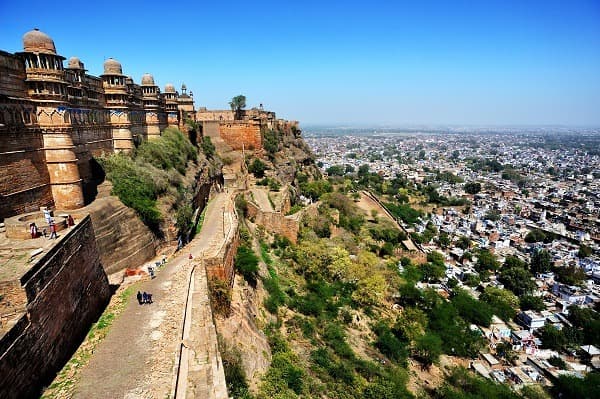
Located in Madhya Pradesh, the state nicknamed the "heart of India", Gwalior possesses incomparable charm. The rocky hills surrounding the city form an enchanting backdrop. The imposing Gwalior Fort, also called the "Gibraltar of India", overlooks the city. The great conquerors in India's history were particularly interested not only in the architecture of the site, but also in its strategic importance.
Gwalior presents itself as a continuously developing center of education, arts and business. In the past, it was home to legendary artists, including the singer Tansen. Today, the city has become an important industrial center housing offices for several multinational corporations. You will find a series of shopping malls, multiplexes and restaurants catering to the entertainment needs of the young population.
Gwalior is known for its cultural heritage encompassing the influences of different dynasties. The melting pot of traditions and cultures is fascinating. Both historical and contemporary art enjoy considerable popularity in the city. Furthermore, Drupad, defined as one of the oldest genres of Hindustani classical music, is still practiced in Gwalior. Akbar's illustrious court singer, Tansen, hailed from the region. The Tansen Music Festival pays homage to him every year. Folk dance continues to captivate audiences in this corner of the subcontinent. Discover the Ahir, Bardi and Saharia dance forms here. As for festivals, major events include Makar Sankranti, Diwali, Rakhi and Holi.
Hindi is the common language in Gwalior. Maratha influence is strongly felt throughout the city, with a quarter of the population speaking Marathi. The English language is also widely practiced.
Climate
Gwalior experiences a subtropical climate characterized by hot summers, humid monsoons and dry winters. The summer season, which extends from March to May, is marked by intense heat that can overwhelm sensitive travelers. The maximum temperature recorded is 48°C. The monsoon season sets in around June and extends through September. During this period, the city receives moderate rainfall. The average annual precipitation is 900 mm. Notably, August proves to be the most humid month in Gwalior. Winter begins around October, with temperatures ranging from 5°C to 21°C. January is the coldest month, with temperatures occasionally dropping to 0°C during this period.
Gwalior has a domestic airport operating regular flights to major Indian cities such as Delhi, Indore, Mumbai and Bhopal. Tourists traveling from abroad can arrange a connecting flight through Indira Gandhi International Airport in Delhi. This world-class airport offers regular connections to major destinations in India and international cities such as Paris, New York, London, Melbourne, Moscow, Toronto, Beijing, and more.
A network of national highways connects Gwalior to different parts of Madhya Pradesh and neighboring states. National Highway 3 provides a connection between Gwalior, Agra and Mumbai, while National Highway 75 links it to Jhansi. Numerous public and private buses operate in these areas.
Gwalior has its own railway station with regular trains to and from various Indian cities such as Delhi, Pune, Lucknow, Kolkata, Bhopal and Jammu.
For getting around Gwalior, you can choose between bus, taxi, rickshaw and rental vehicles.
What to do in Gwalior?
- Visit Gwalior Fort
- Discover the region's cultural and artistic heritage
- Enjoy shopping
- Learn Hindi
- Attend festivals, and much more
Attractions in Gwalior
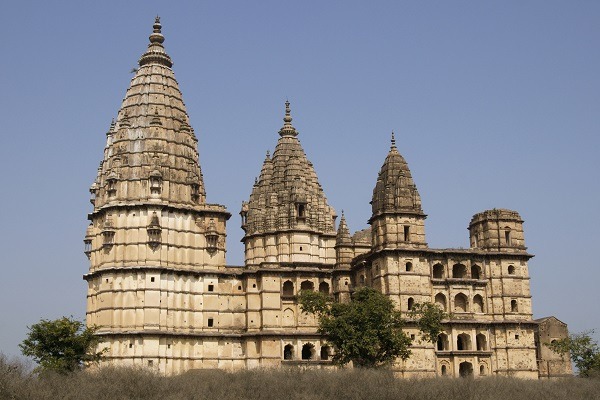
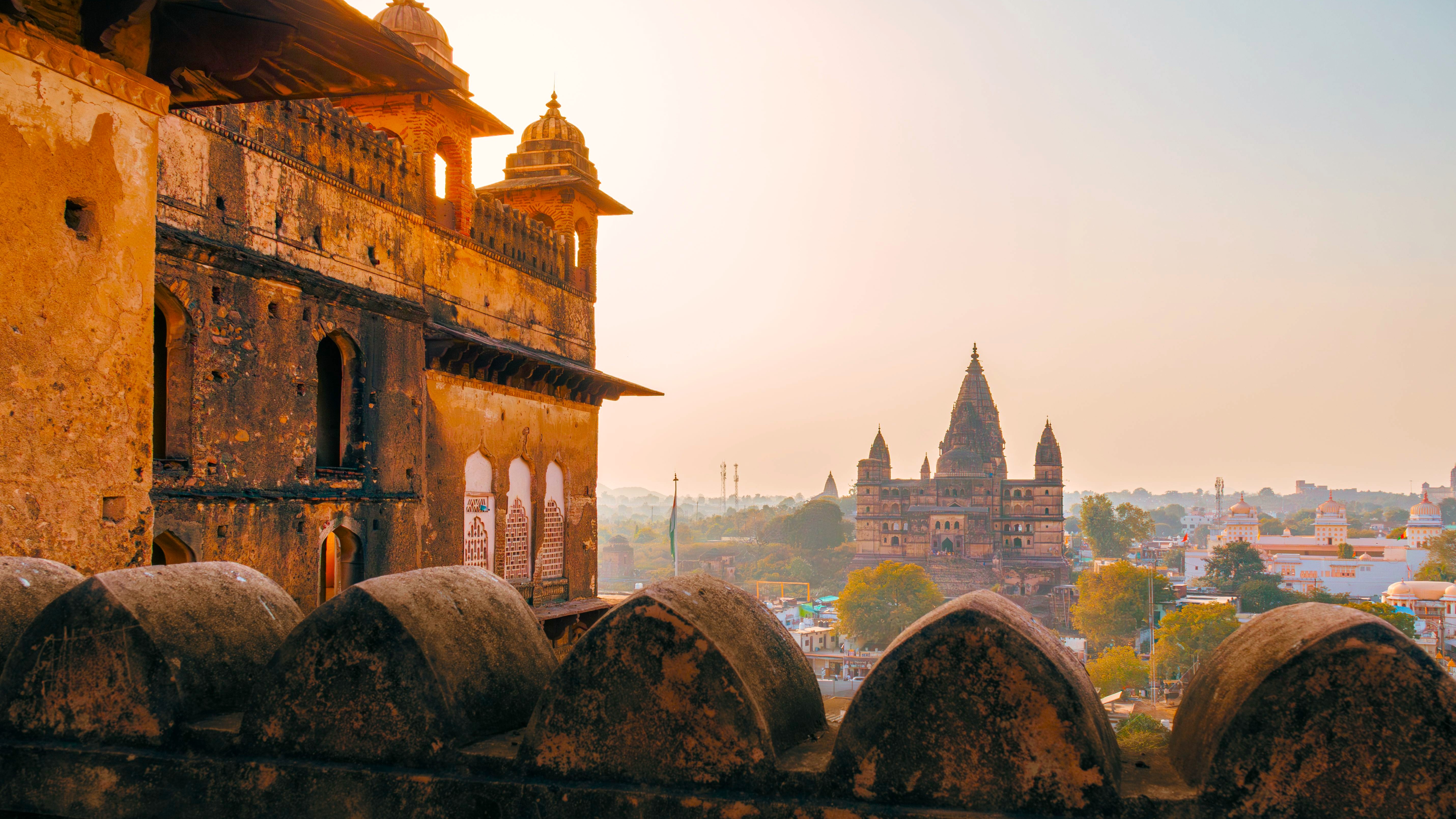
Chaturbhuj Mandir
À Orchha, le Chaturbhuj Mandir dédié à Vishnu mêle architecture de temple hindou et codes palatiaux bundelas, avec une vue panoramique sur la ville.
Man Singh Palace
Perché sur le plateau du fort de Gwalior, le palais Man Singh (XVe s.) impressionne par ses tours ornées de carreaux de faïence bleu et jaune, ses cours intérieures et ses caves historiques.
Gwalior Fort
Perché sur un éperon rocheux de cent mètres, le fort de Gwalior réunit palais Tomara en faïence bleue, temples du VIIIe siècle et sculptures jaïnes monumentales taillées dans la falaise.
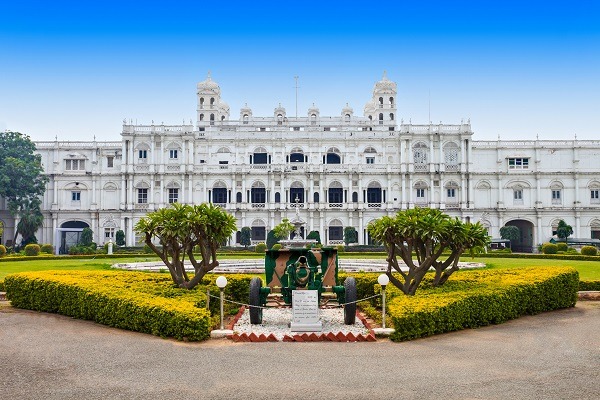
Jai Vilas Palace
Résidence princière des Scindia à Gwalior, le Jai Vilas Palace mêle architecture européenne et faste indien. Musée, lustres monumentaux et collections rares.
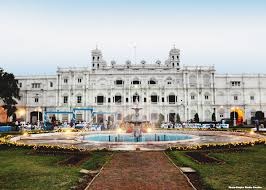
Jai Vilas Palace & Museum
Résidence royale des Scindia convertie en musée, le palais Jai Vilas à Gwalior abrite 35 salles de collections princières : lustres de Bohême monumentaux, train miniature en argent et armures mogholes.
Accommodation in Gwalior
Want to discover this destination?
Our local advisors design your tailor-made trip.