City Palace Alwar
City Palace Alwar
Former residence of the maharajas of Alwar at the foot of the Aravalli hills, City Palace combines Rajput architecture, Mughal gardens and a museum of royal collections.
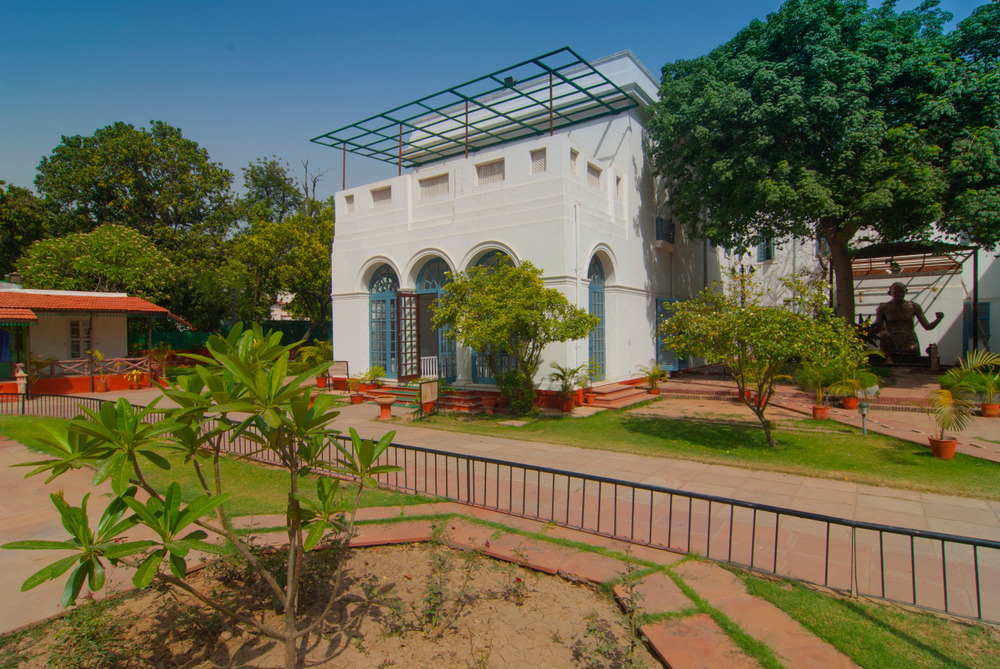
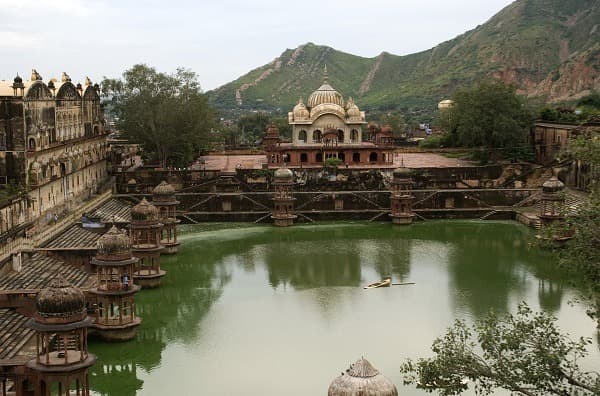
The Alwar City Palace, also known as Vinay Vilas Mahal, stands at the foot of the Aravalli hills, in the heart of Alwar city, Rajasthan. A former residence of the maharajas and seat of princely power, it combines Rajput architecture with Mughal design principles across a unified ensemble of courtyards, pavilions, gardens and galleries. The complex now houses a government museum preserving the collections of the royal family.
Why visit Alwar City Palace
The palace offers genuine insight into how a Rajput court functioned: audience hall, Persian gardens, marble chhatris, jali-screened balconies and collections of weapons and miniatures. Unlike the major tourist palaces of Jaipur or Udaipur, this site remains relatively undiscovered and can be explored at a leisurely pace. Allow 1 to 2 hours including the museum visit.
History
The palace was built in 1793 under the reign of maharaja Bakhtawar Singh, founder of Alwar's princely dynasty. It became the political and residential centre of a principality belonging to the Kachwaha Rajput dynasty, which had dominated the region for centuries.
With each succession, successive sovereigns added a wing, courtyard or architectural detail reflecting their own taste, which explains the eclectic nature of the complex as it stands today. During the British colonial period, the palace served as a venue for receptions and diplomatic meetings, integrating Alwar into the network of alliances with the Raj.
Following independence and the abolition of princely privileges, sections of the buildings were converted into administrative offices and a museum, roles they continue to serve today.
What to see
The Durbar Hall
Once the audience chamber, the Durbar Hall is the most ornately decorated space in the palace. Its painted ceiling, chandeliers and gallery of royal portraits adorning the walls convey the splendour of official ceremonies and public audiences held by the maharajas.
The central courtyard and porticoes
The grand open courtyard structures the palace according to Rajput architectural principles. It is surrounded by arcaded corridors connecting the pavilions, and sculptured balconies from which the royal women could observe processions and audiences. The façades blend polylobed arches, floral motifs and Mughal-inspired geometric patterns.
The white marble chhatris
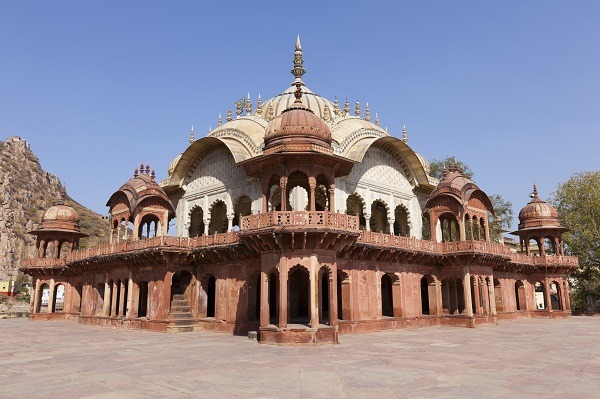
Small domed pavilions carved in white marble, the chhatris served as places of rest and contemplation. They mark the transition between residential spaces and the gardens, and offer views across the entire complex.
The Mughal gardens
Laid out according to Persian symmetry, these gardens combine straight pathways, pools and fountains. They were used for evening musical performances, literary gatherings and courtly promenades. Their design remains evident despite the passage of time.
The Government Museum
Located in a palace wing, the museum displays collections from Alwar's royal family:
- Rajasthani miniatures depicting mythological scenes, battles and court life;
- weapons and armour reflecting the Rajput military heritage;
- textiles, jewellery and pottery from the royal apartments;
- royal furniture and objects from princely daily life.
Practical information
The palace and museum can be visited during daylight hours, with closure every Friday (the standard weekly closure for government museums in India). Hours and admission fees change regularly: verify current information on-site or with your guide before your visit.
Photography is generally permitted in the courtyards and gardens, but often restricted inside the museum. Wear easily removable shoes, as some areas require visitors to remove their footwear.
When to visit
Rajasthan's climate makes visiting most pleasant between October and March, with moderate temperatures and clear skies. The period from April to June sees intense heat (often exceeding 40°C), making it uncomfortable for walking through open courtyards. The monsoon season from July to September remains manageable but reduces the light on façades.
Visiting early morning or late afternoon allows you to enjoy raking light that highlights the sculpture work and balconies.
How to get there
Alwar City Palace is located in the city centre. Alwar Junction railway station, about 3 to 4 km away, is served by trains to and from Delhi, Jaipur and Mumbai, making it easy to include as a stop on a Rajasthan circuit. From the station, auto-rickshaws and taxis provide short journeys to the palace. By car, Alwar is 3 to 4 hours from Delhi via the NH48 motorway.
Nearby
- Bala Quila (Alwar Fort): a fortress perched on the Aravalli hills, accessible by car, with panoramic views over the city.
- Siliserh Lake Palace: a former hunting lodge on a lakeside, about twenty kilometres away, ideal for a half-day visit.
- Sariska Tiger Reserve: a tiger sanctuary roughly 35 km away, best combined as a full day excursion.
- To further explore the havelis and palaces of northern India, also see Bagore Ki Haveli in Udaipur or Bara Imambara in Lucknow.
Frequently asked questions
Frequently asked questions
Plan for 1 to 2 hours to explore the courtyards, gardens and museum at a relaxed pace. Those with a particular interest in history or miniature painting may wish to spend half a day.
Part of the complex still houses administrative offices and is not open to the public. The government museum, housed in a wing, has separate admission and may be closed on Fridays.
Photography is generally permitted in the courtyards, gardens and chhatris. Inside the museum, it is often prohibited or subject to an additional fee: check at the ticket office.
Plan your stay in Alwar
Alwar City Palace fits naturally into a Rajasthan circuit linking Delhi, Jaipur and the Shekhawati region. To design a bespoke itinerary including Alwar, Sariska and other royal cities, consult our India tours.
Interested in this visit?
We can include it in your personalised itinerary.