Taragarh Fort
Taragarh Fort
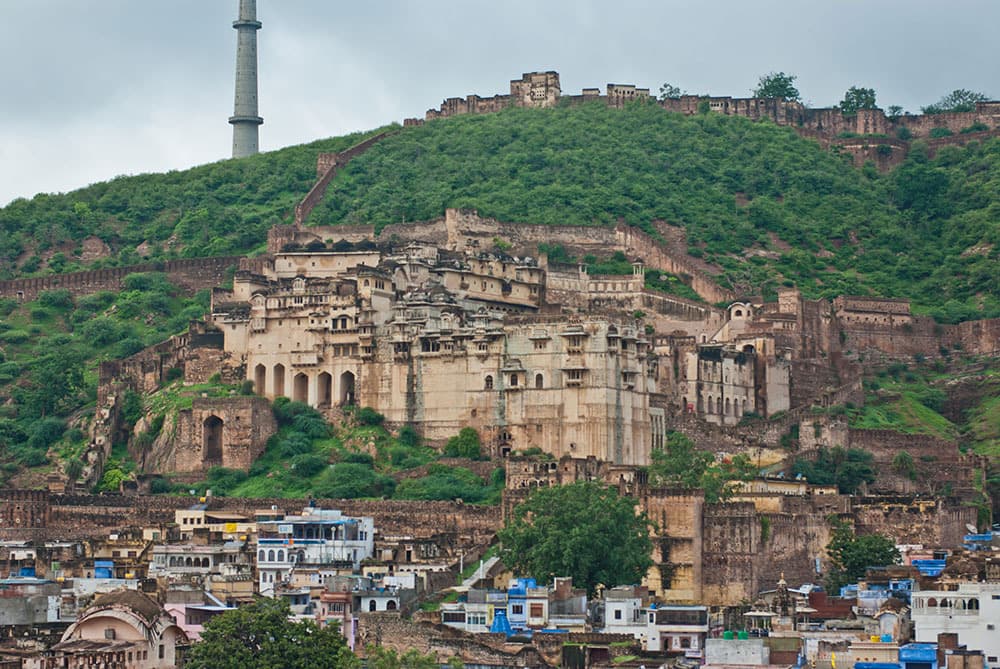
Perched at 435 m above Bundi, Taragarh Fort, completed in 1354, ranks among Rajasthan's oldest forts, with its monumental cannon and rock-cut cisterns.
Perched at 435 metres above Bundi, Taragarh Fort ranks among Rajasthan's oldest fortifications. Its walls, completed in 1354, preserve monumental cannons, rock-cut cisterns and palace ruins that chronicle six centuries of Indian military history.
Why visit Taragarh Fort
- A fortified site among Rajasthan's oldest, completed in the 14th century
- The Garbh Gunjam, one of India's largest cannons, housed in a stone tower
- Unobstructed views over Bundi's old town and the surrounding valley
- A raw, unspoiled atmosphere, far from Rajasthan's crowded tourist forts
The fort's history
Construction of Taragarh Fort was completed in 1354. In the 16th century, the main bastion became known as Bhim Burj. The structure ranks among Rajasthan's oldest forts and is often cited as one of India's first hill forts.
The site changed hands repeatedly. Conquered by Rajput sovereigns, then by the Marathas, it was later repurposed as a military outpost by the British. The fort is also linked to the memory of Miran Saheb Ki Dargah, governor of Ajmer, who died in 1210 defending the stronghold during an attack.
This layering of occupations explains the site's composite character: Rajput defensive architecture, Mughal and Maratha additions, traces of colonial use.
What to see on site
The three monumental gates
Access to the fort is via three gates: Lakshmi Pol, Phuta Darwaza and Gagudi Ki Phatak. The main entrance is adorned with stone elephant statues, a classical motif of Rajput military architecture.
The Garbh Gunjam cannon
At the heart of the complex, a stone tower houses the Garbh Gunjam, one of India's largest cannons. Its size and elevated placement testify to the fort's strategic role in regional defence.
Cisterns and reservoirs
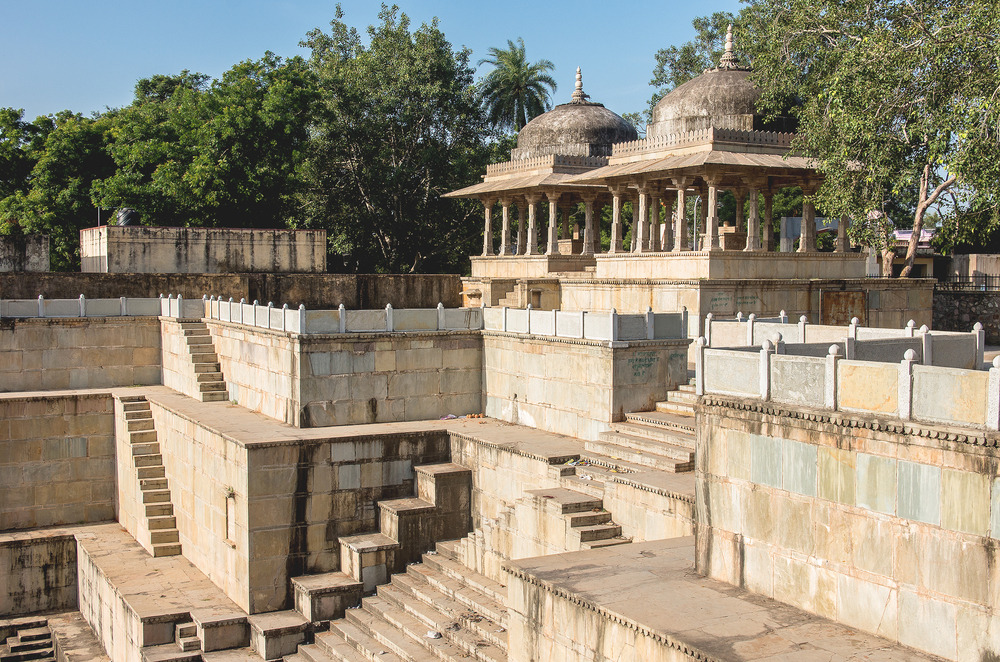
Vast reservoirs were carved directly into the rocky base to store water during sieges. These cisterns ensured the fort's water security over extended periods.
The Rani Mahal
Within the walls stands the Rani Mahal, a modest palace reserved for the sovereigns' women and concubines. It once housed murals and stained glass; the building is largely damaged today, but its structure remains discernible.
The 84-pillar mausoleum
Nearby, the mausoleum founded by Bhai Deva, structured around 84 pillars, merits a visit. It exemplifies regional funerary architecture.
Underground tunnels
The fort is traversed by underground tunnels that once ran through the hill. Today they are closed to the public for safety reasons, though their presence is noted on site.
Practical information
- Duration of visit: allow 1.5 to 2.5 hours to explore the entire site
- Entrance fee: modest admission, standard surcharge for photography and video equipment
- Hours: daytime opening, reduced hours in winter — verify on arrival
- Footwear: walking shoes recommended, terrain is uneven and the climb is sun-exposed
- Water: bring supplies, few refreshment points on site
When to visit
The best period to visit Taragarh Fort spans October through March. Temperatures are manageable and allow comfortable ascent and rampart walks. From April to June, heat makes the visit gruelling. Monsoon, July to September, complicates access due to slippery terrain.
Late afternoon visits offer rewarding golden light over the valley and allow descent before nightfall.
How to get there
Taragarh Fort lies near Bundi, approximately 39 km from Kota and 10 km from Dargah. From Dargah, an auto-rickshaw ride to the fort entrance takes roughly twenty minutes.
Kota has a well-connected railway station serving Delhi, Mumbai and Jaipur. For air travel, Jaipur's international airport is the most straightforward option for international visitors; from Jaipur, road or rail reach Bundi in a few hours.
Note: another Taragarh Fort exists in Ajmer and should not be confused with the Bundi site.
Things to see nearby
Bundi and the Rajasthan region offer natural extensions to your visit:
- Jaigarh Fort — another Rajput hill fort near Jaipur
- City Palace Udaipur — royal palace on Lake Pichola
- Bagore Ki Haveli — historic mansion in Udaipur
- City Palace Alwar — royal residence in northern Rajasthan
Frequently asked questions
Frequently asked questions
Plan for 1.5 to 2.5 hours depending on your pace and time spent on panoramic views and the 84-pillar mausoleum. The ascent from Dargah by auto-rickshaw takes about 20 minutes.
No. Two forts share this name in Rajasthan: one in Bundi, the other in Ajmer. This guide covers the Bundi fort, erected at 435 metres elevation and completed in 1354.
No, the tunnels running through the hill are now closed to the public. Only surface structures—gates, cisterns, cannon tower and Rani Mahal—are accessible.
Include Taragarh Fort in your trip
Taragarh Fort fits naturally into a Rajasthan circuit combining Bundi, Kota and the major royal capitals. To design a bespoke itinerary, consult our journeys in India.
Interested in this visit?
We can include it in your personalised itinerary.