Durpin Monastery
Durpin Monastery
The largest monastery in Kalimpong, consecrated by the Dalai Lama in 1976, Zong Dog Palri Fo-Brang Gompa features a rare three-dimensional mandala and views of Kanchenjunga.
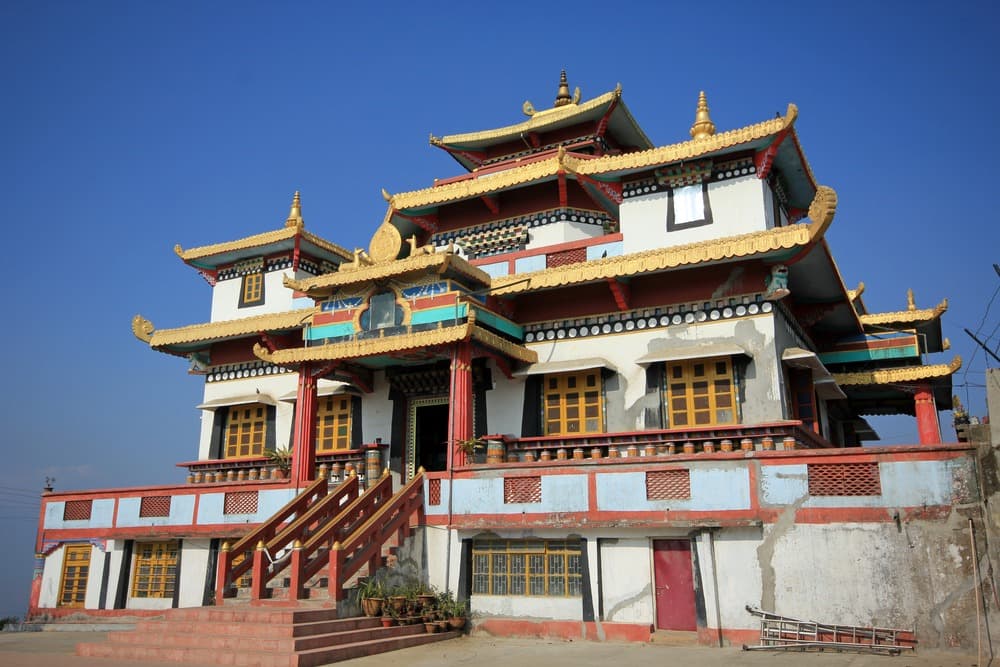
Durpin Monastery, formally named Zong Dog Palri Fo-Brang Gompa, stands at approximately 1,372 meters elevation atop Durpin Hill in Darjeeling district, West Bengal. The largest and most significant monastery in Kalimpong, it belongs to the Nyingma lineage of Tibetan Buddhism and serves as both a spiritual and panoramic landmark of the region.
Why visit Durpin Monastery
Three compelling reasons draw visitors here. First, its religious significance: the monastery was consecrated by the Dalai Lama in 1976, who installed a Tibetan religious scripture and 108 volumes of the Kangyur, the Tibetan Buddhist canon. Second, its architectural and artistic merit, featuring a rare three-dimensional mandala and a complete painted program inside the prayer hall. Finally, its geographical position: the upper terrace offers one of the widest viewpoints over Kalimpong, the Kanchenjunga massif, and the Teesta Valley.
History
The monastery was built in 1972, at a time when the exiled Tibetan community sought to reconstruct its religious centers in the Indian Himalayas following the 1959 events in Tibet. Its official consecration took place on May 29, 1976, during a visit by the Dalai Lama. The spiritual leader personally brought a Tibetan religious scripture as well as the 108 volumes of the Kangyur, immediately establishing Durpin as a reference site for Tibetan Buddhism in West Bengal.
Since then, the monastery has served both as a teaching center for young monks and as a pilgrimage site for regional devotees.
What to see
The façade and entrance
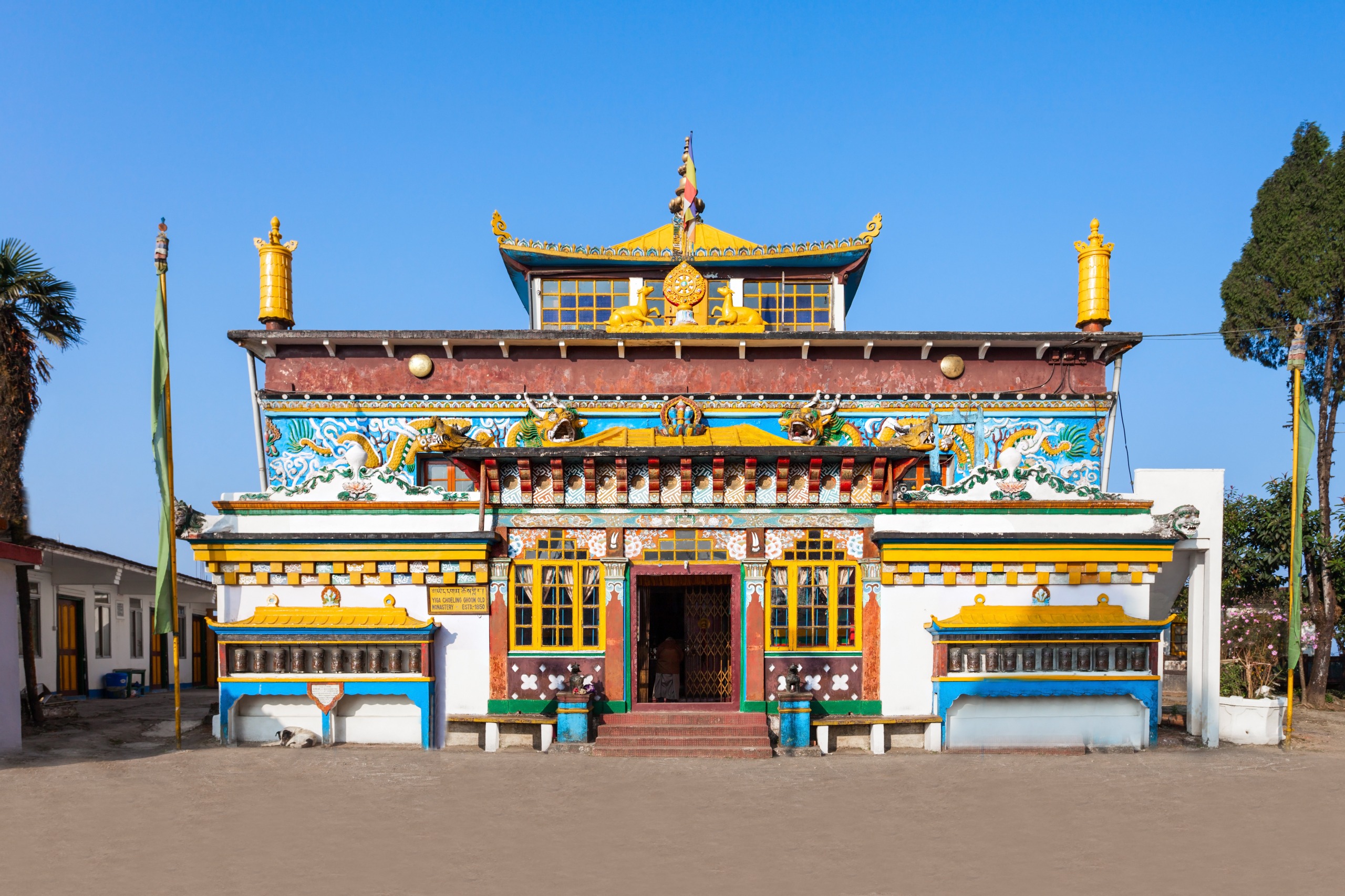
The exterior follows the classical grammar of Tibetan monasteries: a row of prayer wheels runs along the façade at hand height. At the entrance, two large cylinders approximately 3 meters tall stand on either side of the door; they operate by hand crank, and a small bell chimes with each complete turn, marking the recitation of the mantra contained inside.
The prayer hall
The interior houses a dense painted program, typical of Tibetan painting: tutelary deities, scenes from the Buddha's life, cosmological motifs. The centerpiece remains a three-dimensional mandala, a sculpted structure in volume that materializes a divine palace normally represented flat on thangkas. This form remains rare and justifies extended observation on its own.
The panoramic terrace
An interior staircase leads to the building's summit. From the terrace, the view encompasses Kalimpong below, the Kanchenjunga range on clear days, tea gardens stretching downward, the Peshoke road, and the confluence of the Teesta and Reang rivers. Visibility depends largely on weather and Himalayan cloud cover.
Practical information
- Address: summit of Durpin Hill, approximately 5 km south of Kalimpong town center.
- Hours: open daily during daylight hours. Monks' prayer sessions typically occur in the morning and early afternoon; visitors may attend discreetly.
- Admission: free access. Donations are welcome inside.
- Dress code: shoulders and knees covered, shoes removed before entering the prayer hall.
- Photography: generally permitted outside, often prohibited inside the sanctuary; always ask for permission.
- Duration: allow 45 minutes to 1 hour on-site, longer if enjoying the views.
When to visit
The most favorable period extends from October through early December, then March through May. The air is dry, skies clear, and the Kanchenjunga range often visible from the terrace. Avoid the monsoon season from June to September, when persistent rains obscure the view and complicate access. Winter from December to February remains accessible but cool: bring a fleece, as altitude intensifies early morning cold.
For optimal light on Kanchenjunga, visit early morning before clouds rise from the valley.
How to get there
The monastery sits approximately 5 km south of Kalimpong, on the road climbing toward Durpin Hill. From town center, several options are available:
- Private taxi: the simplest solution, with the option to arrange pickup on return.
- Shared taxi: more economical, frequently available from town stands.
- Local buses: regular service reaches the area from Kalimpong.
The road winds upward in switchbacks; those prone to motion sickness will appreciate morning travel on a light stomach.
Nearby
If you extend your exploration of Buddhist and heritage sites in India, several stops complement this visit:
- The Alchi Monastery, in Ladakh, renowned for its 11th-century murals.
- The State Museum of Bhopal, for its Indian religious art collections.
- The Ajit Singh Memorial, another historical site in northern India.
- The Anjengo Fort and Amar Sagar Lake, to vary landscapes within the same itinerary.
Frequently asked questions
Frequently asked questions
Include Durpin in your journey
Durpin Monastery fits naturally into an itinerary through India's eastern Himalayas combining Darjeeling, Kalimpong, and Sikkim. To build a customized circuit and time your visit optimally, consult our India travel guide.
Interested in this visit?
We can include it in your personalised itinerary.