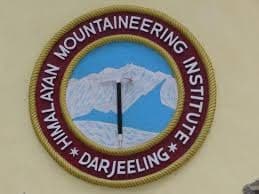
Himalayan Mountaineering Institute
Himalayan Mountaineering Institute
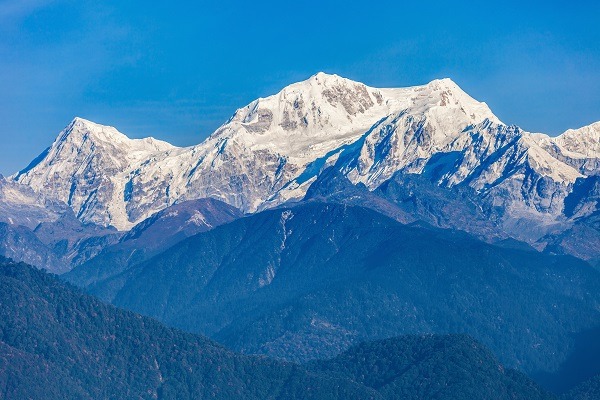
Mountaineering school and museum founded after the conquest of Everest, the HMI in Darjeeling traces the history of major Himalayan expeditions with Kangchenjunga as its backdrop.
The Himalayan Mountaineering Institute (HMI) is both an active mountaineering school and a premier museum dedicated to the conquest of the Himalaya. Located in Darjeeling, in northern West Bengal, it occupies Jawahar Parbat hill at approximately 2,100 metres altitude, facing the Kangchenjunga massif.
Why visit the HMI
The site brings together three dimensions rarely found in one place: a training campus where trainees practice on walls and rock faces, a history museum devoted to major Himalayan expeditions, and a viewpoint overlooking Kangchenjunga, the world's third highest peak. For travellers interested in mountaineering history or mountain culture, the visit illuminates the role played by India and Sherpas in the conquest of the eight-thousanders.
History of the institute
The institute was inaugurated on 4 November 1954, one year after the first ascent of Everest by Tenzing Norgay and Sir Edmund Hillary. Its creation was driven by Prime Minister Jawaharlal Nehru's vision to establish a dedicated mountaineering school for India following the global impact of the 1953 expedition.
Tenzing Norgay, who became a national hero, was appointed first field director and left a lasting imprint on the HMI's spirit: a place where technique is transmitted alongside a certain wisdom in the face of the mountain. Since its founding, the institute has trained over 50,000 students, both Indian and foreign, through various curricula.
The flagship programme lasts 10 days and combines trekking, climbing, navigation and camping. Open to both young people and adults, it offers a first immersion in high-altitude mountaineering with an emphasis on teamwork and environmental respect.
What to see on the site
The campus features a 15-metre by 6-metre outdoor climbing wall, an indoor wall and an obstacle training area. Just a few minutes away, on the Lebong Cart Road, Tenzing and Gombu rocks serve as open-air climbing grounds. Depending on the training schedule, you may observe students in action.
The HMI museum, founded in 1957, ranks among India's oldest mountaineering museums. It spans two levels:
- Ground floor: large relief model of the Himalayan range, collections of ice axes, clothing, alpine club insignia and expedition equipment used by pioneers, as well as sections on Himalayan wildlife and peoples.
- Upper floor: Everest and Makalu section recounting major expeditions, including that of Tenzing Norgay and Edmund Hillary in 1953, with original equipment and full-scale reconstructions of crevasse crossings.
Outside the museum, you will find the statue of Tenzing Norgay, inaugurated by Sir Edmund Hillary in 1997, a historic telescope and a chorten dedicated to Nawang Gombu. A restaurant, tea salon and gift shop complete the site.
Practical information
The HMI can be visited in a few hours; plan for approximately 1h30 to 2h30 including the museum and a tour of the outdoor facilities. The site is normally open throughout the week except for one day of closure; as hours and rates may change, it is best to verify on arrival. Entrance fees remain modest, with differentiated pricing for Indian and foreign visitors.
When to visit
The best periods to visit the HMI or undertake training span March to May and September to November. The sky is usually clear, temperatures mild and views of Kangchenjunga often unobstructed in early morning. The summer monsoon (June-August) brings rain and mist, while winter can be very cold at this altitude.
How to get there
The institute is located approximately 3 km from Darjeeling town centre, at Jawahar Parbat. Two main options from the town:
- On foot: from the Mall Road, at Chowrasta, take the Jawahar Road. Plan for approximately 30 minutes' walk through wooded heights.
- By taxi: private or shared taxi from Chowk Bazaar, in the lower part of town. A quicker journey, useful for visitors less acclimatised to altitude.
The nearest airport is Bagdogra (IXB), approximately 3 hours' drive from Darjeeling. New Jalpaiguri railway station (NJP), near Bagdogra, offers an alternative for reaching the region.
What to see around Darjeeling
Darjeeling and its surrounding area offer other points of interest to combine with a visit to the HMI:
- The Padmaja Naidu Himalayan Zoological Park, an immediate neighbour to the institute and accessible with the same ticket depending on current policy.
- The Darjeeling Himalayan Railway, a UNESCO World Heritage site.
- The tea plantations of the valley and the viewpoint of Tiger Hill at sunrise.
To expand your itinerary in northern India, also consult our guide to Darjeeling or pages dedicated to the ghats and Bara Imambara in Lucknow.
Frequently asked questions
Frequently asked questions
It is situated at Jawahar Parbat, approximately 3 km from Darjeeling town centre, at 2,100 metres altitude, with views of Kangchenjunga.
Allow 1h30 to 2h30 to explore the museum and outdoor facilities at a leisurely pace.
Bagdogra airport (IXB), approximately 3 hours' drive from Darjeeling.
March to May and September to November, when skies are generally clear and temperatures favourable for outdoor activities.
Yes, the institute welcomes foreign trainees on its introductory and advanced courses, including the 10-day programme combining trekking, climbing, navigation and camping.
Preparing your trip
The HMI fits naturally into an itinerary combining Darjeeling, Sikkim and the Bengal plains. To plan a bespoke stay including this destination, consult our suggestions for trips to India.
Interested in this visit?
We can include it in your personalised itinerary.