Bekal Fort
Bekal Fort
Kerala's largest fort, built around 1650 by the Nayaks of Keladi, Bekal Fort dominates the Arabian Sea south of Kasaragod.
Bekal Fort stands at the far north of Kerala, on the Arabian Sea coast, roughly fifteen kilometres south of Kasaragod. With its 16 hectares of ramparts encircling a rocky spur facing the ocean, it is the largest fort in Kerala, and one of the few Indian forts designed exclusively for military purposes, without palatial function.
Why visit Bekal Fort
Bekal is not a fortified palace converted to other uses, as so many Indian citadels are: it is a purely defensive stronghold, conceived to withstand sieges and monitor Arabian maritime traffic. Its semi-circular bastions, loopholes, underground reservoir and secret tunnel tell the story of an intact military logic.
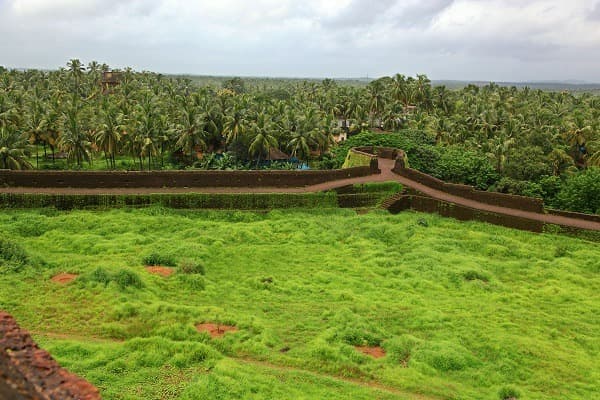
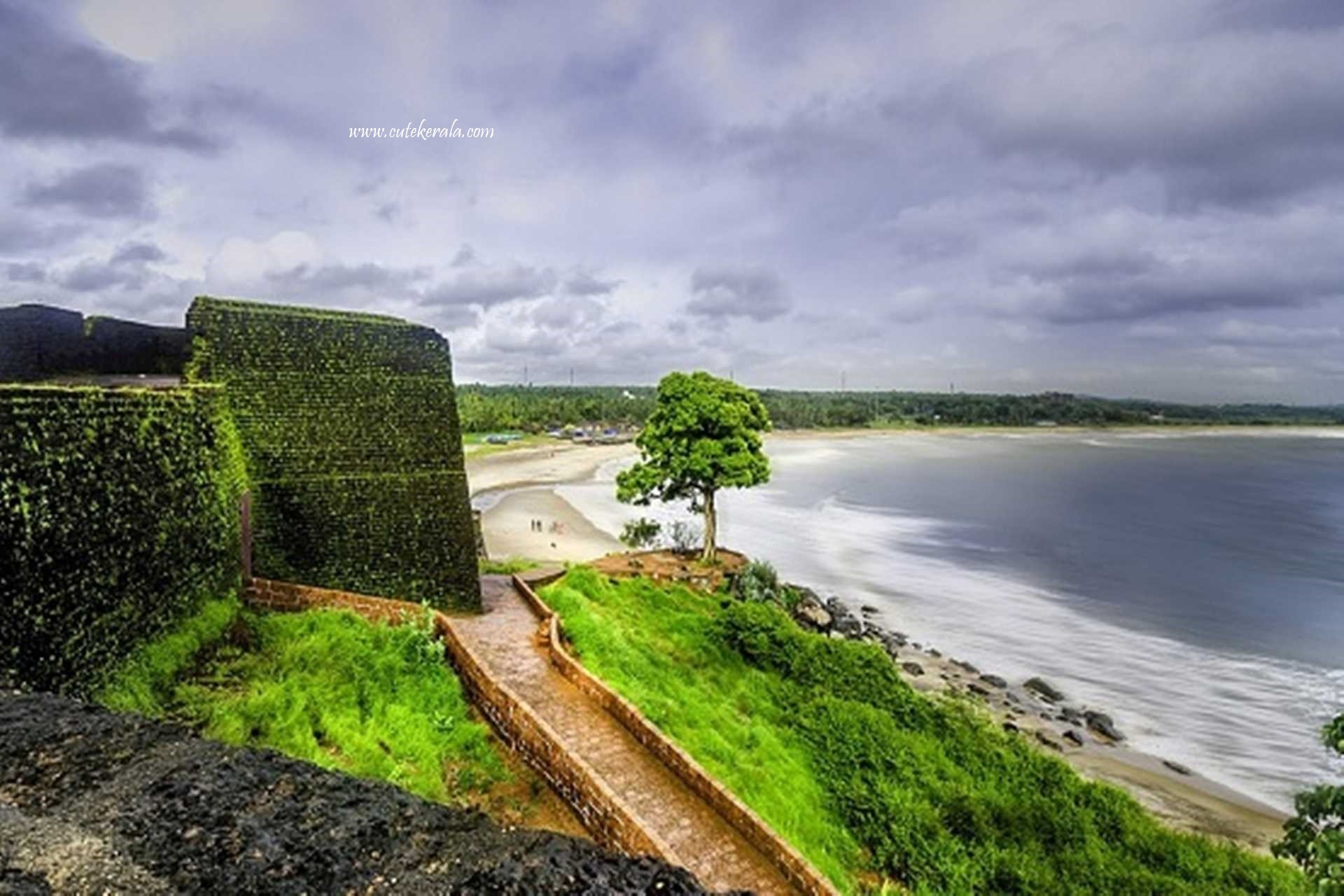
The site also appeals through its distinctive silhouette, a rounded polygonal shape often likened to a key, and its setting: ramparts covered in grass, open views to the ocean, coconut plantations in the background. The fort has moreover served as a set for Indian cinema, which has contributed to its national prominence.
History of the fort
Bekal Fort was built around 1650 by the Nayaks of the Kingdom of Keladi, a dynasty descended from the Vijayanagar empire that then controlled part of the west coast. The objective was clear: lock down the Kasaragod coast, defend maritime trade, and stand against neighbouring powers. From the outset, the structure was conceived as pure military architecture, without royal apartments or ceremonial function.
In the 18th century, the fort fell under the authority of the Mysore Sultanate. Tipu Sultan, one of the last sovereigns to resist British expansion in India, incorporated it into his coastal defensive network and had a mosque built in immediate proximity. After Tipu Sultan's death in 1799, during the Fourth Anglo-Mysore War, the fort passed under British control. It lost its strategic role and gradually fell into dormancy.
From the 1990s onwards, the site underwent restoration campaigns. It is now managed by the Archaeological Survey of India, which ensures its conservation and public access.
What to see on site
The ramparts and cannons
The walls encircle the promontory entirely. Several metres thick and standing around 10 metres high, they are pierced with loopholes and gun emplacements. Over 60 cannons were once positioned here to cover the sea and land approaches. A walk along the rampart path offers continuous views over the coastline.
The observation tower
This circular tower occupies the fort's highest point, in a central position. It is reached by a stone staircase. It served to monitor enemy movements both on land and at sea; today it is the best vantage point for grasping the overall organisation of the fortress and the surrounding coastal geography.
The underground water reservoir
Cut directly into the rock, this reservoir allowed for storage of rainwater in quantities sufficient to sustain a prolonged siege. This type of installation, essential for fortresses without nearby water sources, testifies to the ambitious defensive aims of the site.
The secret tunnel
Now closed to the public for safety reasons, this tunnel allowed for discrete exit from the fort in case of attack, passage of messengers or movement of reinforcements. Its existence confirms Bekal's strictly military purpose.
The bastions
Several semi-circular bastions line the ramparts. The most imposing faces the sea and was the centrepiece of the coastal artillery system. Some remain accessible and offer clear views over the ocean.
The Hanuman temple
Within the enclosure stands a small temple dedicated to Hanuman, the Hindu deity associated with strength and loyalty. Likely used by the garrison, it served the daily rituals of soldiers rather than public worship.
The Tipu Sultan mosque
Just outside the fort, the mosque built by Tipu Sultan recalls the Mysore episode in the site's history. The immediate proximity of Hindu temple and mosque illustrates the composite character of the Kasaragod region's heritage.
Practical information
The fort can be visited in half a day. Allow 1h30 to 2h30 depending on your pace and time spent on the ramparts. The site, open daily during daylight hours, charges modest admission, higher for foreign visitors than for Indian nationals. Check current opening hours with the Archaeological Survey of India before your visit.
Bring a hat, water and closed-toe shoes: the ramparts offer little shade and heat can be intense at midday. Once the site is explored, the adjacent beach lined with coconut palms allows you to extend your outing in a setting typical of Kerala.
When to go
The Kerala coast's climate is marked by a southwest monsoon very active from June to September, with heavy rains that make visiting less pleasant and may close parts of the fort. The most favourable period runs from October to March, when the weather is dry and temperatures more moderate. April and May remain manageable but are hot and humid. Favour visits early in the morning or late in the afternoon to enjoy soft light on the ramparts.
How to get there
Kasaragod railway station, located about 16 km from the fort, sits on the Kozhikode–Mangalore–Mumbai rail line, making it the most practical option for reaching the region. From the station, the fort is reached by local bus, taxi or rickshaw. The station closest to the site itself is Bekal Fort station, served by certain regional trains.
Useful airports are those of Mangalore, roughly 70 km to the north, and Kannur, further south. The coastal road running along northern Kerala also allows arrival by car from Kochi or Calicut.
To see in the region and beyond
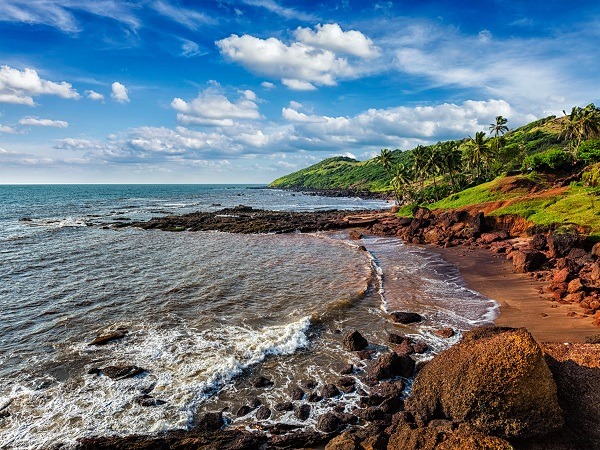
Northern Kerala and India's west coast offer several natural extensions to a visit to Bekal Fort. If you head up towards Goa, Anjuna Beach offers quite a different face of the coastline. On the heritage side, the Alchi Monastery in Ladakh and Bagore Ki Haveli in Rajasthan round out the panorama of Indian historical architecture. For lesser-known archaeological sites, Bahoriband and the Ajit Singh Memorial deserve a detour.
Frequently asked questions
Frequently asked questions
Allow 1h30 to 2h30 to tour the ramparts, climb the observation tower and see the Hanuman temple. Adding the adjacent beach, plan for a half-day.
Yes, the site charges modest admission managed by the Archaeological Survey of India, with a differential rate for foreign visitors. Enquire on site for current conditions.
Tipu Sultan, ruler of Mysore, took control of the fort in the 18th century and integrated it into his coastal defensive network against the British. He also had the mosque built just outside the enclosure.
The adjacent beach, lined with coconut palms, is accessible and pleasant for a walk. Swimming is possible but currents and lack of regular supervision call for caution.
October to March, outside monsoon season. Rains from June to September make visiting less comfortable and may restrict access to certain parts of the site.
Planning your trip
Bekal Fort integrates naturally into an itinerary combining northern Kerala and India's west coast. To build a tailor-made stay blending heritage, beaches and countryside, consult our journeys in India.
Interested in this visit?
We can include it in your personalised itinerary.