Bagore Ki Haveli
Bagore Ki Haveli
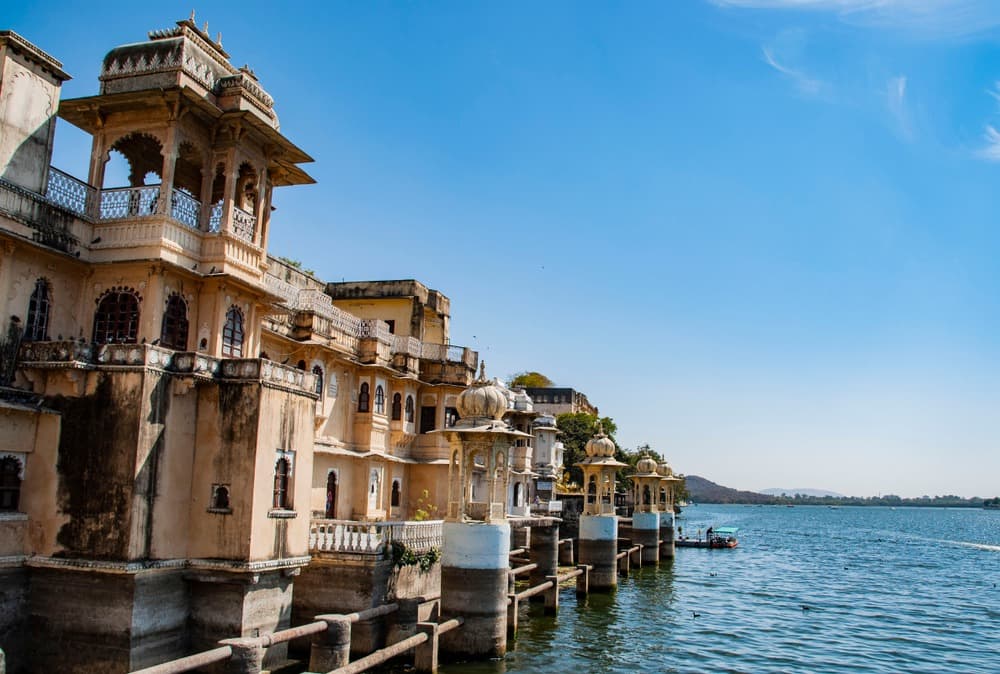
An aristocratic residence from the 18th century overlooking Lake Pichola, Bagore Ki Haveli houses a five-section museum and a traditional Rajasthani folk dance performance.
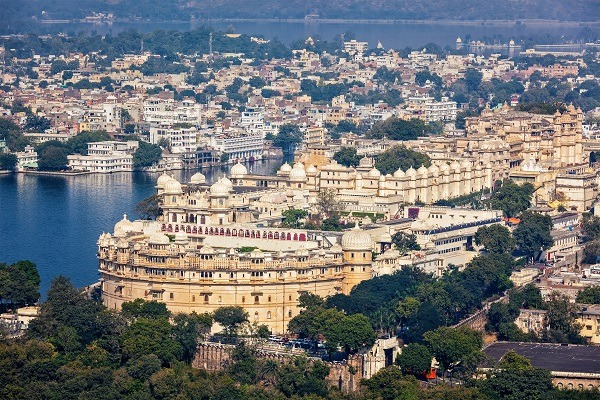
Overlooking Lake Pichola, just steps from Gangaur Ghat, Bagore Ki Haveli occupies one of Udaipur's most iconic locations. This 18th-century aristocratic mansion, now a museum, preserves 138 rooms arranged around inner courtyards and illustrates the daily life of Mewar nobility through frescoes, furniture and ornamental objects.
Why visit Bagore Ki Haveli
The haveli brings together three points of interest rarely found in one place: preserved Rajasthani architecture, a thematic museum divided into five sections, and an evening folk dance performance. Its location on the ghats allows you to include it in a walking tour around the lake, alongside the City Palace and Jagdish Temple, both just minutes away.
Unlike purely monumental palaces, Bagore Ki Haveli remains human in scale. The rooms provide a concrete sense of the domestic life of royal ladies, musicians and craftspeople, making it an educational stop for understanding Rajput culture before or after visiting the city's major sites.
History of the haveli
The building was constructed between 1751 and 1778 by Amar Chand Badwa, Prime Minister of the Mewar kingdom under the successive reigns of Maharanas Pratap Singh II, Raj Singh II, Ari Singh and Hamir Singh. Designed as a noble residence, the haveli originally contained 138 rooms organized around several courtyards.
Upon Amar Chand Badwa's death, the property passed to the Mewar royal family. It became the residence of Maharaj Nath Singh, brother of the reigning Maharana, within the Bagore Thikana. In 1878, Maharaj Shakti Singh added the triple-arched gateway marking the current entrance; it was at this time that the building officially adopted the name Bagore Ki Haveli.
The haveli remained the property of the Mewar sovereigns until 1947. After independence, it was used to house government officials from Rajasthan, then abandoned for nearly forty years, causing serious deterioration. In 1986, the building was entrusted to the West Zone Cultural Centre (WZCC) for restoration. Five years of work were necessary: teams used only traditional materials, lakhori bricks and lime mortar, and discovered beneath layers of plaster 18th and 19th-century frescoes, carefully restored.
What to see
Interior architecture
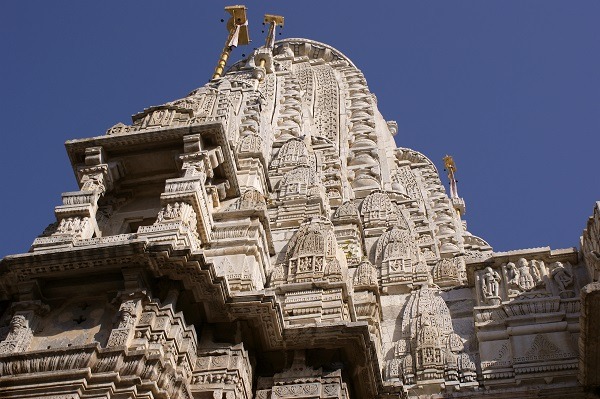
The haveli illustrates classical Rajasthani style: open courtyards, carved balconies, projecting jharokhas, arcades and domes. Interiors combine mirror work and colored glass. In quarters reserved for royal ladies, two peacocks in colored glass mosaic rank among the finest decorative elements. The Sheesh Mahal, or Hall of Mirrors, exploits light reflection across thousands of fragments inlaid in the walls and ceiling.
Other rooms deserve attention: the Sangeet Kaksh, a music room where royal women played the santoor, dholak and sarangi; and the Shringar Kaksh, a dressing room housing carved wooden trunks and perfume bottles used by the princesses.
The museum's five sections
- Puppet Museum: collection of traditional Rajasthani puppets, with a miniature recreation of the royal court.
- Haveli Museum: private apartments of royal ladies, bedrooms, sitting rooms and kitchens in period decor.
- Turban Museum: overview of styles worn in Punjab, Haryana, Rajasthan and Gujarat.
- Weapons Museum: decorated swords, daggers and shields used during historical battles in the region.
- Wedding Museum: stages of traditional Rajasthani marriage represented by dolls and puppets.
Complementary displays showcase jewelry boxes, hookahs, board games, dice, pan boxes, fans, rose water atomizers and copper vessels.
The Dharohar performance
Each evening, the Neem Chowk courtyard hosts the Dharohar performance, dedicated to Rajasthani folk dances and music. The audience sits on large floor mattresses around the stage. The program features Ghoomar, Chari, Terha Taal, Gorbandh, Bhavai and a puppet performance. Access to the performance requires a separate ticket from the museum, with differentiated rates for Indian and international visitors.
Practical information
The site is open daily during the day for museum visits, and in early evening for the performance. Hours may vary during festivals and special occasions: it is best to check on-site or with your guide the day before your visit. Pricing distinguishes Indian residents from international visitors, with an additional charge for photography. Allow 1.5 to 2 hours to tour the museum at a leisurely pace, and about an additional hour if you stay for Dharohar.
The haveli is located on Gangaur Ghat Marg, near Udaipur's historic center. The railway station is about 2.5 km away, Maharana Pratap Airport about 25 km. Auto-rickshaws, taxis and cars with drivers easily access the site; as neighboring lanes are narrow, drop-off often occurs a few dozen meters from the entrance.
When to visit
Udaipur is best explored between October and March, when temperatures remain pleasant during the day and cool in the evening — ideal for attending Dharohar outdoors. April and May are hot, with difficult afternoons; daytime visits are preferable then. The monsoon, from July to September, cools the air and fills Lake Pichola, but can bring evening showers that may cut short the performance.
Nearby attractions
Bagore Ki Haveli is part of a collection of walkable sites around Lake Pichola: Gangaur Ghat directly in front, City Palace minutes away, Jagdish Temple in the heart of the old town. To further explore Rajasthan and its fortresses, also consider Alwar Fort Bala Quila or, further west, Amar Sagar Lake near Jaisalmer. Visitors interested in military history may add the Ajit Singh Memorial.
Frequently asked questions
Frequently asked questions
Preparing your trip
Bagore Ki Haveli integrates easily into an itinerary focused on Rajasthan, alongside Udaipur's major sites, Jodhpur and Jaisalmer. To build a customized itinerary including this stop, consult our India travel suggestions.
Nearby
Interested in this visit?
We can include it in your personalised itinerary.