Bundi
Bundi
Nestled between Jaipur and Udaipur, Bundi reveals its Rajput frescoes, centuries-old stepwells and blue houses, far from Rajasthan's mass tourism.
Bundi sits midway between Udaipur and Jaipur. The well-preserved character of its architectural heritage will transport visitors into a timeless setting. Once nicknamed the "City of Springs," today known as the "blue city," Bundi seems tucked at the foot of its palace and fort, gradually spreading down to its bazaar. A town of character still spared from mass tourism, Bundi makes the perfect base for discovering Northern India and encountering a fascinating culture, well off the beaten path.
A brief history
Bundi takes its name from Bundi Meena, a chief of the Meena tribe who ruled the region before the arrival of the Rajputs. In 1193, after Prithviraj Chauhan's defeat to Mohammad Ghori, part of the Chauhan nobility fled to Mewar in search of safe refuge.
However, other bolder leaders decided to set out to conquer new territories. In the Chambal River valley, they succeeded in subjugating the Bheel and Meena tribes before establishing their dominion over the kingdom of Hadoti.
Much later, during the reign of Jahangir, Bundi was divided into two territories: Kota and Bundi. Although the city lost some prestige, overshadowed by Kota, Bundi remained independent within the British administration. Later, following India's independence declaration, the city was incorporated into the State of Rajasthan.
What to see and do in Bundi?
Today, this destination has preserved the imprint of its glorious past through its forts, palaces and havelis adorned with frescoes. Here are some essential sites and monuments to visit during a trip to India:
Bundi Palace (Garh Palace)
Dominating the city from above, Garh Palace is an architectural jewel of Rajasthan. Built in the 17th century by the Hada Rajputs, it is celebrated for its magnificent murals depicting scenes of royal life and Hindu legends. One of the most impressive rooms, the Chitrashala, is decorated with dazzling paintings in blue and gold hues, illustrating Hindu mythology and royal festivities. This palace, which has endured through the centuries, bears witness to the grandeur of the Maharajas of Bundi and their love for art.
Taragarh Fort
Perched on a hill overlooking the city, Taragarh Fort is an imposing structure offering breathtaking views of Bundi and its surroundings. Built in 1354, it is renowned for its underground tunnels and massive bastions. Despite being partially in ruins, the fort remains an impressive testament to Rajput military architecture.
The Baoris (Stepwells)
Bundi is often called the "city of Baoris" because of its many stepwells, fascinating structures that once served to store rainwater. Among the most remarkable are:
- The Raniji ki Baori: Built in 1699 by Queen Nathavati, this well adorned with sculpted arches and pillars is one of the finest in Rajasthan.
- The Dhabhai Kund: Known for its complex geometric patterns, it is a unique architectural marvel.
The Bundi Cenotaph
Slightly to the southeast entrance of the city, the cenotaph is an impressive monument dedicated to former members of Bundi's royal family. Its refined architecture and detailed sculptures make it an essential site for art and history enthusiasts.
Jait Sagar Lake
Surrounded by verdant hills, this artificial lake offers a peaceful setting, ideal for boating or picnicking. Floating lotus flowers and local wildlife, notably peacocks, add to its picturesque charm.
Frescoes and mural paintings
Bundi is a true open-air museum. The walls of havelis, temples and palaces are adorned with refined paintings depicting epic scenes from the Ramayana and Mahabharata, royal processions and traditional dances.
Sadar Bazaar
After visiting the fort, palace and ramparts, once you've satisfied your wanderlust in the winding lanes, and greeted the primates and bovines, it's time to indulge in some souvenir shopping. At Sadar Bazaar, the shops offer you the finest chai in all of India, but also a plethora of handicrafts that will surely brighten your home.
Bundi and Rudyard Kipling
The writer Rudyard Kipling, famous for The Jungle Book, stayed briefly in Bundi. He was fascinated by the city's unique atmosphere and drew inspiration from its landscapes and architectural heritage to describe certain scenes in his works.
Festivals and local culture
Bundi is a vibrant center of Rajasthani traditions and festivals:
- Bundi Utsav (November–December): This festival celebrates local culture with folk dances, camel races, craft exhibitions and a grand fireworks display.
- Teej Festival (July–August): Dedicated to the goddess Parvati, it marks the onset of the monsoon with colorful processions and traditional songs.
The flavors of Bundi
Bundi's cuisine reflects Rajasthani influences, with dishes rich in spices and flavors. Among the must-tries are:
- Dal Baati Churma: Baked wheat balls served with lentil curry and a sweet dessert made with flour and ghee.
- Gatte ki Sabzi: A curry of chickpea flour dumplings in a spiced yogurt sauce.
- Laal Maas: A spicy lamb stew typical of Rajasthan.
- Rabri: A thickened milk dessert, often infused with cardamom and pistachios.
Tea lovers will appreciate the masala chai served in the city's bustling lanes.
Today
Bordered by hills dotted with ramparts, Bundi is part of the Rajput territory and remains an emerging tourist destination, already thriving, for travelers. Life continues peacefully here, in a welcoming atmosphere. Unlike other Indian cities where traffic is chaotic, Bundi presents itself as an escape bubble where it's pleasant to stroll.
Clad in dhotis, heads held high beneath colorful turbans, sporting refined mustaches, the Rajputs of the region cut a fine figure. You'll see them in the small squares of the old city, conversing calmly over chai, bidis in hand. Their bearing and body language are sure to impress you. Without question, the Rajputs, along with the Sikhs, represent the quintessence of Indian elegance.
Their leader, the Raja of Bundi, once resided in a small palace. While less imposing compared to structures in Jodhpur, this palace and its fort impress through their architecture and history. At the foot of these monuments, the old elephant stables have been converted into budget hotels—unconventional lodgings perhaps, but offering impeccable comfort. In these small inns, you'll have the privilege of tasting local gastronomy during a candlelit dinner.
In Bundi, besides the noble Rajputs and farm animals, your neighborhood will include monkeys. Fortunately, you'll see some frolicking on the city's rooftops, but if you really wish to encounter them, head toward the surrounding hills. Armed with a stick, an essential accessory for hiking around Bundi, have fun tapping the ground to attract their attention while being careful not to frighten them. Also admire the breathtaking view of the region. Like a miniature version of Jodhpur, the blue city unfolds in all its splendor. It is the homes of the Brahmins that give the city this distinctive hue.
Climate
Bundi experiences a steppe climate classified as BSh according to the Köppen–Geiger climate map. Year-round precipitation is relatively low, averaging 772 mm. Temperature-wise, the average is 26.5 °C.
The best time to visit the city is between October and March, when temperatures are milder and more pleasant. The monsoon (July–September) brings a touch of freshness and brings out the beauty of the surrounding hills.
Bundi is well connected to major cities in Rajasthan and central India. The nearest airport is Jaipur, situated approximately 210 km away. Bundi railway station is served by several trains connecting the city to Chittorgarh, Udaipur, Delhi, Jaipur, Kota and Agra. It forms part of Rajasthan's main railway lines. By road, buses and taxis are available from Kota (35 km), Udaipur (260 km) and Jaipur (210 km).
The city of Bundi is compact and easily explored on foot. However, to visit more distant sites, several options are available:
- Rickshaws: An economical and practical way to get around the old city.
- Bicycle or scooter rental: Ideal for exploring the surroundings at your own pace.
- Private taxis: Recommended for excursions to nearby villages and historical sites.
Attractions in Bundi
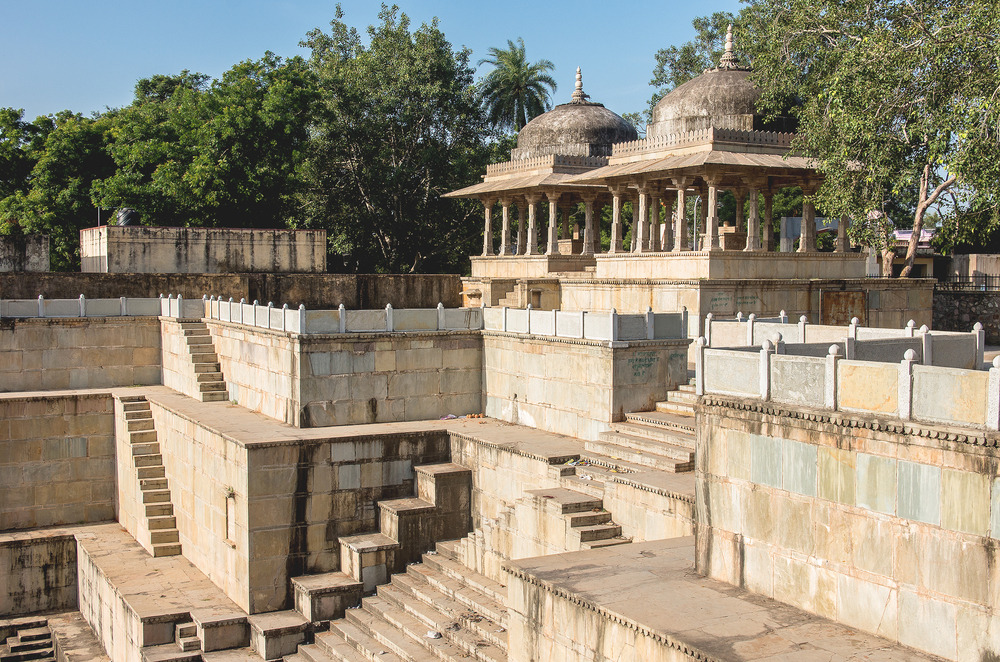
Dabhai Kund
Le Dabhai Kund, puits à degrés monumental de Bundi, illustre l'ingénierie hydraulique du Rajasthan. Accès libre, ambiance calme, géométrie remarquable.
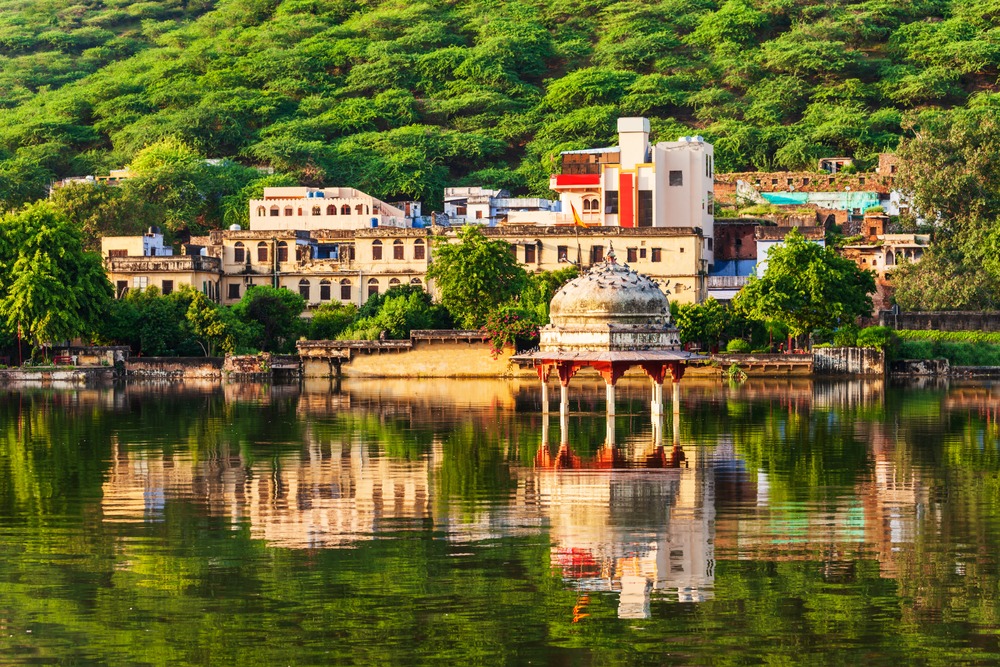
Lac Nawal Sagar
Lac artificiel au centre de Bundi, le Nawal Sagar reflète les palais et forts de la ville et abrite un temple à demi submergé dédié à Varuna.
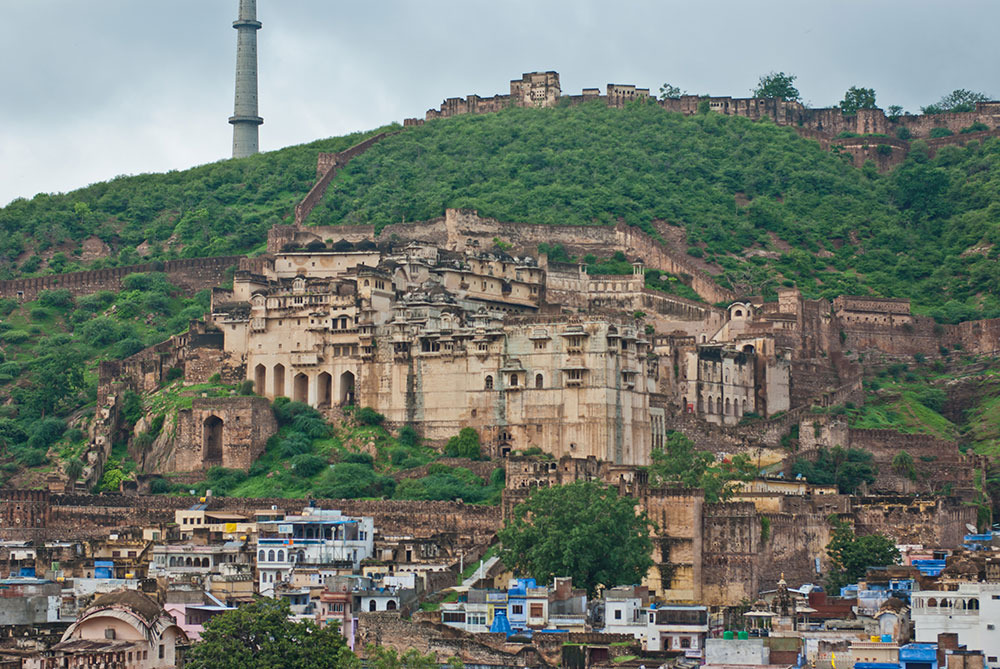
Fort Taragarh
Perché à 435 m au-dessus de Bundi, le Fort Taragarh, achevé en 1354, figure parmi les plus anciens forts du Rajasthan, avec son canon monumental et ses citernes taillées dans le roc.
Accommodation in Bundi
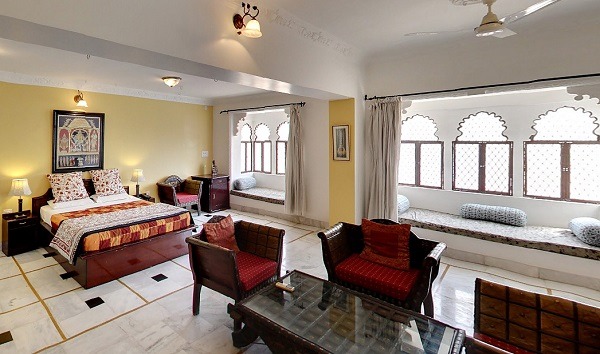
Hotel Bundi Haveli
Haveli patrimonial de 12 chambres à Bundi, face au palais Garh et au fort Taragarh, avec piliers sculptés et fenêtres jali réalisés par un artisan local.
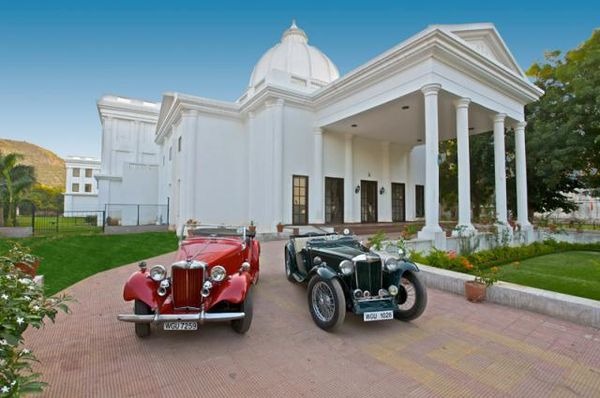
The Hadoti Palace
Sur Kota Road à Bundi, The Hadoti Palace marie architecture coloniale et inspirations rajasthani, face au fort de Taragarh, au cœur du pays Hadoti.
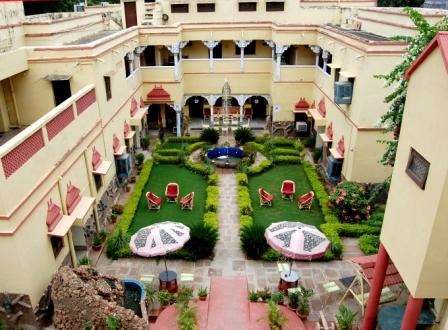
Ishwari Niwas
Haveli traditionnelle à Bundi liée à l'héritage Hada : 24 chambres autour d'une cour, peintures murales de style Bundi et cuisine végétarienne du Rajasthan.
Want to discover this destination?
Our local advisors design your tailor-made trip.