Tsomgo Lake (Changu Lake)
Tsomgo Lake (Changu Lake)
A sacred glacial lake at 3,753 meters altitude, 40 km from Gangtok, Tsomgo freezes in winter and is adorned with rhododendrons in spring. A permit is mandatory for foreign visitors.
Tsomgo Lake, also known as Changu Lake, lies approximately 40 km east of Gangtok in the state of Sikkim at an altitude of about 3,753 meters. This elongated glacial lake remains frozen for part of the winter and shifts in color throughout the seasons. Revered as a sacred site by local communities, it is surrounded by rhododendrons, conifers, and snow-capped peaks. Foreign visitors are required to obtain a special permit to visit.
Quick facts and essentials
- Altitude: approximately 3,753 m — pack warm clothing even in summer.
- Permit required: foreign nationals must obtain a Protected Area Permit (PAP) through an authorized agency in Gangtok.
- Access: via NH10 highway from Gangtok; shared vehicles and private taxis available from Gangtok.
- Recommended duration: half-day (travel time plus lake visit).
- Best time to visit: March-May (rhododendrons in bloom) and October-November (clear skies).
- Possible closures: the road may be impassable in winter (December-February) due to heavy snowfall.
What to see
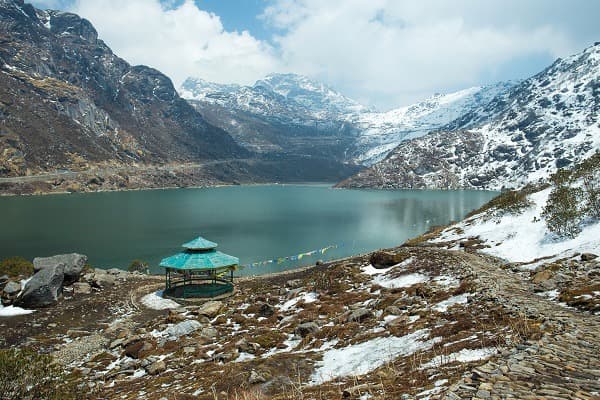
The lake stretches for roughly one kilometer within a mountain cirque. Its waters shift from deep green to slate blue depending on light and season. In winter, the surface freezes partially. Decorated yaks await visitors for rides along the shore. Stalls offer warm clothing for rent and local specialties such as yak butter tea.
History and context
The lake is venerated by Buddhists and Hindus across Sikkim. According to local tradition, lamas once read omens for the coming year in the color of its waters. The site is also tied to the Indian military presence in the border region with China, which explains the access restrictions for foreign visitors.
Highlights of your visit
The lake in winter
Between December and February, the surface becomes encased in ice and snow blankets the shoreline. Access is unpredictable depending on road conditions, but the landscape is dramatic for those able to reach it.
Rhododendron bloom
From March to May, the slopes surrounding the lake burst into red and pink rhododendrons. This is the most colorful and photographed season of the year.
The small temple by the water
A small Buddhist sanctuary stands on the shore. Colorful prayer flags flutter year-round, adding a spiritual dimension to this natural setting.
Etiquette and visitor rules
- Respect the Buddhist shrine: do not touch offerings or prayer flags.
- Do not litter in the lake — this is a protected site and waste is strictly forbidden.
- Drones are subject to military restrictions in this border zone; check regulations before flying.
Photography tips
Early morning light, before tour groups arrive, offers crisp reflections on the water. In autumn, skies are typically clearer than in summer. Position yourself to the east to capture snow-capped peaks as your backdrop. Avoid midday in summer: haze and clouds often obscure the ridges.
Location and access
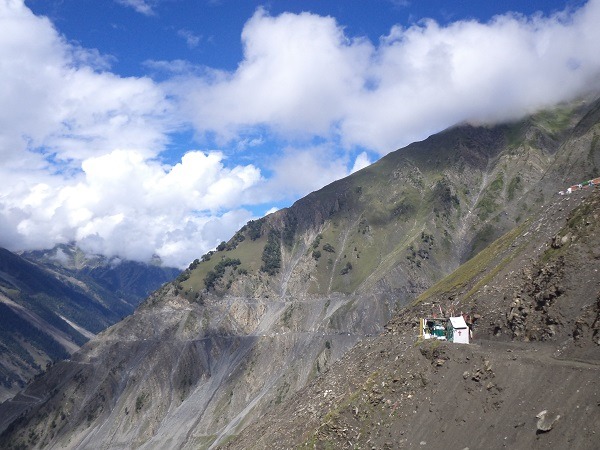
Tsomgo Lake is situated on the Nathula road, approximately 40 km from Gangtok. The road winds upward through conifer forests and alpine scenery. Shared taxis and private vehicles depart regularly from central Gangtok in the morning. The journey takes about 1 hour 30 minutes depending on conditions. Accessibility for people with limited mobility is constrained: the terrain around the lake is irregular and unimproved.
In the surrounding area
- Nathula Pass — about 15 km beyond the lake, this border pass with China at 4,310 m is accessible to Indian nationals and foreign visitors with the proper permit.
- Gangtok — the capital of Sikkim and the essential starting point for arranging your permit and transport.
- Rumtek Monastery — one of Sikkim's most significant Buddhist monasteries, about 24 km from Gangtok.
Frequently asked questions
Yes, but a Protected Area Permit (PAP) is mandatory. It is obtained through an authorized travel agency in Gangtok. Plan to secure this before your arrival.
March-May for blooming rhododendrons, and October-November for clear skies and crisp reflections on the water. Winter is spectacular but road access can be cut off by snow.
Yes, both sites lie on the same route. An additional permit is required for Nathula. Many travelers visit both in a single day from Gangtok.
Warm layered clothing is essential, even in summer. At 3,753 m, temperatures drop rapidly, especially with wind or cloud cover.
Photography is generally permitted around the lake. However, avoid photographing military installations along the road. Drones are subject to strict restrictions in this border zone.
At 3,753 m, some visitors experience headaches or breathlessness, particularly if arriving directly from low elevation. Ascend gradually from Gangtok and stay well hydrated.
Photos
Want to discover this destination?
Our local advisors design your tailor-made trip.