Ghats
Ghats
Ghats, sacred staircases descending to the Ganges or sacred lakes, structure the ritual life of Varanasi, Haridwar and Udaipur. Complete visitor's guide.
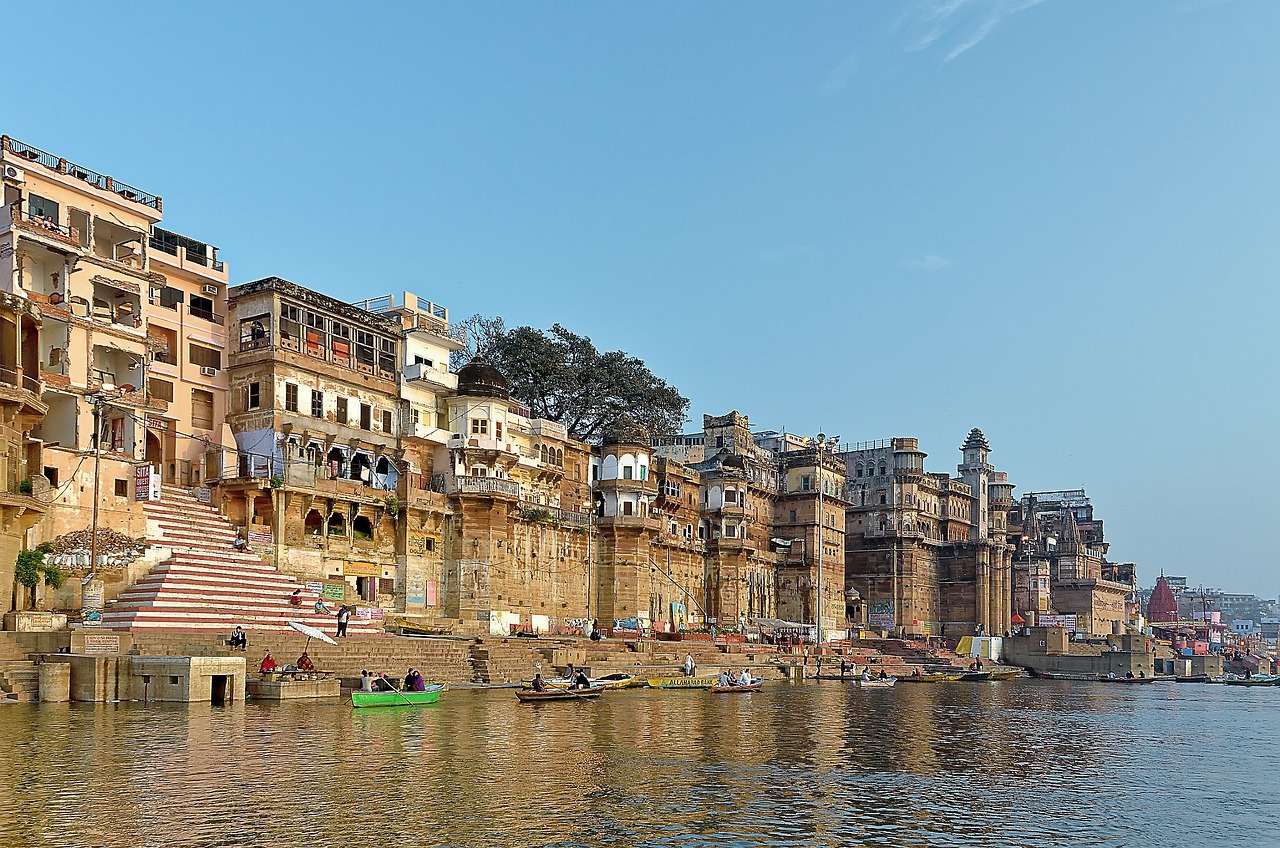
Ghats are flights of steps leading down to a river, lake or sacred basin. In India, they structure the ritual life of Hindu holy cities, particularly along the Ganges in Varanasi and Haridwar, but also on the shores of Lake Pichola in Udaipur. More than merely staircases, they are spaces where devotion, ablutions, cremations and daily life intersect.
Why visit the ghats
The ghats offer one of the most eloquent windows into living Hindu spirituality. In Varanasi, considered one of the world's oldest continuously inhabited cities, more than eighty ghats stretch for nearly seven kilometres along the Ganges. From dawn, you witness pilgrims immersed waist-deep performing their ablutions, priests conducting rituals beneath bamboo parasols, and funeral pyres burning continuously.
The term ghat refers to a series of steps leading to a body of water. The word, of Sanskrit origin and present in several Indian languages, also extends by association to the mountain ranges bordering the subcontinent: the Western Ghats and Eastern Ghats, which flank the Deccan plateau.
History and ritual significance
Ghats are typically found in holy cities such as Varanasi and Haridwar where the Ganges winds. Most of Varanasi's current ghats were built or rebuilt in the eighteenth century at the initiative of Maratha rulers, notably Ahilyabai Holkar and the Peshwas, following destruction during the Mughal period. Each ghat often belonged to a princely kingdom or priestly caste, which explains the diversity of their architectures.
In Hindu cosmology, dying in Varanasi and being cremated on Manikarnika Ghat would liberate the soul from the cycle of rebirths (moksha). Ablutions in the Ganges, believed to cleanse accumulated wrongdoings, remain a central act of pilgrimage. At Haridwar, Har Ki Pauri marks the point where the river leaves the Himalayas to enter the plains.
What to see on the ghats
The ghats of Varanasi
- Dashashwamedh Ghat: the most visited, home each evening to the Ganga Aarti, a ceremony of fire and chanting honouring the river.
- Manikarnika Ghat: the principal cremation ghat, active day and night. Photography is strictly forbidden and the site should be visited with restraint.
- Assi Ghat: at the southern end, quieter, popular for morning yoga and the Subah-e-Banaras ritual.
- Harishchandra Ghat: the second cremation ghat, older.
- Panchganga Ghat: crowned by the Alamgir Mosque, marking the symbolic meeting of five rivers.
The ghats of Udaipur
Udaipur's ghats, renowned for their beauty rather than pilgrimage traditions, border Lake Pichola below the City Palace. Four notable ghats attract visitors: Gangaur Ghat, bustling during the eponymous festival dedicated to the goddess Parvati, Ambrai Ghat, prized at sunset for its panorama of the Lake Palace, Laal Ghat and Nav Ghat. Unlike Varanasi, they are more urban promenade than religious ritual, though Gangaur retains a festive dimension.
Other remarkable ghats
At Haridwar, Har Ki Pauri concentrates evening rituals. Pushkar, in Rajasthan, boasts some fifty ghats around its sacred lake. Mathura and Vrindavan, linked to Krishna worship, line the Yamuna with their own series of steps.
When to visit
The most pleasant season to visit Varanasi and the Ganges basin runs from October to March: manageable temperatures, a calm river, clear skies. The monsoon (July-September) swells the Ganges, which can submerge the lower steps and interrupt ceremonies on the ghats.
Several religious occasions are worth planning around:
- Dev Deepawali (November, fifteen days after Diwali): Varanasi's ghats are illuminated by thousands of oil lamps.
- Kumbh Mela: the largest Hindu pilgrimage, rotating every three years among Haridwar, Allahabad (Prayagraj), Nashik and Ujjain.
- Gangaur (March-April) in Udaipur: female processions to Gangaur Ghat.
- Kartik Purnima (November): massive ritual bathing on all Ganges ghats.
Practical information
- Access: ghats are public spaces open permanently, with no entrance fee.
- Boat rides: in Varanasi, trips at sunrise or during the evening aarti offer the most meaningful experience. Plan for roughly one hour, to be negotiated directly with boatmen or through your accommodation.
- Dress code: shoulders and knees covered, both out of respect and to avoid unwanted attention.
- Photography: strictly forbidden on cremation ghats (Manikarnika, Harishchandra). Ask before photographing people in prayer.
- Health and sanitation: do not bathe in the Ganges at Varanasi; the water is heavily polluted. Wear closed shoes, as steps can be slippery or soiled.
- Evening aarti at Dashashwamedh: arrive an hour early for a seated spot, or book a boat to watch from the river.
Nearby attractions
From Varanasi, several sites complement a visit: Bara Imambara in Lucknow, a remarkable eighteenth-century Shi'a monument, and Bhedaghat in Madhya Pradesh, celebrated for its marble cliffs and waterfalls on the Narmada. Architecture enthusiasts will appreciate Chanderi, an ancient weavers' city, as well as Deeg Fort and the archaeological site of Bahoriband.
Frequently asked questions
Frequently asked questions
Preparing your journey
Ghats are best experienced as part of an itinerary combining spirituality, architecture and great rivers. To build a custom trip, explore our India travel suggestions.
Interested in this visit?
We can include it in your personalised itinerary.