Fort Kochi
Fort Kochi
Fort Kochi, the historic quarter of Kochi in Kerala, concentrates five centuries of Portuguese, Dutch, British and Chinese influences on the Malabar coast.
Fort Kochi designates the historic quarter of the city of Kochi, in the state of Kerala, in southwestern India. This port enclave concentrates five centuries of European and Asian influences, visible in its architecture, places of worship and its famous Chinese fishing nets aligned facing the Arabian Sea. It is also known by the names of Old Kochi or West Kochi.
Why visit Fort Kochi
Few Indian quarters superimpose as many historical layers over such a compact perimeter. Portuguese, Dutch, British and Chinese merchants left tangible traces: a 16th-century European church, spice warehouses, a British colonial club, and Chinese-origin fishing nets still in operation. The atmosphere remains that of a pedestrian port, conducive to strolling, shaded alleyways and weathered facades.
Travelers interested in colonial history, hybrid architecture and photography will find rich material here, without the tumult of major Indian cities. Fort Kochi lends itself to a walking visit over half a day to a full day.
History of Fort Kochi
Before the arrival of Europeans, Kochi was a fishing village under the authority of the local kingdom. In 1503, the Rajah of Kochi grants the Portuguese a territory that will become Fort Kochi. The latter build the Church of St. Francis and Fort Emmanuel, the first fortified European bastion on this stretch of coast.
In 1683, the Dutch seize the place and hold it for nearly 112 years, until 1795, when the British dislodge them. Foreign domination ends with Indian independence in 1947.
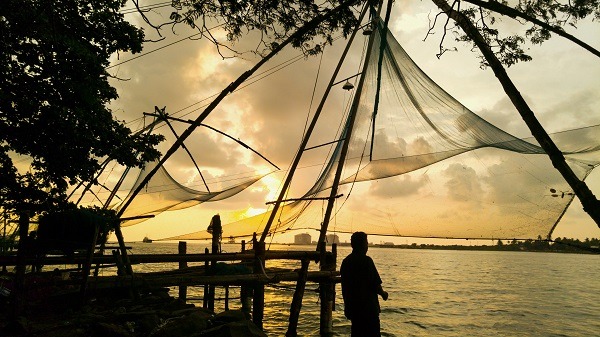
Chinese merchants, present since the early 14th century, left their most visible imprint with fishing nets mounted on wooden cantilever beams. The European nickname "Cochin" is sometimes linked to Chinese etymology, but other linguistic hypotheses, notably from the Malayalam kochazhi ("small lagoon"), remain debated.
What to see in Fort Kochi
St. Francis Church
Built by the Portuguese in the early 16th century, St. Francis Church is considered the oldest church of European construction in India. Vasco da Gama, who died in Kochi in 1524, was buried here before his remains were repatriated to Portugal; his tombstone is still visible inside the building.
Chinese Fishing Nets
Lined along the northern shore of the quarter, these immense fan-shaped nets are operated by stone counterweights and manned by several fishermen. They have been in operation since the arrival of Chinese merchants in the 14th century. The best time to observe them in motion is early morning or late afternoon.
Fort Emmanuel
Of the original Portuguese bastion, only fragments of walls remain along the waterfront. The site is freely accessible as part of a coastal promenade.
Cochin Club and Beach
The Cochin Club, set in a park, retains a British atmosphere with its library and collection of sporting trophies. Nearby, Fort Kochi beach offers a waterfront stroll along the Arabian Sea, frequented by locals in the late afternoon.
Practical Information
Fort Kochi is an open quarter at all times: there is no entrance fee or visiting hours for the perimeter itself. Individual monuments (St. Francis Church, Mattancherry Synagogue, Dutch Palace) have their own hours and, for some, a modest entry fee.
- Recommended visit duration: half a day to a full day
- Appropriate dress required to enter places of worship
- The quarter can be explored on foot or by rickshaw
When to Visit
Kerala experiences a tropical humid climate. The most comfortable period to visit Fort Kochi extends from November to March, when temperatures remain pleasant and rainfall is rare. The southwest monsoon, from June to September, brings abundant precipitation but also lush vegetation. April and May are hot and humid.
Nearby
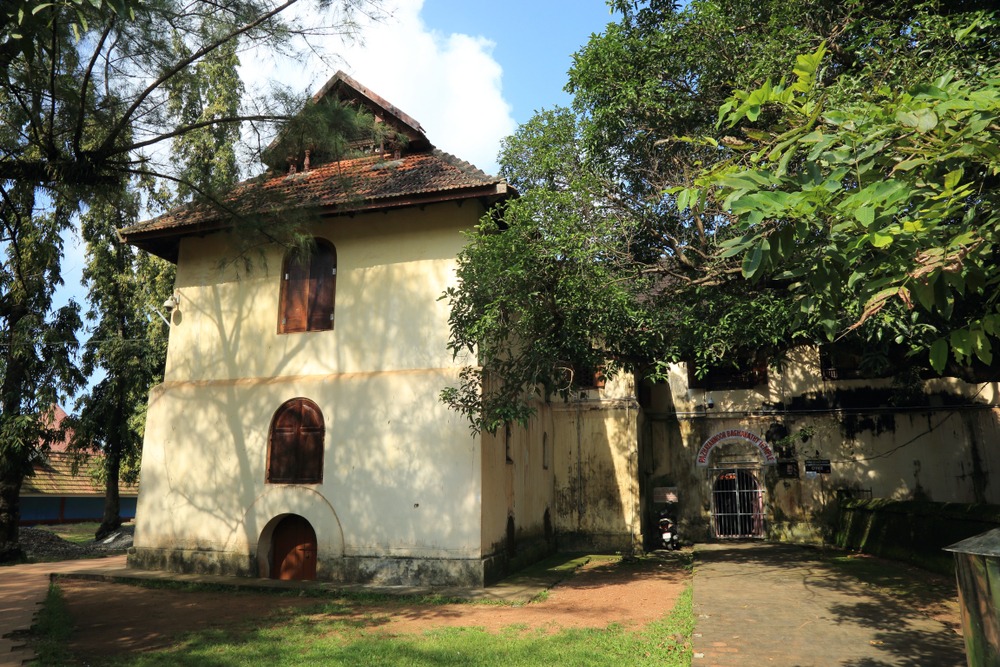
Mattancherry is located about 2 km south of Fort Kochi. The quarter is home to Jew Street and the former Jewish quarter around the Paradesi Synagogue, as well as active spice warehouses. The Dutch Palace, despite its name, was built by the Portuguese before being modified by the Dutch; it retains remarkable murals.
To further explore the religious and fortified heritage of South India, you may consult pages dedicated to the Basilica of St. Thomas and Bekal Fort, also located in Kerala. Lovers of Portuguese colonial architecture will find an interesting echo in Fort Aguada, in Goa.
How to Get There
Fort Kochi occupies a peninsula partially surrounded by water. Several access options are available:
- By boat: ferries connect Fort Kochi to Ernakulam and Vypeen jetties several times daily. This is the fastest option from the modern center of Kochi.
- By road: local buses, private taxis and rickshaws serve the quarter via the bridge connecting the peninsula to the mainland.
- Nearest airport: Cochin International Airport (COK), approximately 40 km northeast.
Planning Your Trip
Fort Kochi fits naturally into an itinerary in Kerala, between the backwaters, the tea plantations of Munnar and the Malabar coast. To build a customized stay, consult our India travel suggestions.
Interested in this visit?
We can include it in your personalised itinerary.