Bharat Bhavan
Bharat Bhavan
A major cultural centre in Bhopal inaugurated in 1982, Bharat Bhavan brings together an art museum, theatres and libraries under one roof in a building designed by Charles Correa.
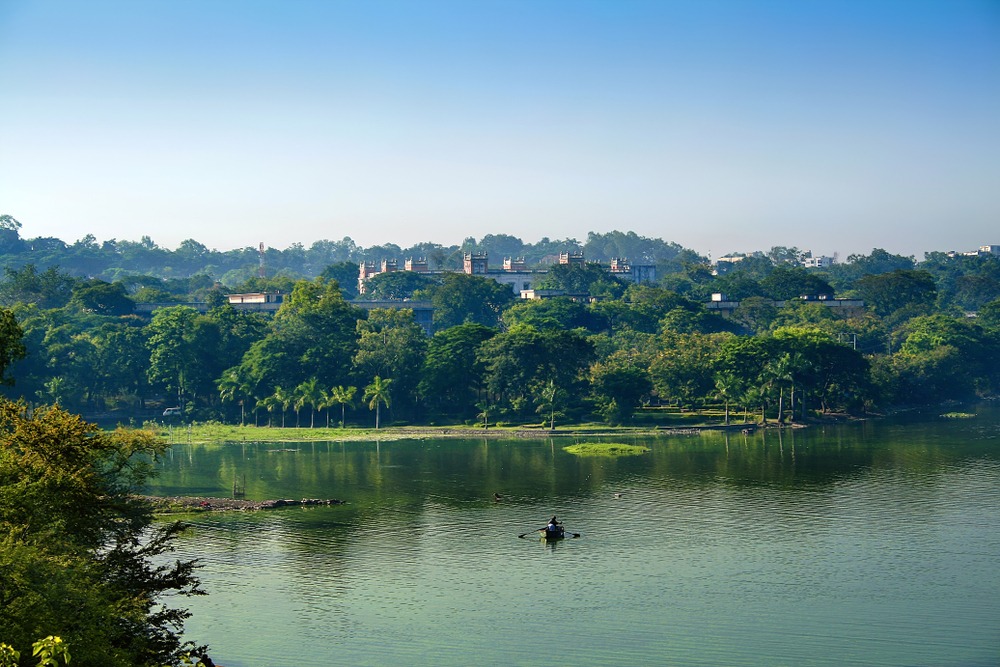
A multidisciplinary cultural centre located in Bhopal, capital of Madhya Pradesh, Bharat Bhavan houses an art museum, theatres, poetry and music libraries, and artist residency spaces all under one roof. Inaugurated in 1982 and designed by architect Charles Correa, it occupies an open site in the Shamla Hills neighbourhood, close to Upper Lake.
Why visit Bharat Bhavan
Bharat Bhavan offers a coherent perspective on contemporary Indian creativity in relation to tribal and folk traditions. It is one of the rare places in the country where modern painting, indigenous art, repertory theatre, classical music, poetry and independent cinema coexist within the same complex. The visit will appeal equally to enthusiasts of modern Indian architecture and those seeking to understand the artistic scene of Madhya Pradesh, often overshadowed by the major centres of Delhi or Mumbai. The entire complex can be explored freely, allowing you to combine contemplation of the collections with attendance at a recital or screening depending on the day's programming.
History of Bharat Bhavan
The project emerged in the 1980s, when the Indian government encouraged the creation of regional arts centres in state capitals. Driven by the vision of Shri Arjun Singh, then Chief Minister of Madhya Pradesh, Bharat Bhavan was inaugurated on 13 February 1982 by Prime Minister Indira Gandhi. The founding idea was to create an interactive proximity between verbal arts, visual arts and performing arts, without hierarchy between refined and popular forms.
The centre quickly established itself as a point of reference. It launched the Bharat Bhavan Biennial of Contemporary India Art in 1986, followed by the Bharat Bhavan International Print Biennial in 1989, two events that put Bhopal on the map of Indian and Asian biennials. Over the decades, the institution has welcomed artists, poets and scholars from both India and abroad, playing a structuring role in showcasing the tribal art of central India.
Charles Correa's Architecture
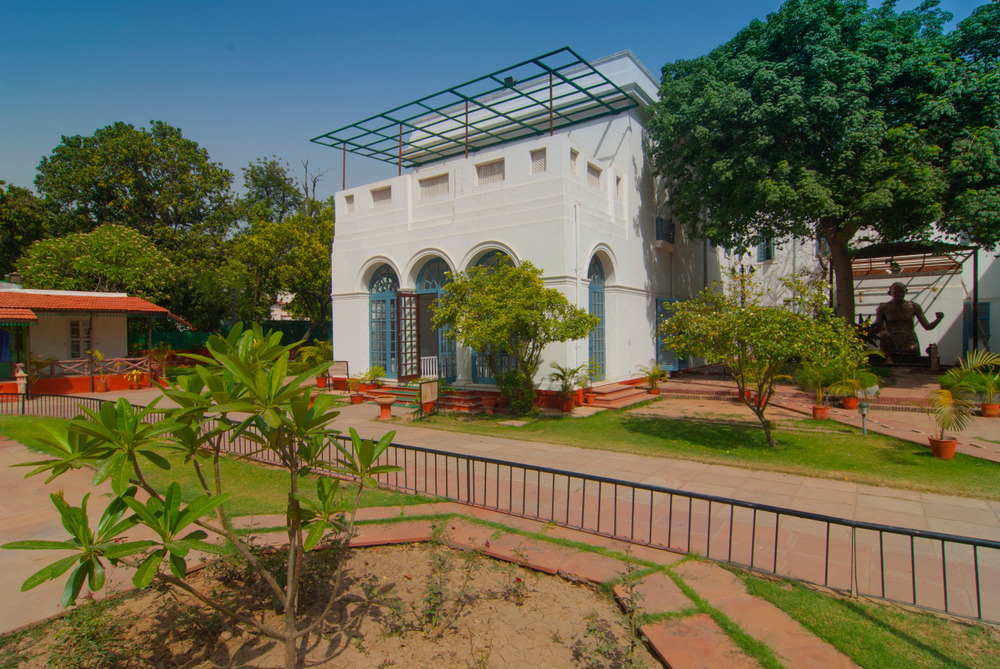
Charles Correa, one of modern India's most influential architects, designed a semi-sunken building that follows the slope descending towards the lake. His approach was one of understated architecture from the exterior: terraces, courtyards, patios and level changes replace the monumental façade. Raw concrete engages with elements inspired by Indian vernacular architecture, and circulation happens via open-air pathways that connect the different spaces.
This horizontal organisation creates a particular visiting experience: you pass seamlessly from a gallery to an open-air theatre, from a library to a courtyard opening onto the sky. Natural light plays a central role in highlighting the artworks and spaces.
What to see at Bharat Bhavan
Roopankar, the art museum
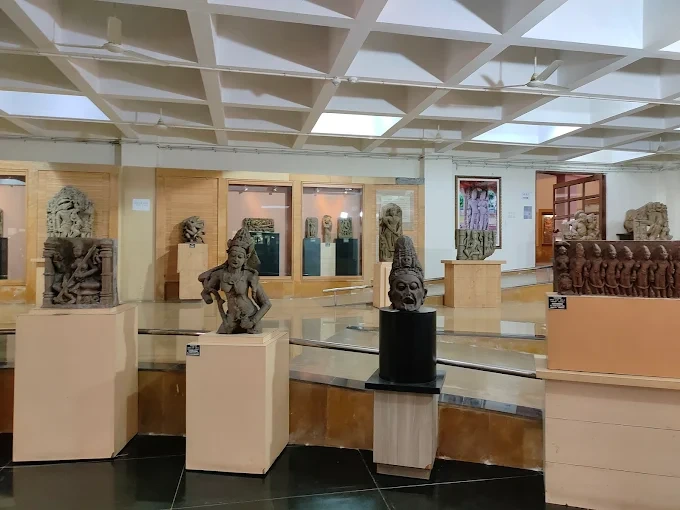
Roopankar is the museum heart of the complex. It is divided into two sections: the first presents contemporary Indian art through modern paintings and sculptures; the second is dedicated to tribal and folk art, with a significant collection from indigenous communities of Madhya Pradesh and neighbouring regions. Graphic works and ceramics complete the ensemble.
The theatre complex
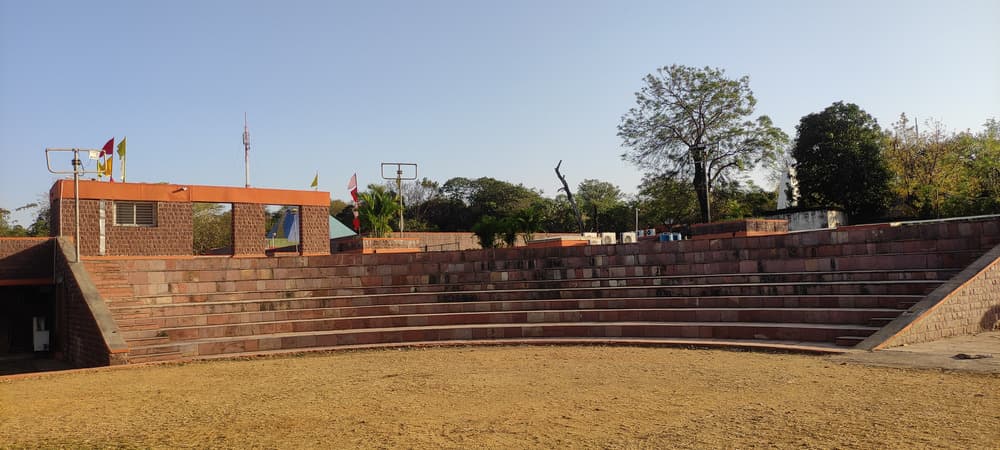
Three spaces host the performing arts: the Rang Mandal, a repertory theatre that produces plays and workshops; the Bahirang, an open-air theatre; and the Antrang, an indoor hall dedicated to more intimate formats. Programming combines Indian creations and symposiums open to foreign companies.
Vagarth, poetry and classical music centre
Vagarth houses a library bringing together more than 7,000 volumes of poetry in various Indian languages, as well as a concert hall dedicated to classical music. Public readings, translation workshops, discussions and fellowships for writers punctuate the year.
Anhad, music archives
Anhad is the centre's classical and folk music library, rich in audio and video archives. It organises the Parampara and Saptak series, which programme instrumental recitals and classical Indian dance.
Chhavi, Ashram and Nirala Srijanpeeth
Chhavi is a cinema centre focused on independent and experimental filmmakers, with screenings followed by discussions. The Ashram offers a residency programme for artists, while the Nirala Srijanpeeth, a chair dedicated to literary creation, supports contemporary Indian writing.
Practical information
Bharat Bhavan can be visited in half a day. Allow 2 to 3 hours to explore the Roopankar galleries and wander through the outdoor spaces, longer if you wish to attend a concert or screening.
- Opening days: open Tuesday to Sunday according to sources, closed one day per week. Check with the centre before your visit as hours vary by season.
- Admission: moderate entry fee, more affordable for foreign visitors than major Delhi museums.
- Programming: most shows and screenings take place in late afternoon and evening. Check the schedule on site or online before your visit.
- Photography: generally allowed in outdoor spaces, restricted in galleries.
How to get there
The centre is located on J. Swaminathan Marg, in the Shamla Hills neighbourhood, close to Upper Lake (Bada Talab). It is easily accessible from Bhopal city centre by auto-rickshaw or taxi.
- By air: Raja Bhoj airport about twelve kilometres away, connected by taxis and public transport.
- By train: Bhopal Junction and Habibganj stations about 8 km away, well served by the Indian rail network.
- By bus: Nadira bus station about 6 km from the complex.
- On the ground: auto-rickshaws and taxis are the most convenient means. From some nearby neighbourhoods, walking access remains possible.
What to see nearby
Bharat Bhavan is part of a cultural itinerary in Bhopal that includes several complementary sites. The State Museum Bhopal offers an overview of the archaeology and arts of Madhya Pradesh, useful as a complement to Roopankar's contemporary art collections. The Ajit Singh Memorial allows you to approach a more political and memorial aspect of the region.
Frequently asked questions
Frequently asked questions
Allow 2 to 3 hours for the galleries and outdoor spaces. If you wish to attend a recital, play or screening at Chhavi, plan for half a day to a full day.
Signage and certain publications are available in English. Performances are predominantly in Hindi and other Indian languages, but reading the visual works and architectural spaces does not require particular linguistic knowledge.
Yes, the complex houses three theatres (Rang Mandal, Bahirang, Antrang) and a concert hall at Vagarth. Programming varies by week; it is recommended to check before your visit.
The dry season, from October to March, offers the most pleasant conditions. The monsoon months (July-September) remain viable for an indoor visit, but limit the use of outdoor spaces and the Bahirang theatre.
Yes, the open architecture, courtyards and green spaces make it an enjoyable place for a family visit. The tribal and folk art sections are often appreciated by children for their visual and narrative dimension.
Plan your trip
To integrate Bhopal and Bharat Bhavan into a wider itinerary in central India, consult our journeys in India and our suggestions around Bhopal.
Nearby
Interested in this visit?
We can include it in your personalised itinerary.