Gangotri
Gangotri
At 3,100 meters altitude in Uttarakhand, Gangotri marks the sacred source of the Ganges. Temple, Gomukh glacier, Tapovan trek: a sacred pilgrimage site in the Indian Himalaya.
Nestled in the heights of Uttarakhand, Gangotri stands as one of North India's most sacred places. This small village, perched in the Bhagirathi valley, draws both pilgrims and travelers alike. Visitors come here to honor the Ganges at its source, and to experience the distinctive atmosphere of the Himalayan mountains.
Gangotri, a Spiritual and Natural Haven in Uttarakhand
Gangotri is one of four major sites on the Chota Char Dham, an important Hindu pilgrimage circuit in the Indian Himalaya. Undertaken at least once in a lifetime, this spiritual journey encompasses Yamunotri, Gangotri, Kedarnath, and Badrinath. It symbolizes purification, devotion, and spiritual liberation.
It is here that the Bhagirathi River, regarded as the original form of the Ganges, takes its birth. The temple overlooking the village becomes, each year, the heart of this vast spiritual gathering, particularly between May and October, when the mountain roads are passable.
Beyond its religious significance, Gangotri captivates visitors with its natural environment. Cedar forests, spectacular waterfalls, and snow-capped peaks create a landscape where trekkers discover multiple trails. This blend of spiritual fervor and pristine nature makes it a unique destination in the heart of the Indian Himalaya.
History and Legend
The story of Gangotri is deeply intertwined with the myth of the Ganges descending to Earth. According to legend, King Bhagiratha prayed intensely to Shiva so that the goddess Ganga would descend from the heavens to purify the souls of his ancestors. The god granted the request and held the river's power in his hair before gently releasing it toward the valley below.
The current temple, built in the early 19th century by Nepali general Amar Singh Thapa, embodies this sacred tradition. Since then, it has been renovated several times and remains a major pilgrimage destination. Every year, thousands of devotees traverse the steep mountain roads to pay homage before the deity Ganga.
What to See and Do in Gangotri?
Gangotri Temple
The Gangotri Temple sits at the heart of the village. Built of white stone, it attracts daily pilgrims and sadhus seeking to honor the goddess Ganga. Daily rituals, chanting, and offerings create a vibrant spiritual atmosphere.
Gangotri Glacier and Gomukh
The Gangotri Glacier, stretching 30 km, ranks among the largest in the Himalaya. It is the sacred source of the Bhagirathi River. The trek to Gomukh, meaning "cow's mouth," unfolds amid impressive landscapes dominated by eternal snows. It is both a spiritual pilgrimage and a discovery of unique glacial terrain.
Kedar Tal
Perched above 4,000 meters, Kedar Tal lake enchants with its deep blue waters surrounded by snow-capped peaks like Thalay Sagar. Accessible after a demanding trek, it rewards hikers with a breathtaking natural tableau.
Tapovan
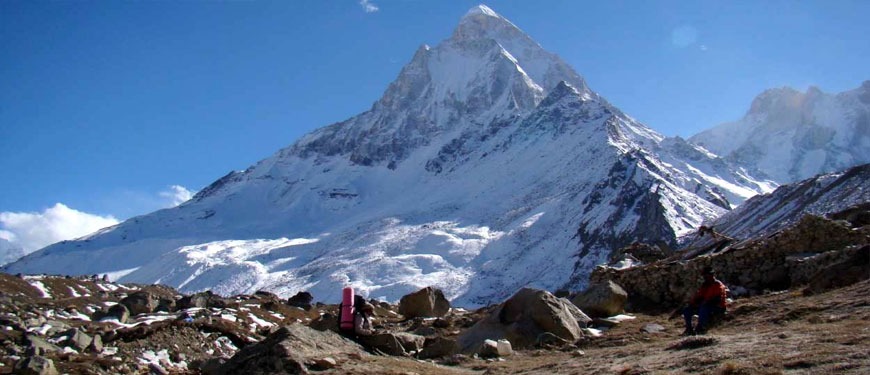
Tapovan is a verdant high-altitude plateau at the foot of Shivling, an emblematic Himalayan summit rising above 6,500 meters, sometimes nicknamed the "Indian Matterhorn" for its distinctive pyramidal silhouette. Known for its ashrams, this high mountain meadow is a privileged place for meditation.
Bhairon Ghati
A few kilometers from Gangotri, Bhairon Ghati impresses with its deep gorge where the Bhagirathi River plunges between sheer rock walls. A small temple dedicated to the god Bhairav watches over the site. The location also features a suspension bridge offering breathtaking views of the valley.
Pandava Gufa
According to tradition, the Pandavas, heroes of the Mahabharata epic, sought refuge in this cave during their exile. Located near the village, it attracts both pilgrims and curious travelers. The path winds through forests and peaceful landscapes.
Gauri Kun and Surya Khund
These two powerful waterfalls, situated near the temple, offer a refreshing stop after prayers. Gauri Kun, gentler in its flow, and Surya Khund, more torrential, symbolize the raw power of nature.
Gangotri–Tapovan Trek
The trek linking Gangotri to Tapovan is one of the Himalaya's most celebrated trails. It spans approximately 24 km from Gangotri to Tapovan via Gomukh, totaling roughly 46 to 48 km round-trip. This trek typically takes 6 to 8 days, including necessary acclimatization and rest phases at high altitude.
Climate and Temperature
Gangotri's climate is montane. Winters are severe and snowbound, making the site inaccessible. The visiting season extends from May to October. Days are mild, while nights turn cool. July and August bring monsoon conditions, less favorable for trekking.
Location and Access
Gangotri lies in Uttarkashi district in northern Uttarakhand. The road climbs from Rishikesh and Uttarkashi via Harsil to the village. Access is by road only, with buses or shared taxis departing from major towns. The nearest airports are Dehradun and Rishikesh.
FAQ
Do I need a special permit to trek to Gomukh?
Yes, a permit issued by forest authorities is mandatory. It can be obtained easily in Uttarkashi for a modest fee and a valid ID.
How long does the trek to Gomukh take?
From Gangotri, expect about 18 km to reach Gomukh, requiring two days of round-trip trekking. Some hikers choose to continue to Tapovan, which demands additional effort and a night in a camp or bivouac.
Does the temple remain open year-round?
No, Gangotri Temple closes during winter, from November to April, when snow blocks the mountain roads.
Can I find lodging in Gangotri?
Yes, several small guesthouses, dharamshalas, and ashrams welcome travelers. Accommodations are modest but sufficient for a spiritual stay or before embarking on a trek. For greater comfort, some prefer to stay in Harsil, situated lower in the valley, where more equipped lodging options are available.
Accommodation in Gangotri

Want to discover this destination?
Our local advisors design your tailor-made trip.