Jama Masjid of Bhopal
Jama Masjid of Bhopal
Built between 1832 and 1857 by Qudsia Begum in the Loha Bazar quarter, the Jama Masjid of Bhopal reflects the architectural heritage of the Begums.
Built in the 19th century by Qudsia Begum, one of Bhopal's first sovereigns, the Jama Masjid testifies to the major role played by the Begums in the history of the city and the place of Islam in Madhya Pradesh. Construction began in 1832 and was completed twenty-five years later, in 1857. The mosque remains an active place of worship in the heart of the Loha Bazar quarter today.
Why visit the Jama Masjid
Three reasons make a visit worthwhile for travelers passing through Bhopal: the mosque exemplifies late Mughal style with its bulbous domes and gilded minarets; it stands as part of a network of buildings commissioned by the Begums, a dynasty of Muslim sovereigns who shaped the city known as the "city of mosques"; and finally, its atmosphere remains that of a living place of prayer, frequented daily by local residents, far from mass tourism.
History and context
In the early 19th century, Qudsia Begum took the helm of the princely state of Bhopal and launched a construction program designed to endow the city with religious and civic heritage. The Jama Masjid project began in 1832. It would take an entire generation, until 1857, to complete the building. The Begum family continued this policy thereafter: Sikandar Jahan Begum erected the Moti Masjid in 1860, and each generation would leave its mark on the modernization of Bhopal—water supply, schools, railway infrastructure.
The Jama Masjid is inscribed in this political as much as religious legacy: it marks the influence of a rare female dynasty in the princely India of that era.
What to see on site
The minarets and skyline
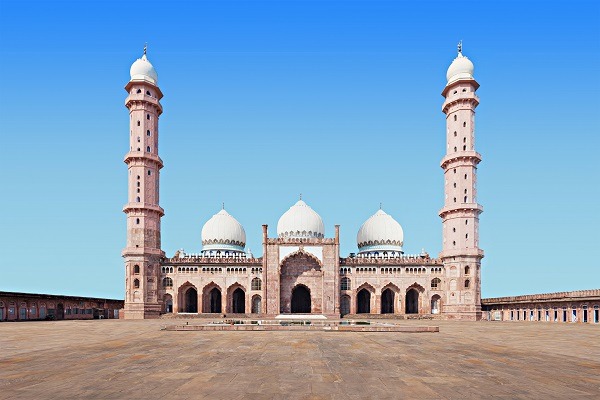
Two slender minarets, crowned with gilded spires, signal the mosque from the narrow lanes of Loha Bazar. They rise above neighboring rooftops and still serve as a visual landmark in the historic center.
The exterior and courtyard
The plan follows the classic Mughal model: a large open rectangular courtyard, vaulted galleries on the sides, and a covered sanctuary to the west. Three bulbous domes crown the main building. The façades are articulated by ogival arches and whitewashed columns, in a restrained style that privileges volume over ornament.
The inner sanctuary
The prayer hall measures approximately 37 meters in length and is divided into three naves covered by domes. White marble arcades structure the space. The qibla wall, oriented toward Mecca, features several finely carved mihrabs—niches indicating the direction of prayer. Floral motifs subtly adorn the domes.
The galleries and annexes
- The central courtyard: vast, designed to accommodate large numbers of worshippers during Friday prayers.
- The north and south vaulted galleries: shaded spaces conducive to contemplation.
- The lateral wings: connected by vaulted corridors, they balance the composition of the plan.
Practical information
Admission is free. The mosque is generally open around the five daily prayers, from dawn to dusk. Non-Muslim visitors are typically welcome outside prayer times, particularly mid-morning and early afternoon. Dress should cover shoulders and legs; women are invited to wear a headscarf, and everyone removes shoes before entering the prayer hall. Photography of the architecture is permitted; photographing worshippers at prayer should be avoided.
When to visit
The best time to visit Bhopal extends from October to March, when temperatures are more manageable. Avoid Friday prayer times, when attendance is high and tourist visits become inappropriate. During Ramadan, the atmosphere changes: the mosque fills in the evening for the breaking of the fast and night prayers; a visit is possible but requires greater discretion.
How to get there
The Jama Masjid is located in the Loha Bazar quarter of the old city. From Bhopal Junction railway station, allow about ten minutes by auto-rickshaw. Raja Bhoj Airport is approximately 15 km to the northwest. City buses serve the historic center, but the motorized rickshaw remains the simplest way to reach the narrow lanes of Loha Bazar.
Nearby attractions
- Taj-ul-Masjid (approximately 1 km): one of Asia's largest mosques, recognizable by its immense domes and vast courtyard.
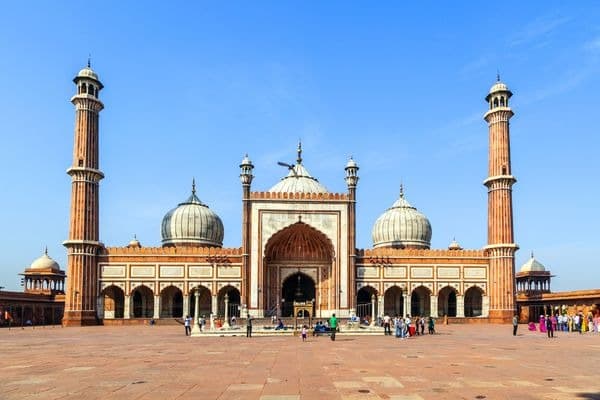
- Moti Masjid (a few hundred meters away): the "pearl mosque" erected by Sikandar Jahan Begum in 1860, whose contrast between white marble and red sandstone recalls the Jama Masjid of Delhi.
- Gohar Mahal (approximately 5 km): a palace built around 1820 by Qudsia Begum, blending Hindu and Islamic architectural elements.
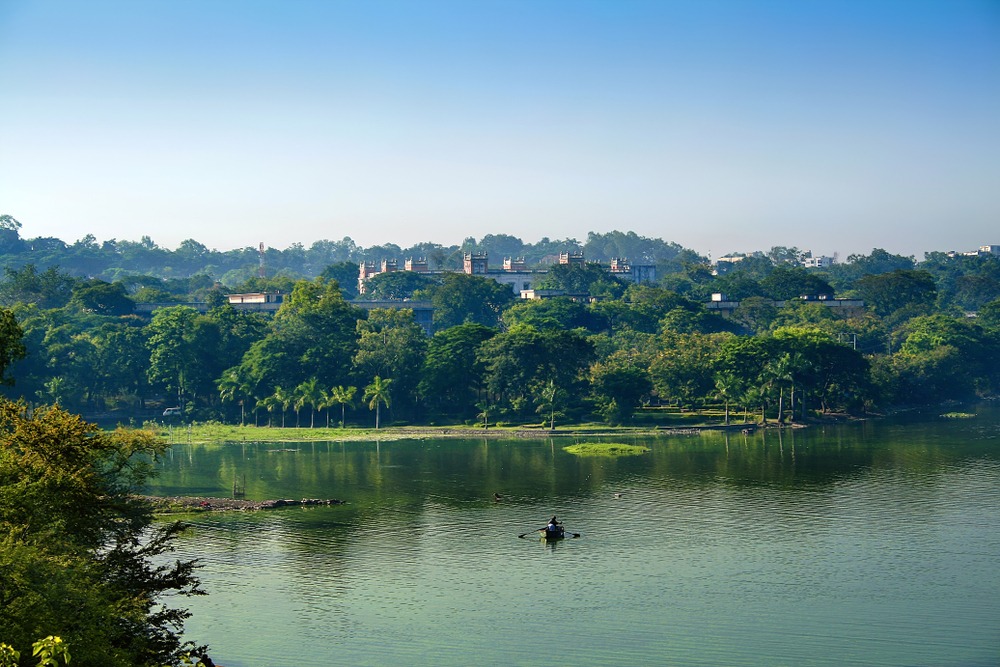
- Upper Lake (Bhojtal) (approximately 4 km): a reservoir attributed to King Bhoj in the 11th century, considered one of India's oldest artificial lakes.
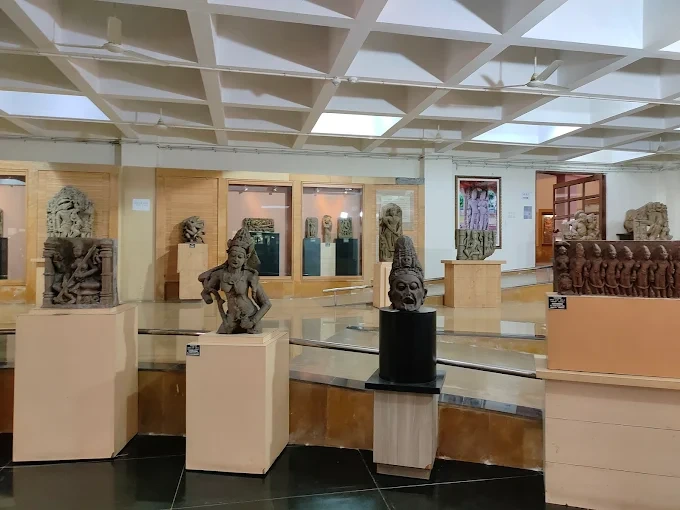
- State Museum Bhopal: collections of Hindu, Buddhist, and Jain sculptures tracing Madhya Pradesh's heritage.
Frequently asked questions
Frequently asked questions
Yes, outside prayer times. It is important to be respectful, remove shoes before entering the prayer hall, and avoid busy days such as Friday noon.
Clothing should cover the shoulders and extend below the knees. Women are invited to wear a headscarf. Avoid tight-fitting or transparent clothing.
Allow 30 to 45 minutes to explore the courtyard, observe the sanctuary, and appreciate the minarets. By combining the Jama Masjid with the nearby Moti Masjid, plan for approximately 1 hour 30 minutes.
No, admission is free. A small contribution to the mosque's collection boxes is appreciated but not obligatory.
Construction began in 1832 under Qudsia Begum and was completed in 1857, after twenty-five years of work.
Extend your experience
The Jama Masjid fits naturally into a heritage itinerary through Bhopal's historic center and Madhya Pradesh. To prepare a tailor-made trip including this stop, consult our suggestions for circuits on our dedicated page for India.
Nearby
Interested in this visit?
We can include it in your personalised itinerary.