Ayodhya
Ayodhya
Ayodhya, the birthplace of Rama and one of the seven holiest pilgrimage sites in Hinduism, unveils its temples, ghats, and millennia-old heritage.
Ayodhya, one of India's most ancient and sacred cities, stands as a true historical and spiritual treasure. Situated on the Ghaghara River (also called Sarayu or Sarju), east of Faizabad in Uttar Pradesh, it is deeply woven into Hindu tradition and draws millions of pilgrims and visitors each year. This city is far more than a tourist destination. It offers an immersion into Indian history, spirituality, and culture. Between its majestic Hindu temples, living traditions, and an atmosphere suffused with devotion, Ayodhya provides a unique experience for any traveler seeking spiritual connection and cultural discovery.
History
Ayodhya, meaning "invincible," refers to its reputation as an unconquerable city—both militarily and spiritually. One of India's oldest cities, it was once known as Saketa and served as the capital of the ancient kingdom of Kosala. It is revered as the birthplace of Lord Rama, one of the most respected avatars of Vishnu, embodying the ideal man through his virtues and exemplary conduct.
Ayodhya is a city marked by dynastic history, having served as a major spiritual center throughout the centuries. In the 6th–5th centuries BCE, it was also a site of Buddhist significance, and some scholars believe Saketa corresponds to a place where the Buddha himself stayed. During the Mauryan Empire, it was a major Buddhist center with numerous monasteries and stupas, as evidenced by the visit of the Chinese monk Faxian in the 5th century. Additionally, Ayodhya is known as the origin of the Korean queen Heo Hwang-Ok, who married King Kim Suro of Gaya in 49 CE.
Ayodhya is mentioned in various ancient texts, including Buddhist and Jain scriptures, where it is also associated with the birth of several Tirthankaras. Beyond its religious dimension, the city played a key role across the centuries, successively integrated into the Gupta and Mughal empires. Later, under the name Oudh, it became a center of power during British rule, until its annexation in 1856. Its multicultural and multireligious heritage, marked by Buddhist, Hindu, and Muslim influences, remains undeniable.
During the Mughal Empire, Ayodhya underwent significant transformation with the construction of Babur's Mosque, or Babri Masjid, in 1528. Archaeological evidence suggests this mosque was built on the site of an earlier Hindu temple, believed to be the birthplace of the god Rama. This structure generated tensions that persisted through the centuries. After decades of religious disputes, the destruction of the Babri Masjid by Hindu activists in 1992 reignited tensions between Muslim and Hindu communities, triggering bloody riots and conflicts across the nation.
A lengthy legal battle ensued, culminating in 2019 with a decision by India's Supreme Court, which awarded the disputed site to Hindus while providing alternative land to the Muslim community for building a new mosque. This decision ultimately enabled the construction of the grand Ram Temple, inaugurated in 2024, marking a turning point in Ayodhya's contemporary history.
Must-see attractions
Ayodhya is the mythological birthplace of Lord Rama, and its rich religious tradition attracts people across India and visitors from around the world. Here is an overview of the places, monuments, and attractions not to be missed in this city:
Ram Janmabhoomi Temple
The Ram Janmabhoomi Temple is undoubtedly the most sacred and most visited site in Ayodhya. According to legend, this is where Lord Rama was born, on the banks of the Sarayu River. Following a lengthy legal and political struggle, a new temple was constructed at this location. It was inaugurated by Prime Minister Narendra Modi on January 22, 2024. This magnificent site, built on 70 acres of land, includes a main temple of 5,330 m². Today it is an important pilgrimage site for Hindus. Furthermore, the construction, which continues in several phases, aims to become a spiritual and tourism center, creating thousands of jobs and strengthening the city's religious and cultural identity.
Hanuman Garhi
Perched on a hill, Hanuman Garhi is dedicated to Hanuman, the devoted companion of Lord Rama. To access this temple, visitors must climb 76 steps—a symbolic act of devotion. This sanctuary offers spectacular panoramic views of Ayodhya and is a vibrant place of worship where numerous pilgrims come to pray and honor Hanuman.
Kanak Bhawan
Kanak Bhawan, or the "House of Gold," is a temple dedicated to Rama and Sita. This site impresses with its magnificent golden statues of the deities and its peaceful atmosphere. The temple's interior is adorned with gold ornaments, lending it a unique brilliance. It is a must-visit monument for those wishing to discover Ayodhya's spirituality and traditional architecture.
Saryu Ghat
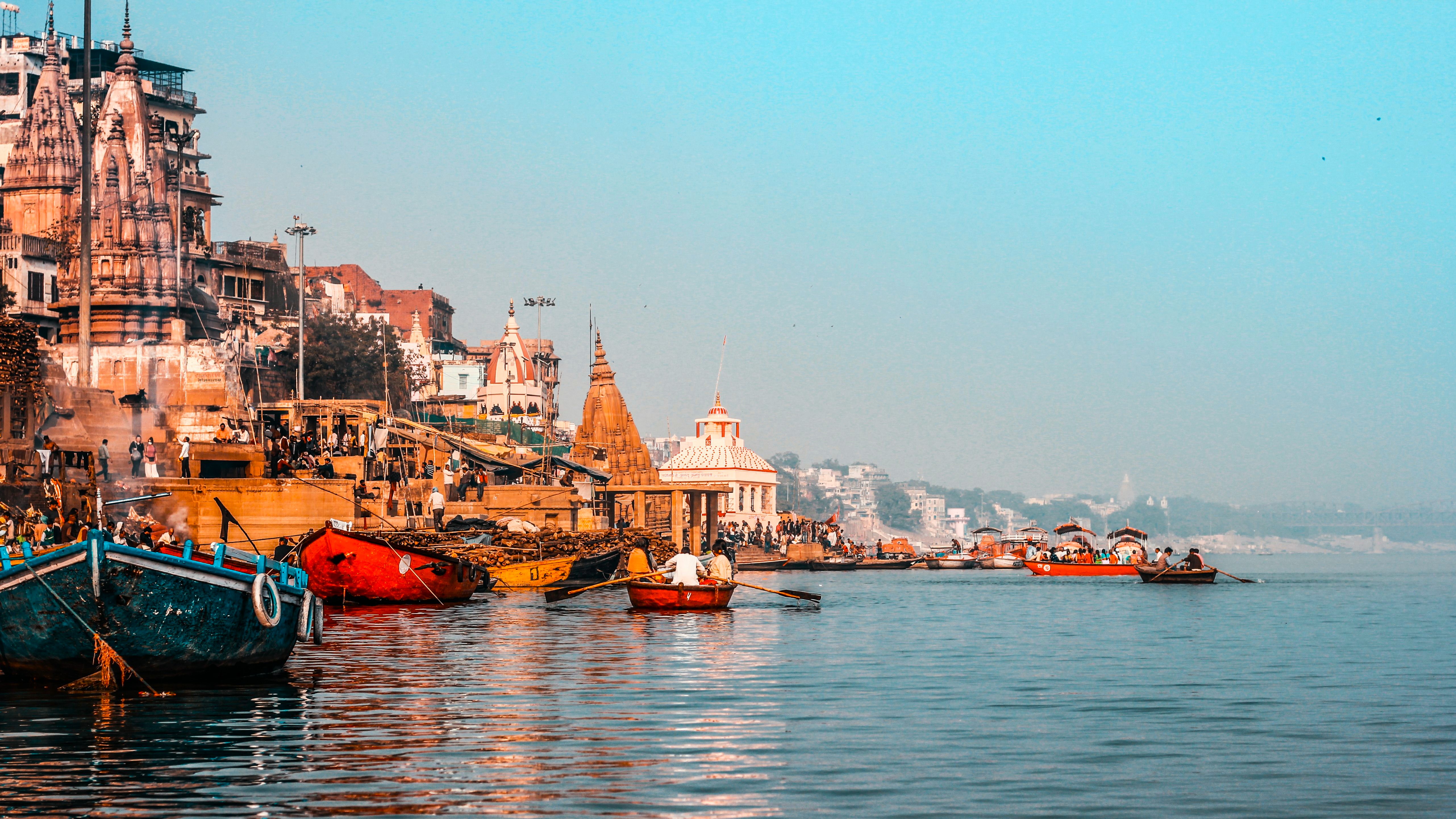
The Saryu River flows through Ayodhya and plays an important role in the city's spiritual culture. The ghats, notably Guptar Ghat, are places of purification. According to tradition, bathing in the sacred waters of the Saryu washes away sins. Aarti ceremonies at sunrise are particularly popular, attracting crowds of devotees.
Treta Ke Thakur
The Treta Ke Thakur temple is another important site in Ayodhya. It houses statues of Rama, Sita, Lakshman, and Hanuman, all carved from a single stone. According to legend, this is where Rama performed a sacrifice upon his return to the city.
Ramkot
Ramkot, a historic and religious site situated on a hill, is the ancient fort of Lord Rama. It offers breathtaking views of the ghats and the city of Ayodhya. This site is also rich in Hindu temples and other sanctuaries dedicated to Rama, making it a sacred place frequently visited by pilgrims.
Shri Nageshwarnath Temple
The Nageshwarnath Temple, dedicated to the god Shiva, is one of the city's oldest Hindu temples. According to legend, it was built by Rama's youngest son in gratitude to a Nag Kanya (a serpent goddess) who helped him recover a bracelet lost in the Saryu River. The current temple was rebuilt in 1750 and remains an important place of worship for devotees of Shiva.
Tulsi Smarak Bhawan
The Tulsi Smarak Bhawan is a place of devotion dedicated to Goswami Tulsidas, the author of the Ramcharitmanas. This spiritual center is a key destination in Ayodhya, offering immersion into Tulsidas's work. The Bhawan also includes a museum dedicated to artifacts related to Lord Rama and organizes Ramleela performances, attracting many devotees.
Cultural experiences and festivals
Ayodhya celebrates its festivals with unique fervor, particularly during Ram Navami, marking the birth of Lord Rama. Observed during Navratri, this celebration draws thousands of devotees through prayers, processions, and recitations of the Ramayana epic.
But it is during Diwali, the Festival of Lights, that the city truly shines. Millions of lamps illuminate Ayodhya to commemorate Rama's return following his victory over Ravana, creating a grand spectacle accompanied by fireworks and festivities.
Beyond celebrations dedicated to Rama, Maha Shivratri is also an important event, celebrated at the Nageshwarnath Temple. These festivities, blending spirituality and tradition, make Ayodhya a vibrant and unmissable destination for devotees and visitors alike.
When to visit?
The ideal period to visit Ayodhya spans October to March, when the climate is cooler and more pleasant. This is also the peak tourist season, marked by numerous Hindu festivities. From April to June, intense heat makes travel less comfortable, making it a period to avoid. From July to September, the monsoon brings frequent showers and high humidity, though tourist activity is more moderate.
Ayodhya is easily accessible thanks to a well-developed transport network:
By air
Maharishi Valmiki International Airport Ayodhya Dham, located approximately 8 km from the Ram Temple, welcomes domestic flights facilitating access for pilgrims and visitors.
By train
The city is served by Ayodhya Dham Railway Station and Ayodhya Cantonment Railway Station, which provide connections to major cities including Delhi, Lucknow, and Varanasi.
By road
Ayodhya is well-connected by a network of national and regional highways. It lies 135 km from Lucknow, 200 km from Varanasi, 170 km from Prayagraj, 140 km from Gorakhpur, and 636 km from Delhi. Frequent bus services connect the city to these destinations, offering a convenient option for travelers.
Want to discover this destination?
Our local advisors design your tailor-made trip.