Teli Ka Mandir
Teli Ka Mandir
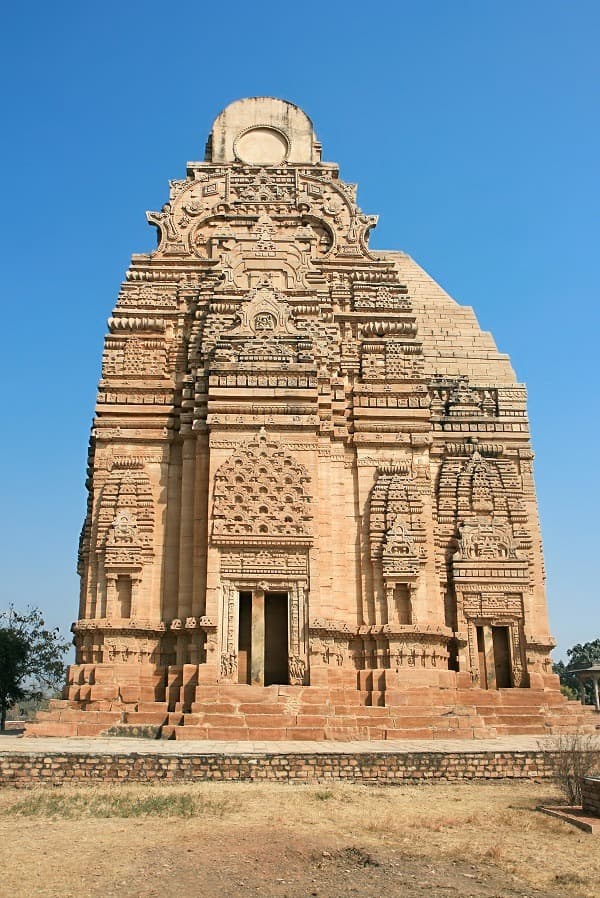
Teli Ka Mandir, within Gwalior Fort, stands as one of Central India's oldest temples. Its distinctive tower—Dravidian style rising above a North Indian plan—and intricately carved façades make it an exceptional architectural monument.
Teli Ka Mandir rises within the ramparts of Gwalior Fort in Madhya Pradesh. This 8th-9th century temple ranks among the region's oldest and most substantial. Its unusual silhouette—a southern Dravidian tower set upon a North Indian ground plan—makes it a singular architectural achievement across Central India.
Quick Reference
- Access: within Gwalior Fort, reachable via the ascending eastern road (Gwalior Gate) or by funicular on the north side.
- Admission: included with Gwalior Fort's entry ticket (ASI site, differential rates for residents/foreign visitors).
- Recommended duration: 20 to 30 minutes for the temple alone; allow 2 to 3 hours for the entire fort.
- Dress code: modest attire recommended; the temple is presently dedicated to Shiva, respectful conduct expected.
What You'll See
The main tower reaches approximately 30 metres. Its façade is covered in carved friezes: geometric patterns, divine figures, and mythological creatures layer across its full height. The rectangular sanctuary plan contrasts with the cylindrical tower crowning it—a blend of Pratihara and Dravidian styles rarely encountered elsewhere.
History and Context
Built under the Gurjara-Pratihara dynasty, the temple was originally dedicated to Vishnu. Its name—"oil merchant's temple"—derives from local tradition concerning its patron. Damaged during invasions, it served as a munitions depot under British administration in the 19th century before restoration by the Archaeological Survey of India. It remains an active Shaiva temple today.
Highlights of Your Visit
The Carved Façade
Move slowly around the exterior perimeter. Layered friezes reveal fine details: kirtimukhas (masks of glory), divine couples, and lotus motifs frame each register. Morning light brings out the relief in the golden stone.
The Hybrid Tower
From the courtyard, raise your eyes to the tower: the transition between the rectangular body and cylindrical shikhara is visible at mid-height. This blend of northern and southern architectural vocabularies represents the monument's greatest appeal for architectural history enthusiasts.
The Fort's Setting
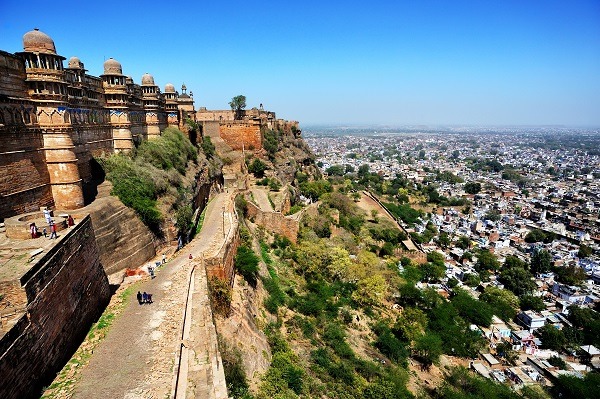
The temple anchors a monumental complex including the Man Singh Palace, the Sas-Bahu temples, and an archaeological museum. Views across the plains from the ramparts complete the experience.
Etiquette and Visit Guidelines
- Remove your shoes before entering the inner sanctum.
- Avoid turning your back to the principal deity during prayer times.
- Speak softly; devotees come to worship daily.
Photography Tips
Morning light (between 7 and 9 a.m.) strikes the eastern façade directly and brings sculptures into sharp relief. Late afternoon bathes the stone in warm tones. Step back to the opposite courtyard to frame the entire tower. Photography is permitted outside; verify restrictions inside the sanctum at the time of your visit.
Location and Access
Teli Ka Mandir sits on the plateau of Gwalior Fort in Madhya Pradesh—not to be confused with Orchha. Gwalior is served by an airport, railway station, and road connections from Agra (roughly 120 km) and Jhansi. Within the fort, the temple is accessible on foot from the main car park or via the northern funicular. Accessibility for mobility-impaired visitors remains challenging due to uneven terrain.
Nearby Sites
- Man Singh Palace — a 15th-century masterpiece of Tomar architecture, minutes away on foot.
- Sas-Bahu Temples — a pair of 11th-century temples with remarkable sculpture, within the same enclosure.
- Gwalior Archaeological Museum — Pratihara and Gupta sculptures recovered from the region, at the fort's base.
- Ghaus Muhammad's Tomb — a 16th-century Mughal mausoleum in the lower city, featuring fine stone jali work.
Photos
Interested in this visit?
We can include it in your personalised itinerary.