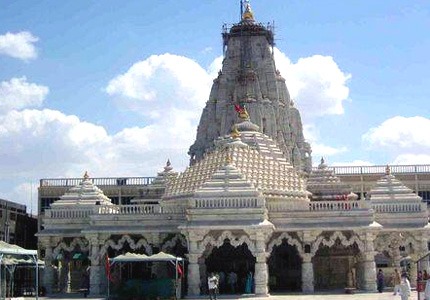
Gujari Mahal
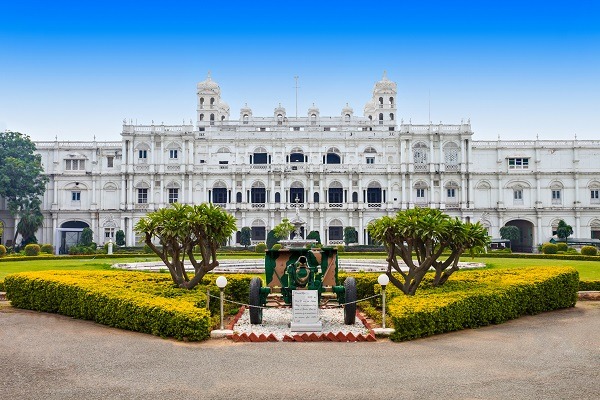
A medieval palace from the 15th century built at the foot of Gwalior Fort by Man Singh Tomar, Gujari Mahal now houses an archaeological museum with remarkable Gupta and Jain sculptures.
Gujari Mahal is a medieval palace built in the 15th century at the foot of Gwalior Fort in Madhya Pradesh. Erected by Raja Man Singh Tomar for his wife Mrignayani, it stands as testimony to a royal love that became local legend. Today converted into an archaeological museum, it shelters one of the most significant collections of sculpture from central India, spanning several centuries of regional art.
Practical Information at a Glance
- Admission: Paid (archaeological museum managed by the Archaeological Survey of India)
- Closure: Closed Mondays
- Recommended duration: 1 to 1.5 hours
- Dress code: No specific clothing restrictions
What to See
The building itself is a sober example of 15th-century Rajput architecture: sandstone facades, interior galleries, and open courtyards. The archaeological museum it houses displays stone sculptures from Madhya Pradesh sites, notably representations of Hindu and Jain divinities dating from the Gupta and post-Gupta periods. The most cited piece is a small Salabhanjika statue, a female figure of remarkable delicacy.
History and Context
Man Singh Tomar, who ruled Gwalior between 1486 and 1516, built this palace for Mrignayani, a woman of lower caste whom he married according to tradition. Legend has it she demanded a supply of running water as a condition of marriage — hence the channels integrated into the edifice. After the fall of the Tomar, the palace passed successively to the Mughals and then the Scindia, before being designated a protected monument.
Highlights of Your Visit
Gupta and Post-Gupta Sculpture
The collection brings together pieces from regional excavations. Sandstone sculptures from the Gupta periods (4th–6th century) illustrate a style characterized by softness of form and precision of drapery. Some Jain pieces come from sites near Gwalior.
Palace Architecture
Columned galleries and jalis (stone lattice screens) reveal the craftsmanship of Tomar artisans. The central courtyard, austere in design, contrasts with the more ornate decoration of the neighboring fort.
Photography Tips
Natural light filters through the open galleries: early morning remains the best time to photograph sculptures without backlighting. Inside the galleries, lighting is dim — a stabilizer or high ISO setting is useful. Check with the attendant whether photography is permitted in all rooms: some ASI museums enforce restrictions or charge a photography fee.
Location and Access
Gujari Mahal stands at the foot of Gwalior Fort hill, in the lower town. It is accessible on foot from the central bus station or by rickshaw from Gwalior railway station, which serves Delhi, Agra, and Bhopal. The fort and its monuments are minutes away on foot or by vehicle via the main access road.
Nearby Attractions
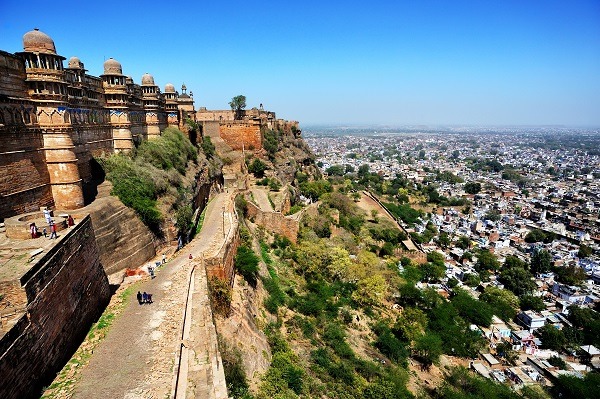
- Gwalior Fort — Medieval fortress dominating the city, with temples, palaces, and Jain rock sculptures.
- Man Mandir Palace — Ornate palace decorated with colorful ceramic tiles, located within the fort walls.
- Tomb of Ghaus Muhammad — 16th-century Mughal mausoleum with finely carved jalis, in the lower town.
- Tomb of Tansen — Memorial to Akbar's court musician, a pilgrimage site for lovers of classical Indian music.
Frequently asked questions
No, the museum is closed on Mondays, like most sites managed by the Archaeological Survey of India.
Yes, the two sites are close to each other. Allow half a day for Gujari Mahal and an additional half day for the fort and its interior monuments.
Rules vary by room. Inquire at the entrance: a photography fee may apply or certain areas may be off-limits to cameras.
October to March, when temperatures are mild. Summer (April–June) is very hot in this region of Madhya Pradesh.
No, Gujari Mahal is a civil museum, not an active place of worship. No specific dress code is imposed.
Nearby
Interested in this visit?
We can include it in your personalised itinerary.