Mokokchung
Mokokchung
Mokokchung is the cultural center of the Ao Naga people in Nagaland. Ancient villages, hand-woven shawls with identity motifs, and the Moatsu festival make it an authentic stop in India's northeast.
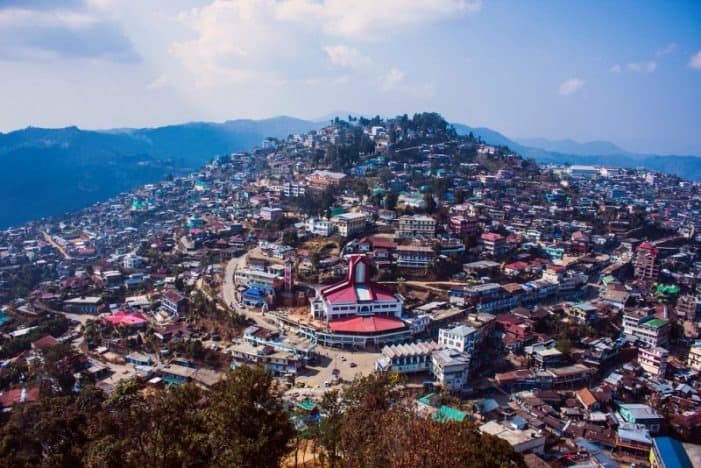
Mokokchung is a town in Nagaland State in northeast India, regarded as the cultural heart of the Ao Naga people. Perched on hills at roughly 1,300 meters in elevation, it concentrates living tribal traditions, distinctive textile craftsmanship, and well-preserved village architecture. It is one of the few towns in Nagaland where Ao culture—language, music, weaving—remains fully active in daily life.
Quick Facts
- Access: Mokokchung is reachable from Dimapur (Nagaland's main transit hub) by road; the journey takes several hours depending on conditions.
- Permit: Foreign nationals must obtain a Protected Area Permit (PAP) before entering Nagaland—apply through the competent Indian authorities.
- Best season: October to April, dry season. Avoid the monsoon (June-September): mountain roads become difficult.
- Suggested duration: 2 to 3 days to explore the town and surrounding villages.
- Dress code: Respectful attire recommended, especially in villages and churches (the majority of the Ao population is Baptist Christian).
What to See
Mokokchung's central market is the natural starting point: you'll find Ao textiles with characteristic geometric patterns, local agricultural products, and handcrafted items. Surrounding villages—notably Ungma, one of the oldest Ao settlements—preserve traditional wooden houses and morung (men's houses), structures with strong community roles.
History and Context
The Ao Naga were among the first tribal groups in Nagaland to encounter American missionaries in the 19th century. This meeting profoundly shaped society: Mokokchung is today predominantly Christian, while maintaining pre-Christian cultural practices in festivals and craftsmanship. The town played a central role in the 20th-century Naga nationalist movement.
Highlights of Your Visit
Ungma Village
Ungma is considered one of the oldest Ao villages. You'll observe traditional stilt granaries, wooden sculptures, and well-preserved vernacular architecture. Residents warmly welcome respectful visitors.
Moatsu Festival
The Moatsu Mong, celebrated in early May, is the major agricultural festival of the Ao Naga. Songs, dances in traditional costumes, and sowing rituals mark several days of celebration. This is the most vibrant period to visit the region.
Ao Textile Craft
The Ao shawl—fabric with stripes and geometric motifs—is a powerful identity marker. Each pattern indicates the wearer's social status or exploits. You can watch weavers at work in certain villages and purchase directly from artisans.
Etiquette and Visiting Guidelines
- Always ask permission before photographing people or the interiors of homes.
- In villages, it is customary to introduce yourself to the village chief (gaonbura) before exploring.
- On Sundays, much of life comes to a standstill: markets and shops are often closed, residents attend services.
- Avoid sensitive political discussions related to the Naga movement.
Photography Tips
Morning light on the surrounding hills is particularly clear from October to February. Markets are most animated in the early morning. During Moatsu, traditional costumes offer rich photographic subjects—but obtaining people's consent remains essential.
Location and Access
Mokokchung is located in the district of the same name, in the northern part of Nagaland. The nearest town with rail and air connections is Dimapur, several hours' drive away. Buses and shared vehicles regularly connect the two towns. The route crosses forested hills characteristic of Nagaland.
Nearby Attractions
- Dimapur — Nagaland's main gateway, with railway station and airport.
- Kohima — Nagaland's capital, known for its World War II war cemetery and Hornbill Festival.
- Mon — district of the Konyak Naga, renowned for its tattooed chiefs and traditional villages.
Frequently asked questions
Yes. Foreign nationals must obtain a Protected Area Permit (PAP) to enter Nagaland. This permit can be obtained from the competent Indian authorities before departure or at certain entry points.
October to April, during the dry season. The Moatsu Festival in early May is a particularly interesting time to experience living Ao culture.
By road, via bus or shared vehicle. The journey takes several hours depending on road conditions. There is no direct rail connection.
Yes, but it is strongly recommended to introduce yourself to the village chief upon arrival. A local guide familiar with Ao customs greatly facilitates interaction and helps avoid missteps.
Yes. Both towns are in the same state. A 5 to 7-day itinerary allows you to cover Dimapur, Kohima, and Mokokchung while traveling the mountain roads of Nagaland.
Photos
Want to discover this destination?
Our local advisors design your tailor-made trip.