Kohima
Kohima
Kohima, capital of Nagaland at 1,500 metres altitude, blends Second World War heritage, living Naga warrior traditions and the Hornbill festival. A truly distinctive corner of India's Northeast.
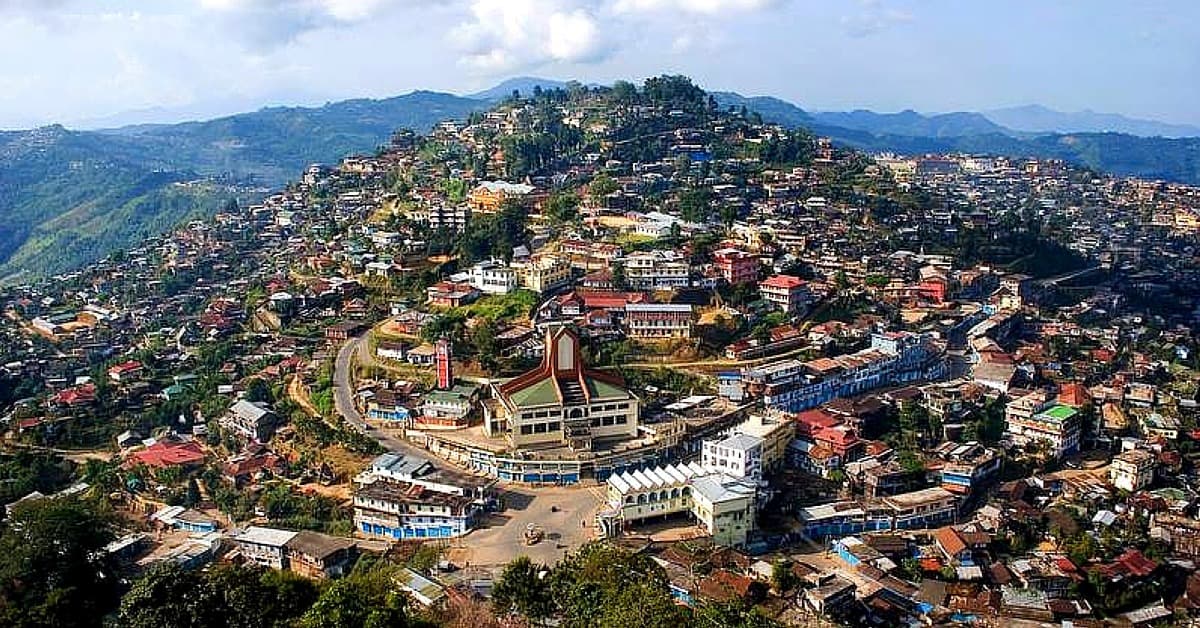
Kohima is the capital of Nagaland, a mountainous state in northeastern India bordering Burma. Perched at approximately 1,500 metres altitude, it is known for the decisive 1944 battle that halted Japanese expansion in South Asia, for its Naga villages with vibrant warrior traditions, and for a market selling some of the subcontinent's most singular local products.
Quick Facts
- Access: nearest airport at Dimapur (approximately 74 km); National Highway NH-29 from Dimapur, accessible by taxi or shared bus.
- Permit: foreign nationals must obtain an Inner Line Permit (ILP) before entering Nagaland.
- Recommended duration: 2 to 3 days to cover the city and immediate surroundings.
- Dress code: modest dress recommended in villages and churches; Nagaland is predominantly Christian.
- Best time: October to April, before monsoon rains; the Hornbill festival takes place annually in early December.
What to See
The Commonwealth War Cemetery occupies the very site of the 1944 battles: thousands of white headstones aligned on a verdant hillside. The Kohima Market (Supermarket Bazar) displays unexpected products — smoked caterpillars, dried dog meat, raja mircha peppers among the world's hottest. The Nagaland State Museum houses warrior costumes, shrunken heads and traditional musical instruments.
History and Context
In April–June 1944, the Battle of Kohima pitted British and Indian forces against Japan's imperial army on the British commissioner's tennis court. This Allied victory marked the turning point of the Burma campaign. The inscription carved at the cemetery — "When you go home, tell them of us and say, for your tomorrow we gave our today" — ranks among the world's most quoted military epitaphs.
Before colonial rule, Kohima was Angami Naga territory, renowned for headhunting practices and fortified villages. Nineteenth-century conversion to Christianity profoundly reconfigured society without erasing clan traditions.
Highlights of Your Visit
The Commonwealth War Cemetery
Maintained by the Commonwealth War Graves Commission, this serene, well-kept site holds burials of British, Indian and other service personnel. The reconstruction of the commissioner's tennis court, scene of the fiercest combat, provides human scale to the battle.
The Hornbill Festival
Held annually December 1–10 at Kisama Heritage Village (roughly ten kilometres from Kohima), this festival brings together Nagaland's sixteen tribes. Warrior dances, polyphonic singing, archery contests and tribal cuisine converge here. It offers the most accessible window into Naga cultures.
Khonoma Village
About 20 km from Kohima, Khonoma is considered India's first "green" village: hunting and wild animal slaughter have been banned since the 1990s. Angami timber and stone houses, rice terraces and a community forest make it a memorable stop.
Kohima Market
The morning market concentrates Naga culinary diversity: bhut jolokia peppers, smoked meats, mountain vegetables and local rice spirits. A direct immersion in the city's daily life.
Etiquette and Visiting Rules
- In villages, always request permission before photographing residents or ceremonies.
- On Sundays, many shops and activities close: Nagaland observes the Christian Sabbath strictly.
- At the war cemetery, adopt a respectful demeanour; avoid loud conversation.
- In churches, cover shoulders and avoid shorts.
Photography Tips
The war cemetery is best photographed early morning, when mountain mist still envelops the headstones. For the market, arrive before 8 a.m.: activity peaks and natural light filters through the covered bazaar's openings. During Hornbill, traditional costume dances happen outdoors — favour a fast lens for scenes under awnings.
Location and Access
Kohima lies in Nagaland's hills, east of Assam. Dimapur airport is the main gateway; taxis and buses connect the two cities via a winding mountain road. From Dimapur, allow roughly two hours depending on traffic. Foreign nationals must obtain an ILP (Inner Line Permit) before arrival — available online or from Nagaland government offices in Delhi, Kolkata or Guwahati.
Accessibility for persons with reduced mobility is limited: streets are steep and pavements uneven. Local agencies offer guided circuits including the Hornbill festival and surrounding villages.
Nearby
- Khonoma Village — India's first ecological village, some twenty kilometres away, with rice terraces and a protected forest.
- Kisama Heritage Village — permanent home of the Hornbill festival, with reconstructed morung (clan houses) for each Naga tribe.
- Dimapur — Nagaland's main commercial town, the air gateway, with Kachari ruins and a bustling market.
- Dzükou Valley — on the Nagaland–Manipur border, famed for alpine meadows and lily blooms in season (June–September).
Frequently asked questions
Yes. Foreign nationals must obtain an Inner Line Permit (ILP) before entering Nagaland. It is issued online or at Nagaland government offices in Delhi, Kolkata and Guwahati. Indian citizens do not require one.
October to April, outside the monsoon. Early December coincides with the Hornbill festival, the ideal time to explore Naga cultures. Avoid June to September: rains make mountain roads challenging.
The standard route passes through Dimapur by train or plane from Guwahati, then a mountain road to Kohima. State buses and shared taxis operate this link daily.
At the market, photography is generally permitted but seek vendors' consent. In villages, always request residents' permission before photographing them, out of respect for local custom.
Two days suffice for the war cemetery, museum and market. Add a day for Khonoma and Kisama. During Hornbill, plan at least three to four days to enjoy the festival.
The war cemetery remains open. However, many shops, markets and services close on Sundays: Nagaland observes the Christian Sabbath strictly. Plan your shopping and travel accordingly.
Photos
Want to discover this destination?
Our local advisors design your tailor-made trip.