Taj-ul-Masajid
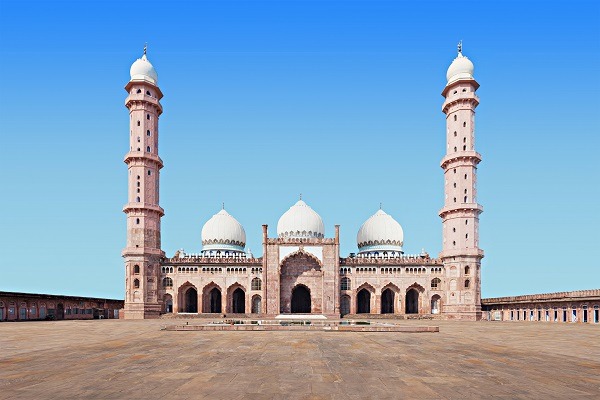
Taj-ul-Masajid, the 'crown of mosques', dominates Old Bhopal with its pink minarets. Begun in the 19th century by Begum Shah Jahan, completed in 1985, it remains an active place of worship and a masterpiece of Islamic architecture in central India.
Taj-ul-Masajid — literally 'crown of mosques' — rises at the heart of Bhopal, capital of Madhya Pradesh. With its two pink minarets rising more than 18 storeys high and an immense courtyard that can accommodate thousands of worshippers, it ranks among South Asia's largest mosques. Begun under Begum Shah Jahan of Bhopal in the 19th century, it was only completed in the 20th century. It remains an active place of worship and a major architectural landmark of the city.
Practical information at a glance
- Admission: free for non-Muslim visitors (donation appreciated)
- Dress code: covering clothing for men and women; headscarf required for women
- Shoes: must be removed before entering the prayer hall
- Access: downtown Bhopal, accessible by auto-rickshaw or taxi from the main railway station
- Recommended duration: 30 to 45 minutes for an exterior visit and courtyard exploration
- Closure for non-Muslims: during the five daily prayers
What to see
The main facade strikes with its two octagonal minarets topped with bulbous domes, painted in a characteristic salmon pink. The great central dome dominates the main prayer hall. The vast interior courtyard, paved with white marble, can accommodate tens of thousands of worshippers during major prayers. An ablution pool occupies the centre of the esplanade.
History and context
Construction began under Begum Shah Jahan (reign 1868-1901), sovereign of the princely state of Bhopal and a great patron of Islamic architecture. Due to insufficient funds, work was interrupted after her death. The mosque remained unfinished for decades, until the Indian government and private donors financed its completion in the second half of the 20th century. It was inaugurated in its final form in 1985.
Bhopal was governed by female Begums for nearly a century — a rarity in Islamic history — and Taj-ul-Masajid is the most visible architectural legacy of this period.
Highlights of the visit
The minarets and facade
From the main street, the perspective of the two pink minarets and central dome is striking. The best overall view is obtained by stepping back to the esplanade facing the main entrance.
The interior courtyard
The interior esplanade, quiet outside prayer times, offers an atmosphere of rare contemplation in the heart of the city. The central pool and arcaded galleries frame the space with elegance.
The Ijtema festival
Each year, the mosque hosts a major Islamic gathering (Ijtema) attracting worshippers from across India and abroad. The courtyard and its surroundings transform into a large-scale devotional encampment.
Etiquette and visiting rules
- Remove your shoes before entering the prayer area.
- Women: cover your head with a headscarf or dupatta; shoulders and legs must be covered.
- Men: avoid shorts; wear long trousers.
- Avoid visiting during the calls to prayer (adhan): wait until prayers end before entering.
- Speak in a low voice and avoid loud behaviour in the courtyard.
- Ask permission before photographing worshippers in prayer.
Photography tips
Morning light (early after sunrise) bathes the pink minarets in an ideal warm hue. In the late afternoon, the western facade is well-lit. From the street, a wide-angle lens allows you to frame both minarets and dome together. Photography is generally tolerated in the courtyard but forbidden inside the prayer hall.
Location and access
Taj-ul-Masajid is located in Old Bhopal, near the Upper Lake. Bhopal Junction railway station is reachable by auto-rickshaw in about twenty minutes depending on traffic. Taxis and ride-sharing services (Ola, Uber) serve the site from downtown hotels. Wheelchair access to the main courtyard is possible, though the marble floor can be slippery.
Nearby attractions
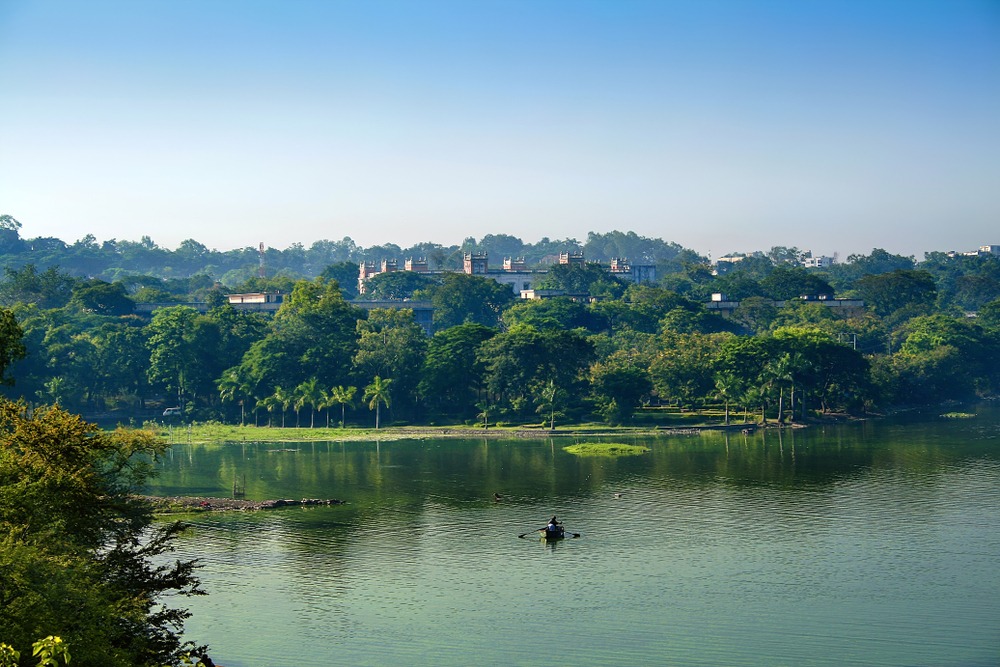
- Upper Lake — Asia's largest urban lake, a few minutes' walk away, ideal for a sunset stroll.
- Moti Masjid — a small 19th-century Mughal mosque, known as the 'pearl of mosques', in Old Bhopal.
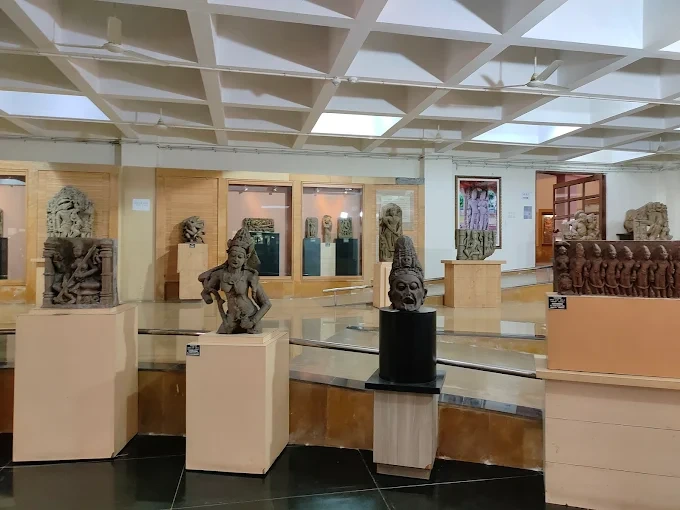
- Madhya Pradesh State Museum — archaeological and tribal collections tracing the region's history.
- Chowk (Old Market) — bustling bazaar in Old Bhopal, renowned for jewellery, spices and embroidery.
Frequently asked questions
Yes, non-Muslim visitors are welcome in the courtyard and outdoor spaces. Access to the main prayer hall is restricted during prayers. Respectful dress is essential.
Covering clothing for everyone: shoulders and legs must be covered. Women must cover their head. Headscarves are sometimes provided at the entrance, but it's best to bring your own.
October to March offers pleasant weather (mild temperatures, low humidity). Summer (April-June) is very hot; monsoon season (July-September) makes travel more difficult.
Photography is generally allowed in the courtyard. It is forbidden or strongly discouraged inside the prayer hall. Always ask permission before photographing worshippers.
Yes. Moti Masjid, Chowk and the Upper Lake shores are all accessible on foot or by rickshaw from Taj-ul-Masajid. Half a day is enough to cover this area.
Local guides offer their services at the entrance or through Bhopal travel agencies. Nomadays can arrange a guided tour of Old Bhopal including the mosque.
Nearby
Interested in this visit?
We can include it in your personalised itinerary.