Bhandasar Jain Temple
Bhandasar Jain Temple
Built in 1468 in Bikaner, the Bhandasar Jain Temple blends carved red sandstone, gold leaf frescoes and the legend of ghee mixed into its mortar.
The Bhandasar Jain Temple stands in the Bada Bazaar quarter of Bikaner, in northwest Rajasthan. Built in the 15th century by a wealthy Jain merchant, it is dedicated to Sumatinatha, the fifth Tirthankara of Jainism. Its carved red sandstone, frescoes recounting the history of the 24 Tirthankaras, and the legend of ghee mixed into its mortar make it one of the city's most distinctive places of worship.
Why visit the Bhandasar Temple
The temple combines several features that set it apart from other religious buildings in Bikaner. Architecturally, it exemplifies the Shekhari style with its sculpted spires and meticulous ornamentation in yellow stone. Artistically, its gold leaf paintings, narrative frescoes, and mirror inlays create an interior of striking visual richness. Culturally, it offers insight into living Jainism in Bikaner, where the Oswal merchant community long thrived. Finally, its second floor provides access to a secondary sanctuary from which views extend across the rooftops of the old city.
History of the temple
The temple's construction dates to 1468. It was erected by the Jain merchant Bhandasa Oswal, whose wealth and devotion enabled the financing of a building befitting his religious convictions. The temple is dedicated to Sumatinatha, the fifth Tirthankara of Jainism, and testifies to the influence of the Jain community in the caravan trade that brought prosperity to Bikaker at that time.
A persistent legend surrounds its construction: 40,000 kilograms of ghee (clarified butter) are said to have been incorporated into the mortar in place of water, and the floors are said to have been laid with a mixture of ghee and coconut. It is claimed that on the hottest days, traces of ghee still seep from the walls. No modern analysis has confirmed this practice, but the anecdote has become inseparable from the temple and the prestige of its patron.
Several restoration campaigns, funded by the Jain community, have allowed the building to be preserved over the centuries. The temple is today listed as a protected site by the Archaeological Survey of India.
What to see on site
Exterior architecture
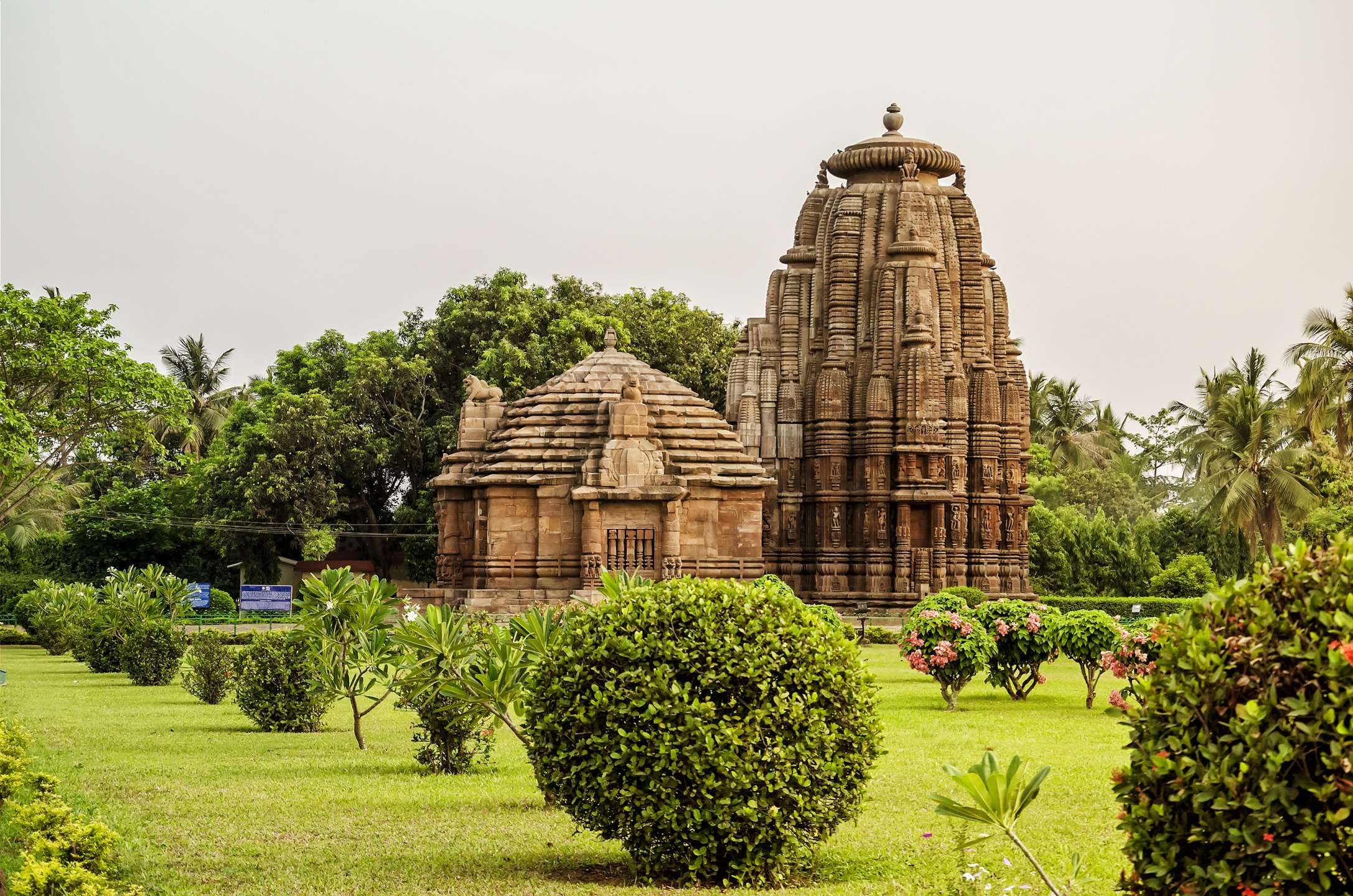
The building is primarily constructed of red sandstone, enhanced with carved details in yellow stone. The shikhara, the conical superstructure characteristic of the Shekhari style, features several secondary spires crowned with karna-amalakas and amalakas. The facades are covered with bas-reliefs depicting deities, mythological scenes, and floral motifs.
Interior layout
The plan follows Jain tradition and is divided into four successive spaces:
- Garbhagriha: main sanctuary housing the idol of Sumatinatha.
- Antarala: vestibule leading to the sanctuary.
- Mahamandapa: great hall for prayer and gathering.
- Ardhamandapa: half-hall entrance.
On the ground floor, the white marble idol of Sumatinatha sits on a silver platform. Parshvanath, another major Tirthankara, also occupies a venerated place in the temple, his teachings on non-violence and asceticism being central to devotees.
Paintings and decoration
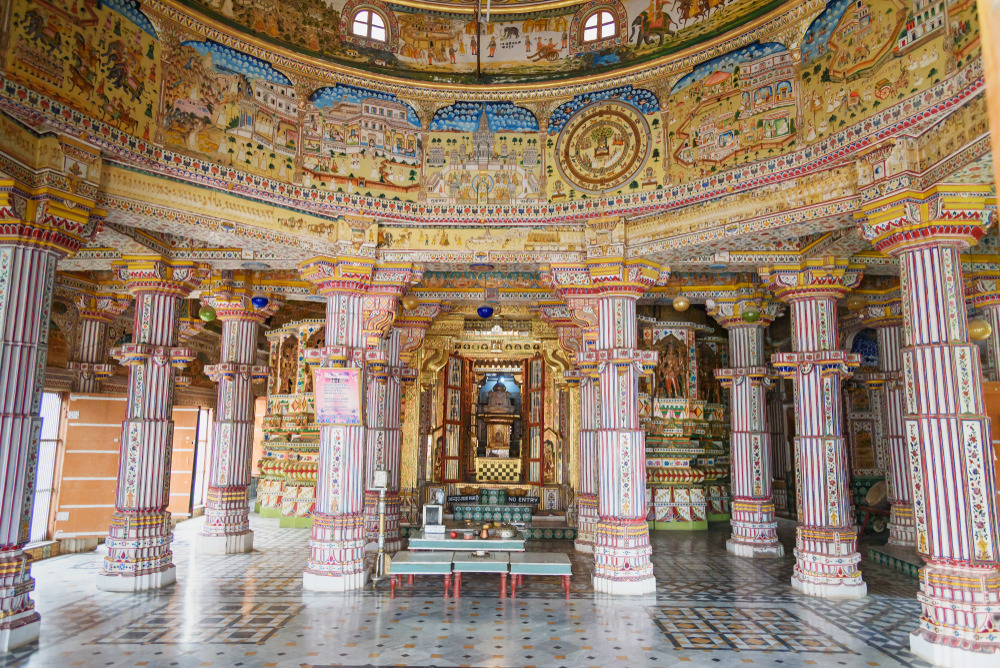
Each wall is adorned with detailed paintings retracing the history of the 24 Tirthankaras, the spiritual guides of Jainism, as well as scenes featuring acharyas and Rajasthani landscapes. Artists used gold leaf, camel bone, and sandalwood. The ceilings combine geometric patterns, hand-painted floral motifs, and inlaid mirror fragments that reflect natural light. A "magic mirror" composed of finely decorated pieces is among the most remarked-upon elements for visitors.
The second-floor sanctuary
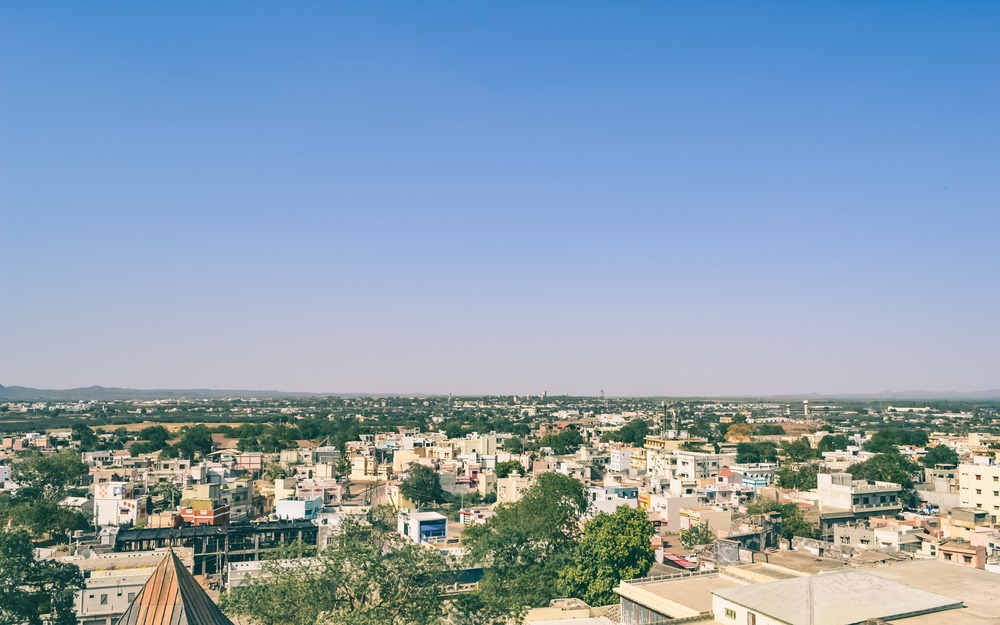
A staircase leads to a secondary sanctuary on the second level. The statues venerated there are less frequently visited than those on the ground floor, and the adjacent terrace offers panoramic views over Bikaner's rooftops and the old city's ramparts.
Practical information
The temple is open to visitors outside of worship hours, generally in the morning and late afternoon. Exact hours vary by season; it is wise to inquire locally the day before your visit.
- Dress code: shoulders and knees covered, loose-fitting clothing.
- Bare feet inside (leave shoes at the entrance).
- Leather objects prohibited (belts, bags, wallets), in keeping with Jain principles.
- Photography often restricted inside: ask permission before photographing frescoes or idols.
- Silence required so as not to disturb worshippers in prayer.
The visit typically lasts 45 minutes to 1 hour. Hiring a local guide allows you to better grasp the symbolism of the frescoes and represented Tirthankaras.
When to visit
November to March is the most pleasant time to visit Bikaner, with daytime temperatures remaining comfortable. From April to June, the Thar Desert heat can exceed 40°C and make sightseeing difficult, although the temple interior offers some cool relief. The monsoon (July-September) is milder but remains secondary in this arid region.
To fully appreciate the colors of the sandstone and frescoes, favor early morning or late afternoon light.
How to get there
The temple is located in the Bada Bazaar quarter, in Bikaner's old city. From the city center, count about ten minutes by rickshaw or taxi. Bikaner is connected by train and road to the main cities of Rajasthan: Jaipur (approximately 330 km), Jodhpur (approximately 250 km), and Jaisalmer (approximately 330 km). Jodhpur Airport is the closest, but the rail connection from Delhi or Jaipur remains the most practical.
What to see nearby
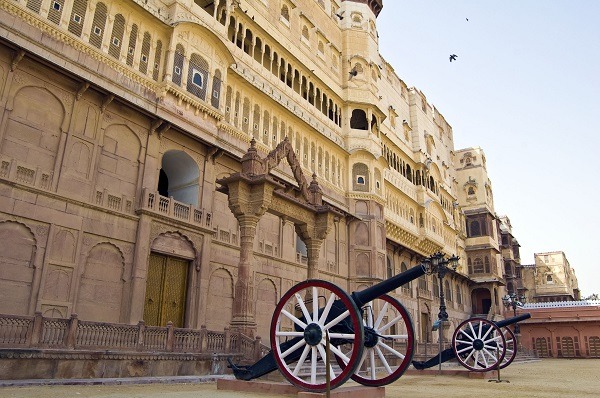
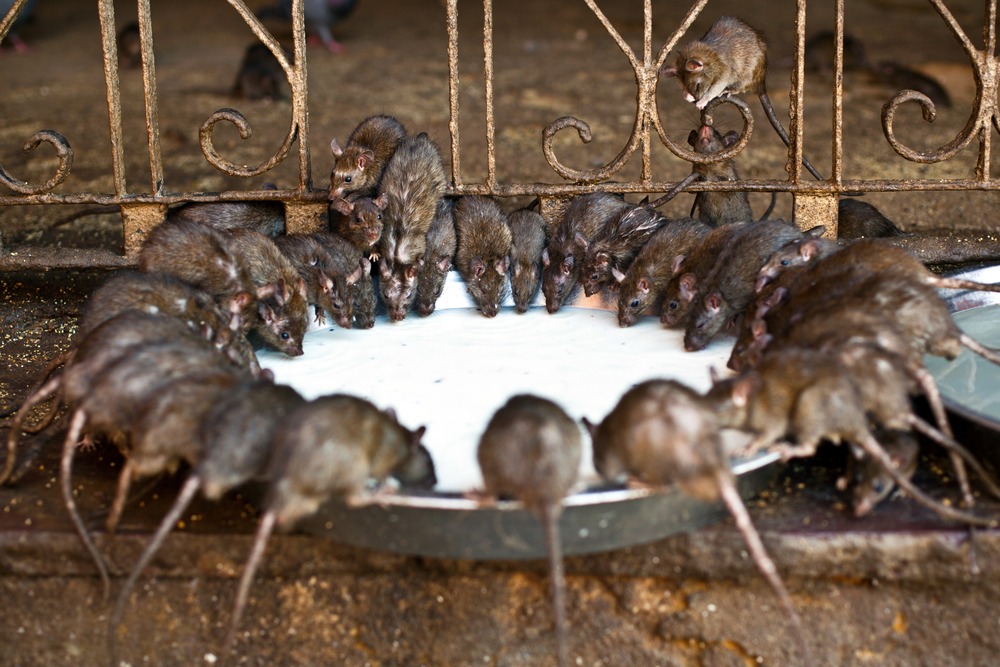
Bikaner brings together several complementary sites suited to a one or two-day visit. Junagarh Fort, a few minutes from the temple, preserves impressive courtyards, palaces, and collections. Karni Mata Temple, about thirty kilometers south, is famous for its rats considered sacred. To extend your exploration of Rajasthani art and architecture, Amar Sagar Lake near Jaisalmer and the Ajit Singh Memorial in Jodhpur offer other facets of the region.
Frequently asked questions
Frequently asked questions
Yes, the temple welcomes visitors of all faiths provided they respect the dress code, the prohibition of leather objects, and maintain silence inside.
Entrance is generally free, but donations are welcome for the upkeep of the sanctuary. Terms may vary; inquire upon arrival.
Allow 45 minutes to 1 hour to tour both levels and observe the frescoes. With a guide, plan for 1 hour 30 minutes.
Photography is often restricted inside, particularly near the idols. Ask permission before taking your photographs.
According to tradition, 40,000 kilograms of ghee are said to have replaced water in the construction mortar, and the floors are said to have been laid with a mixture of ghee and coconut. Legend has it that traces of ghee still seep from the walls during intense heat.
Prepare your visit
The Bhandasar Temple fits naturally into a circuit devoted to desert Rajasthan, between forts, palaces, and caravan villages. To build your itinerary, consult our India travel suggestions and our guides dedicated to Bikaner.
Nearby
Interested in this visit?
We can include it in your personalised itinerary.