Bhagsu Nag Temple
Bhagsu Nag Temple
Two kilometres from McLeod Ganj, Bhagsu Nag Temple combines a Shiva sanctuary, the legend of King Bhagsu, sacred pools and direct access to Bhagsu Waterfall.
Two kilometres from McLeod Ganj, in Kangra district (Himachal Pradesh), Bhagsu Nag Temple — also called Bhasgunath Temple — is dedicated to the god Shiva and the serpent deity Bhagsu Nag. Set against the Dhauladhar range, this sanctuary combines an ancient founding legend, understated mountain architecture and two sacred pools fed by a spring. It makes a short but meaningful stop for understanding the religious and Gurkha culture of the Dharamshala region.
Why visit Bhagsu Nag Temple
The temple brings together several points of interest in one location: a living sanctuary frequented by Gurkha communities from the 14 surrounding villages, two pools of crystal-clear water used for ritual bathing, and a natural starting point for Bhagsu Waterfall. Its immediate proximity to McLeod Ganj — accessible on foot — makes it one of the easiest outings to arrange from Dharamshala. Allow 1 to 2 hours on site, longer if you extend your visit to the waterfall or the nearby bazaar.
History and legend
Local tradition traces the founding of the site to a mythological narrative. King Bhagsu of Ajmer, seeking to save his people struck by drought, is said to have stolen the water from Nag Dal lake, situated above 5,000 metres in altitude, from Nag Devta, the serpent deity. Discovering the theft, the serpent god caught up with the king and a battle took place on the lands which subsequently took the names of both protagonists. Pardoned after imploring the god's clemency, the king obtained that the water remain with his people; the merger of the two names gave "Bhagsu Nag".
A second tradition recounts that at the beginning of Kalyug, Shiva appeared in a dream to King Dharma Chand asking him to build a temple at the place where the sacred spring flowed. According to this tradition, the sanctuary would have been founded some 5,000 years ago — a date to be understood as symbolic rather than historical. The current temple was rebuilt in the nineteenth century by the 1st Regiment of Gurkha Rifles, and continues to be revered by Gurkha communities in the surrounding villages.
What to see on site
The main sanctuary
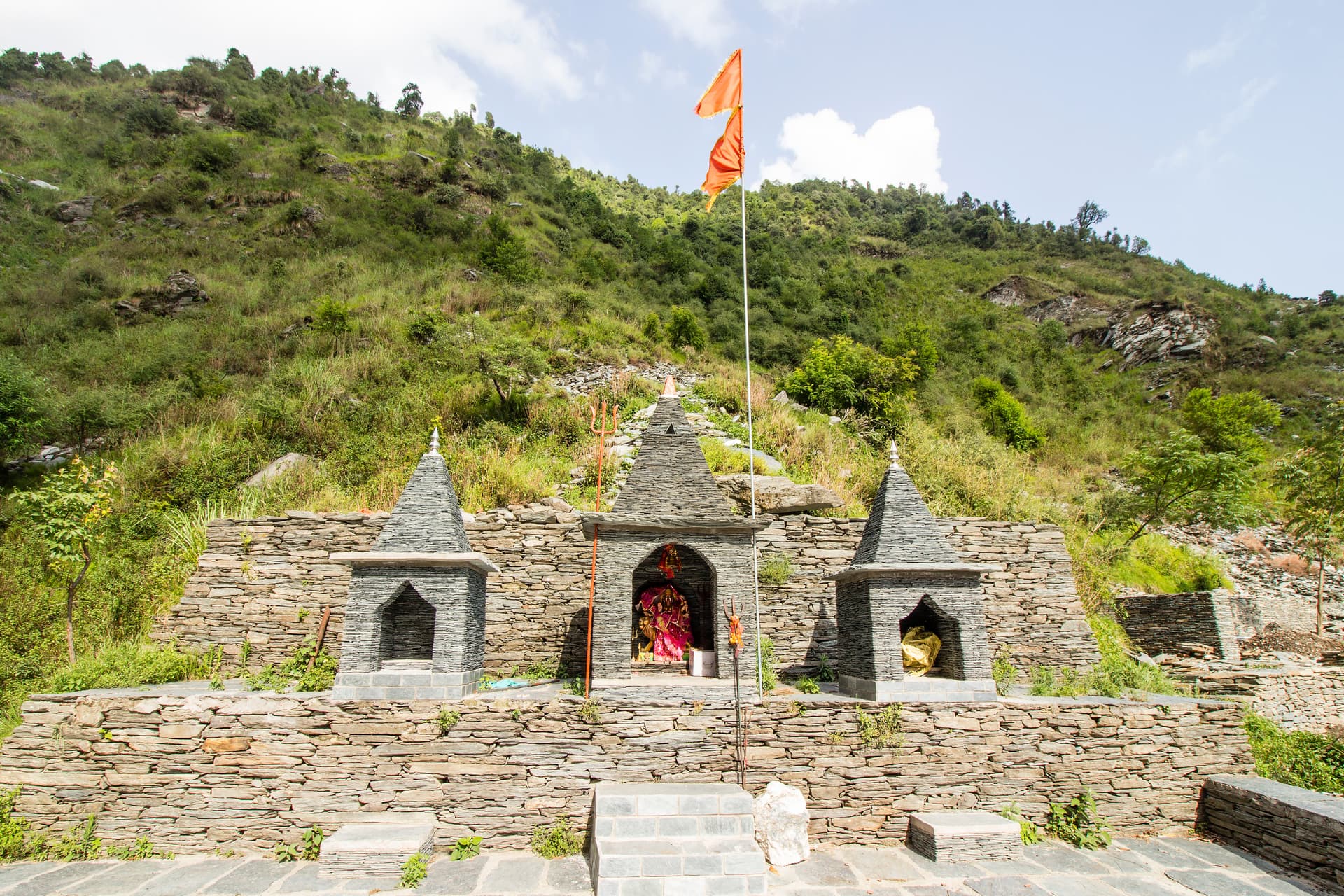
The heart of the complex houses the idol of Bhagsu Nag, adorned with flower offerings, and a Shiva Lingam. This dual homage to the divine serpent and Shiva summarizes the religious identity of the site. The architecture is typical of Himachal: wooden roof, white spire and red finishes, in modest proportions that blend into the surrounding forest.
The sacred pools
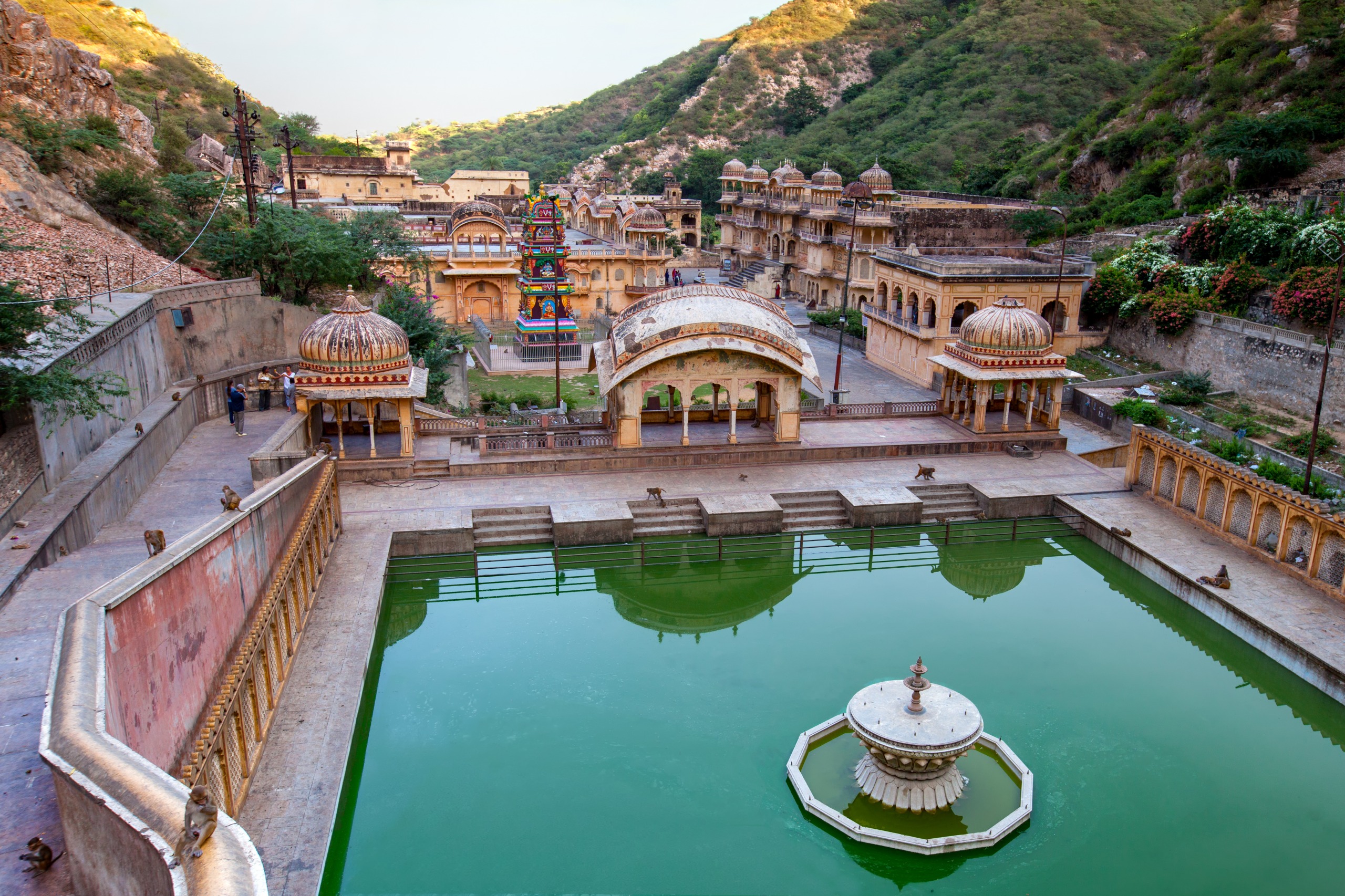
Two pools of crystal-clear water, fed by the spring, are considered sacred. Devotees perform ritual baths in them before entering the sanctuary. Travellers can observe the practice from a distance; some also refresh themselves in the pools. The pools are accessible during the day, typically from dawn and until early evening in the warm season.
Bhagsu Waterfall
About twenty minutes' walk from the temple, Bhagsu Waterfall drops approximately thirty metres onto dark rocks surrounded by forest. The flow varies greatly depending on season: modest in spring, spectacular during the monsoon. The trail is short but steep; wear good shoes.
Practical information
- Location: Bhagsu village, 2 km from McLeod Ganj, Kangra district, Himachal Pradesh.
- Duration of visit: 1 to 2 hours for the temple alone, 3 hours including the waterfall.
- Dress code: shoulders and knees covered, shoes to be removed at the sanctuary entrance.
- Pools: accessible during the day, extended hours in summer.
- Entry fee: free entry; small donations appreciated.
- On site: stalls selling incense, religious objects and souvenirs around the temple.
When to visit
The most favourable periods run from March to June, then September to November. Spring offers sunny days and mild temperatures; autumn provides clear light on the Dhauladhar. The monsoon, from July to August, makes the waterfall impressive but complicates the trails. Winter is harsh due to the altitude, with possibility of snow. If you can, plan your visit for September: an annual traditional fair then animates the village, blending Hindu rituals and local celebrations.
How to get there
By air
The nearest airport is Gaggal (Kangra), about 10 km from McLeod Ganj. It is served by flights from Delhi and Kullu, with frequencies varying by season.
By train
The main train station closest is Pathankot, about 90 km away, well connected to major Indian cities. From there, allow for buses or taxis to reach Dharamshala then McLeod Ganj. The narrow-gauge stations at Kangra and Nagrota offer a more local alternative.
By road
McLeod Ganj is connected by state buses to Delhi, Chandigarh and several towns in Himachal Pradesh. From McLeod Ganj town centre, the temple is reached on foot in 20 to 30 minutes via an uphill road, or in minutes by local taxi.
In the surroundings
Bhagsu was originally a pastoral village of the Gaddi tribe; it is today a meeting point between Tibetan monastic life, trekkers and international travellers. Several stops extend the visit:
- The Dalai Lama Temple (Tsuglagkhang), 3 km away, spiritual centre of the Tibetan community in exile.
- The Kotwali Bazaar, nearby, for fresh produce, crafts and souvenirs.
- Local bakeries, where you can taste Bhagsu cake, a sweet specialty of the village.
To broaden your itinerary in India, you can also explore other heritage sites such as the Alchi Monastery in Ladakh, the State Museum in Bhopal or the Ajit Singh Memorial.
Frequently asked questions
Frequently asked questions
Plan your trip
Bhagsu Nag Temple fits naturally into a stay in Dharamshala and McLeod Ganj, complementing Tibetan sites and walks in the Dhauladhar. To build a bespoke itinerary combining the Indian Himalaya with other regions of the country, consult our trips to India.
Interested in this visit?
We can include it in your personalised itinerary.