Jagdish Temple
Jagdish Temple
Built in 1651 by Maharana Jagat Singh, Jagdish Temple in Udaipur is dedicated to Vishnu. Indo-Aryan architecture, 22-meter sikhara and Rajasthani sculptures.
Built in 1651 in the heart of Rajasthan's lake city, Jagdish Temple — also called Laxmi Narayan — is one of Udaipur's largest temples. Dedicated to Vishnu, the preserver of the universe in Hinduism, it stands just steps from City Palace, with which it shares access through the monumental gate known as barapol. Its Indo-Aryan architecture, its 22-meter sanctuary tower and sculptures inherited from the 17th century make it a major stop for understanding the religious history of Mewar.
Why visit Jagdish Temple
- An active temple for more than three centuries, still frequented by Udaipur's devotees.
- Indo-Aryan architecture representative of 17th-century Vishnu-worshipping Rajasthan.
- A rich iconographic program: dancers, horsemen, musicians, apsaras, scenes from the life of Krishna.
- A central location at the entrance to City Palace, making it easy to include in a half-day exploration of the old city.
- Free admission, making it a natural complement to the paid sites in the neighborhood.
Temple history
The temple was built in 1651 by Maharana Jagat Singh, ruler of Udaipur from 1628 to 1653. Local tradition speaks of a major undertaking; sources mention a considerable budget for the time, sometimes cited around 1.5 million rupees, a figure better understood as a rough estimate passed down through local chronicles than as verified accounting data.
The sanctuary bears the marks of Mewar's turbulent history. Several exterior sculptures — figures of elephants, horses, warriors — were damaged during confrontations with Mughal armies that took place around Udaipur. The hammer-marked faces and faded reliefs still bear witness to these episodes today.
A local legend holds that one of the temple's slabs possesses soothing properties: according to belief, rubbing an ailing limb against it would ease certain ailments. This tradition belongs to popular devotion and is part of the sanctuary's daily life.
What to observe on-site
Exterior architecture
The temple rises over three stories and culminates in a sikhara (sanctuary tower) of approximately 22 meters, dominating the neighborhood's skyline. The ensemble follows the Indo-Aryan style, with a pyramidal elevation punctuated by sculptured registers. Access to the main enclosure is via a flight of steps flanked by stone elephant statues.
Sculptures and reliefs
The walls and sikhara feature dense decoration: dancers, horsemen, musicians and apsaras (celestial nymphs) dot the facades. Several panels illustrate scenes from the life of Krishna, one of Vishnu's avatars. In front of the main sanctuary, a brass statue of Garuda, Vishnu's winged servant, faces the inner idol, as is customary in Vishnu temples.
The inner sanctuary
The garbhagriha (sacred chamber) houses the primary image of Vishnu. The sculpted ceiling and pillars adorned with floral and figurative motifs recall the quality of Mewar's craftsmen's work in the 17th century. Visits are conducted barefoot, out of respect for the devotees present.
Practical information
- Access: via the barapol, the entrance gate to City Palace.
- Hours: open early morning through evening, with a possible break midday. The aartis (ritual ceremonies) punctuate the day and are worth observing.
- Admission: free entry.
- Visit duration: allow 30 to 60 minutes for a careful exploration of the sculptures and sanctuary.
- Dress code: shoulders and legs covered; shoes to be removed before entering.
- Guides: English-speaking, Hindi-speaking and other language guides offer their services nearby; useful for deciphering iconography.
- Photography: permitted outside, generally prohibited inside the sanctuary.
When to visit
Udaipur is comfortably visited between October and March, when temperatures remain manageable. April, May and June are hot and dry; July through September bring monsoons. For Jagdish Temple, favor early morning or late afternoon: the light enhances the stone and aartis mark these times. The festival of Janmashtami (the birth of Krishna, in August-September according to the lunar calendar) is particularly vibrant here.
How to get there
Udaipur is connected to major Indian cities by air (Maharana Pratap Airport, approximately 25 km from the center), by train (Udaipur City station) and by long-distance bus. The temple is located in the historic heart, immediately near City Palace. From most hotels in the old city, it is within walking distance. By auto-rickshaw, the fare from the station or outlying neighborhoods is short and inexpensive.
Nearby
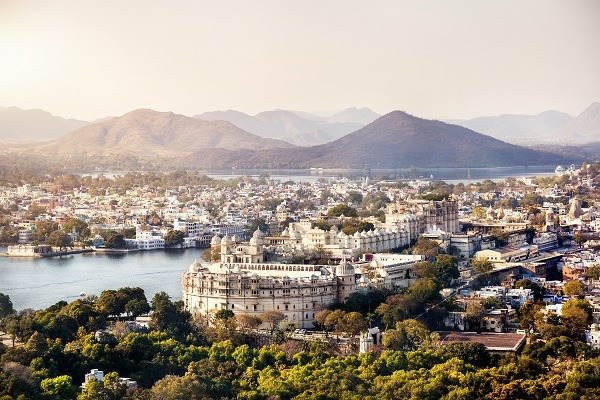
Jagdish Temple is part of a cluster of sites concentrated around Lake Pichola:
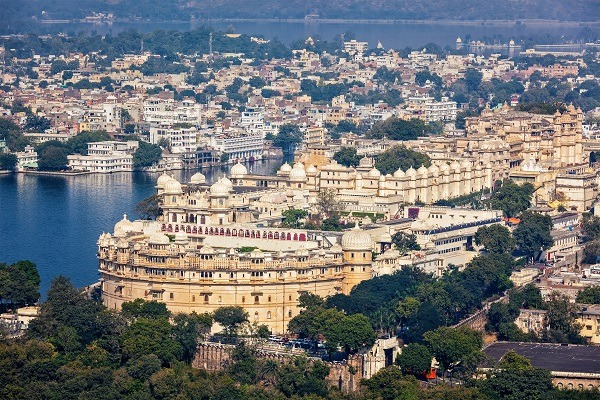
- Udaipur's City Palace, whose entrance adjoins the temple.
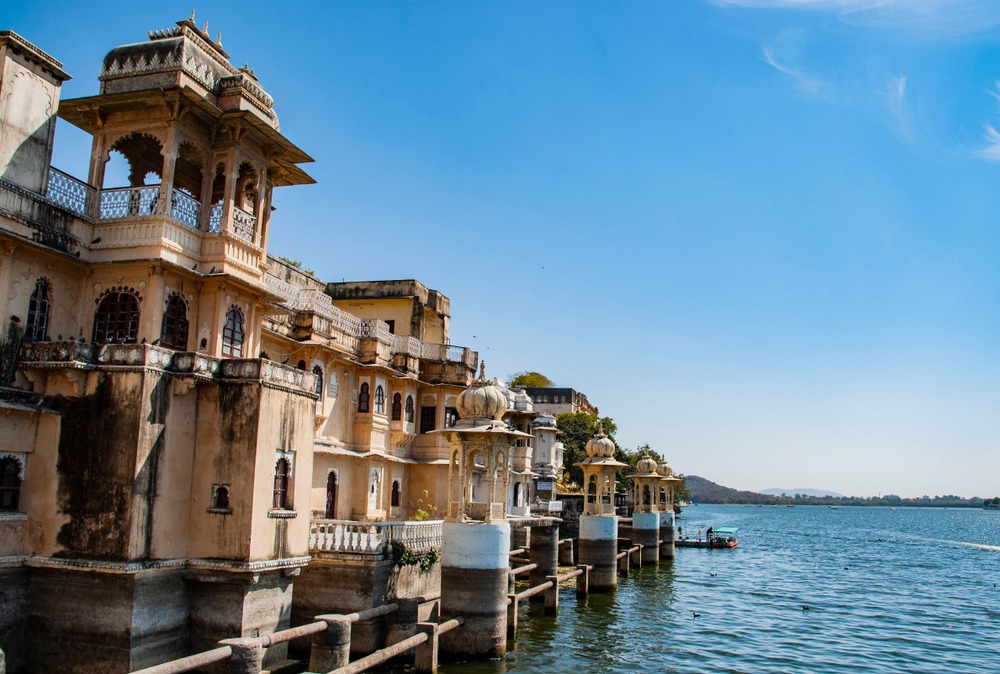
- The Bagore Ki Haveli museum, a former aristocratic residence by the lakeside.
- Further into Rajasthan, Fort Taragarh and Fort Jaigarh extend exploration of Rajasthani military architecture.
Frequently asked questions
Frequently asked questions
Include Udaipur in your journey
Jagdish Temple naturally fits into a Rajasthan circuit combining Udaipur, Jaipur and Jodhpur. To build a customized itinerary including the lake city and its major sites, explore our trips to India.
Nearby
Interested in this visit?
We can include it in your personalised itinerary.