Red Fort of Delhi (Lal Qila)
Red Fort of Delhi (Lal Qila)
Built by Shah Jahan in the 17<sup>th</sup> century, the Red Fort is the iconic monument of Old Delhi. Imperial palaces, red sandstone ramparts and museums: an unmissable UNESCO site in the heart of Chandni Chowk.
The Red Fort — Lal Qila in Hindi — has dominated the old city of Delhi since the 17th century. Built by Mughal emperor Shah Jahan between 1638 and 1648, it served as the seat of imperial power for nearly two centuries. Its ocre-red sandstone ramparts, white marble palaces and inner gardens make it one of the best-preserved monuments of Mughal architecture. Listed as a UNESCO World Heritage Site since 2007, it remains a living symbol of Indian independence.
Practical Information at a Glance
- Admission: paid — differentiated rates for Indian residents and foreign visitors
- Closure: closed Mondays
- Recommended Duration: 2 to 3 hours to explore the entire complex
- Access: Delhi Metro, Lal Qila station (Yellow Line) — a few minutes' walk from the main gate
- Dress Code: no religious requirements, but proper attire is recommended
- Security Check: mandatory screening at entry; certain items (food, bottles) may be prohibited
- Sound and Light: evening show organized within the grounds (check schedule on site)
What to See
The complex spans approximately 250 acres. Entry is through the Lahori Gate, the main gate on the west side, which opens onto the covered bazaar Chatta Chowk. Beyond, gardens lead to imperial palaces lined along the Yamuna River.
- Diwan-i-Aam: public audience hall where the emperor received his subjects, with an inlaid marble throne
- Diwan-i-Khas: private audience hall, once adorned with the Peacock Throne — the Persian inscription on its walls remains celebrated
- Rang Mahal: Palace of Colors, residence of imperial wives, with a central marble basin
- Moti Masjid: small white marble mosque built by Aurangzeb within the grounds
- Archaeological Museum: collections of weapons, miniatures and objects from the Mughal period
History and Context
Shah Jahan transferred his capital from Agra to Delhi in 1638 and had this fort built as the heart of the new city, Shahjahanabad. Following the 1857 Sepoy Rebellion, the British occupied the fort, destroyed part of the gardens and installed barracks. Indian independence was proclaimed from its ramparts on August 15, 1947 — a tradition that each Prime Minister perpetuates every year.
Highlights of Your Visit
The Lahori Gate and Chatta Chowk
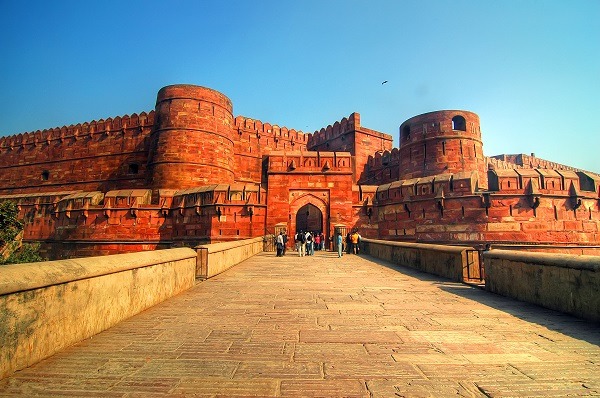
The monumental entrance gate sets the tone: massive red sandstone, ogival arches, crenellated bastions. The covered bazaar that follows was once reserved for the court's silk and jewelry merchants.
The Diwan-i-Khas
This white marble pavilion inlaid with semi-precious stones is the fort's most refined space. The Persian inscription — "If paradise exists on earth, it is here, it is here, it is here" — sums up Shah Jahan's ambition.
The Ramparts at Sunset
From the rampart walk, views of Old Delhi's rooftops and the Jama Masjid minaret take on warm light in late afternoon. This is the quietest time of day.
The Sound and Light Show
In the evening, a multimedia show traces the history of the fort and Mughal empire. The illuminated ramparts provide a striking backdrop.
Photography Tips
Early morning light (shortly after opening) is ideal: the red sandstone glows against the rising sun and crowds are still limited. For the Diwan-i-Khas, choose a low angle to capture the arches and inlays. Drones are prohibited within the grounds and immediate surroundings.
Location and Access
The Red Fort is located in the Chandni Chowk area, at the heart of Old Delhi. The Lal Qila Metro station (Yellow Line) is the closest. By rickshaw or taxi from Connaught Place, allow about twenty minutes depending on traffic. The Jama Masjid is accessible on foot within a few minutes. Wheelchair access is partial: main walkways are accessible, but some pavilions have steps.
Nearby Attractions
- Jama Masjid — India's largest mosque, a few hundred meters away on foot, with its three marble domes and minarets.
- Chandni Chowk — the historic grand bazaar of Old Delhi, perfect for exploring spices, textiles and street food.
- Raj Ghat — Gandhi's memorial on the banks of the Yamuna, serene and contemplative, less than two kilometers away.
- Qutb Minar — 12th century minaret in southern Delhi, another UNESCO site in the city.
Frequently asked questions
From October to March, the heat is manageable and the sky often clear. Avoid weekends and Indian public holidays: queues grow considerably. On weekdays, early morning allows you to enjoy the site with few crowds.
Two hours are sufficient for the main highlights. Three hours allow you to explore the museums and take your time in each pavilion without rushing.
Yes, both sites are a few minutes' walk apart. Start with the fort in the morning, then head to the mosque before midday prayers. In the afternoon, Chandni Chowk bazaar naturally completes the day.
No. Drones are strictly prohibited within the grounds and in the immediate vicinity of the monument. Standard cameras and smartphones are, however, permitted without particular restrictions.
No strict requirements, unlike at mosques. Proper attire (shoulders and knees covered) is nevertheless recommended out of respect for the site and to avoid any issues at security checks.
Main internal walkways are wheelchair accessible. Some historic pavilions have steps or high thresholds that limit full access. It is advisable to inquire on site with the reception staff.
Photos
Nearby
Interested in this visit?
We can include it in your personalised itinerary.