India Gate
India Gate
A 42-meter triumphal arch erected in 1931 in the heart of New Delhi, India Gate commemorates the soldiers of the Indian Army. Free admission, eternal flame, and nighttime illumination make it an unmissable symbol of the capital.
India Gate is a 42-meter triumphal arch standing at the heart of New Delhi, along the ceremonial axis of Rajpath (now Kartavya Path). A commemorative monument dedicated to the 84,000 soldiers of the British Indian Army who fell during World War I and the 1919 Afghan War, it is also the civic symbol of the Indian capital. The eternal flame of the Amar Jawan Jyoti, lit in 1972, burns at its base in tribute to unknown soldiers.
Practical information at a glance
- Admission: free, open 24/7
- Recommended duration: 30 to 60 minutes on site
- Best time to visit: in the evening, when the monument is illuminated
- Access: Central Secretariat metro station (Yellow/Purple lines), then approximately 15 minutes on foot or by rickshaw
- Dress code: no restrictions
- Accessibility: the lawns and pathways around the monument are wheelchair accessible
What to see
The main arch, built in red sandstone from Bharatpur, bears the engraved names of thousands of soldiers. Beneath the vault, the Amar Jawan Jyoti flame is guarded permanently by military personnel. Surrounding the monument is a vast grassy park frequently visited by Delhi families, with ice cream and snack vendors. The Kartavya Path axis connects India Gate to the Rashtrapati Bhavan (presidential palace), visible in the distance.
History and context
Designed by British architect Edwin Lutyens, India Gate was inaugurated in 1931 by Viceroy Lord Irwin. Its style is directly inspired by the Arc de Triomphe in Paris. Originally, a statue of King George V stood beneath a canopy nearby; removed after independence, the canopy remains empty. In 2022, a statue of Subhas Chandra Bose was installed there. The monument is the focal point of Republic Day ceremonies on January 26.
Highlights of the visit
The Amar Jawan Jyoti flame
Beneath the arch's vault, four soldiers stand guard permanently around the eternal flame. This solemn ritual, visible at any hour, gives the place a dimension far beyond that of a simple tourist monument.
Nighttime illumination
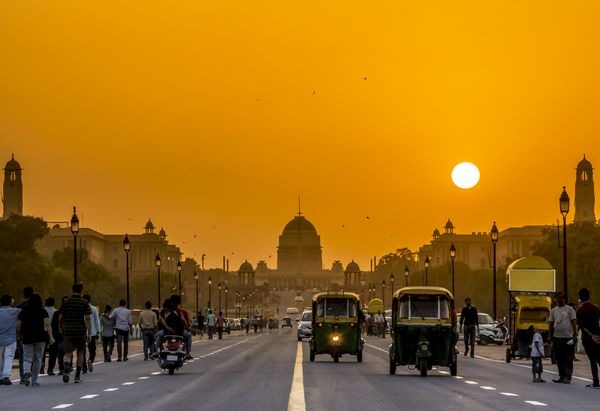
After sunset, India Gate is bathed in an orange glow that contrasts with the dark sky. This is the most photographed and busiest time: families picnic on the lawns, children play, and the atmosphere is festive.
Kartavya Path
The avenue, redesigned in 2022, offers a straight perspective toward the Rashtrapati Bhavan. A walk along this boulevard allows you to grasp the scale of Lutyens' Delhi imperial urbanism in its entirety.
Photography tips
The golden light of late afternoon (one hour before sunset) is ideal for shots from the Kartavya Path axis. In the evening, artificial illumination creates highly contrasted images. To frame the entire arch, step back to the hexagonal basin surrounding it. Avoid busy days (weekends, public holidays) if you're looking for clear shots.
Location and access
India Gate is located in the Lutyens' Delhi district, at the eastern end of Kartavya Path. The nearest metro station is Central Secretariat (Yellow and Purple lines). From Connaught Place, allow approximately 20 minutes by rickshaw. The monument is within walking distance of the Rashtrapati Bhavan and the National Museum of Delhi.
Nearby attractions
- Rashtrapati Bhavan — The presidential palace, visible from India Gate, whose Mughal gardens are open to the public during certain periods.
- National Museum of Delhi — One of India's largest collections of art and archaeology, a few minutes' walk away.
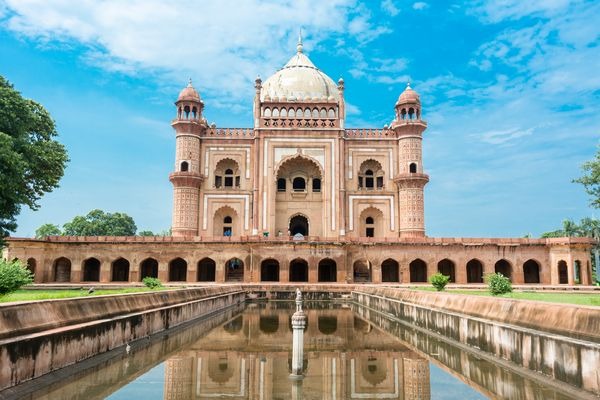
- Humayun's Tomb — A masterpiece of Mughal architecture and precursor to the Taj Mahal, accessible by metro or taxi.
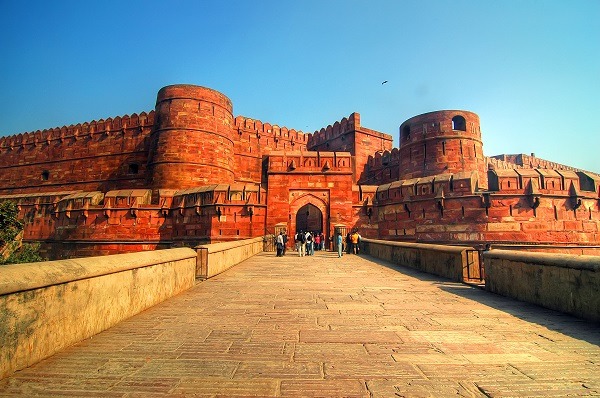
- Purana Qila — The old Mughal fortress, with its lake and ramparts, a few kilometers to the southeast.
Frequently asked questions
Yes, the site is freely accessible 24/7 and admission is free. Nighttime illumination makes it a particularly pleasant place to visit after 7 p.m.
October to March, when temperatures are mild. In summer (April-June), temperatures can exceed 40°C during the day; prefer an evening visit instead.
No, the interior and top of the arch are not accessible to the public. The visit is conducted around and beneath the monument's vault.
Photography is freely permitted. Remain respectful near the flame and soldiers on duty.
India Gate easily combines with the National Museum and Rashtrapati Bhavan in the same half-day. Humayun's Tomb or Purana Qila can round out your day by taxi or metro.
The monument itself does not offer official guided tours. Private guides offer circuits including India Gate in a Lutyens' Delhi tour; your local agency can arrange this.
Photos
Nearby
Interested in this visit?
We can include it in your personalised itinerary.