Bidar
Bidar
Bahmani forts, sultanate palaces, royal tombs and Bidriware craftsmanship: Bidar, an underrated gem of Karnataka, deserves a detour from Hyderabad.
A city in Karnataka State, Bidar reveals a rich historical heritage through its diverse monuments. Your visit to Bidar will be marked by explorations of its temples and palaces that transport you back through the centuries.
History of Bidar
The Bahmani dynasty was established in this city in 1347, following a rebellion by officers of the Sultan. During the age of the Deccan Sultanates, Bidar and Bijapur became capitals and marked the eastern frontier of historic Deccan.
Between 1428 and 1492, Bidar served as the capital of the Bahmani rulers. When these collapsed, the city of Bijapur gained independence and Bidar was chosen as the capital of the Barid Shahi rulers in 1487. Thus, it became one of the five sultanates of the Deccan.
To mark the beginning of the city's development, Ahmad Shah Wali Bahmani ordered the construction of the Bidar Fort in 1430.
In 1656, Mughal emperor Aurangzeb undertook the conquest of the region to integrate Bidar into the Adil Shahi kingdom among the possessions of the Nizam of Hyderabad. By the mid-17th century, the city was incorporated into the Mughal Empire.
Exploring Bidar
Bidar will impress you with its picturesque monuments, each belonging to different eras. The architecture of buildings and structures often displays a blend of Hindu style with Turkish and Persian craftsmanship. The aesthetics and decor are distinctive.
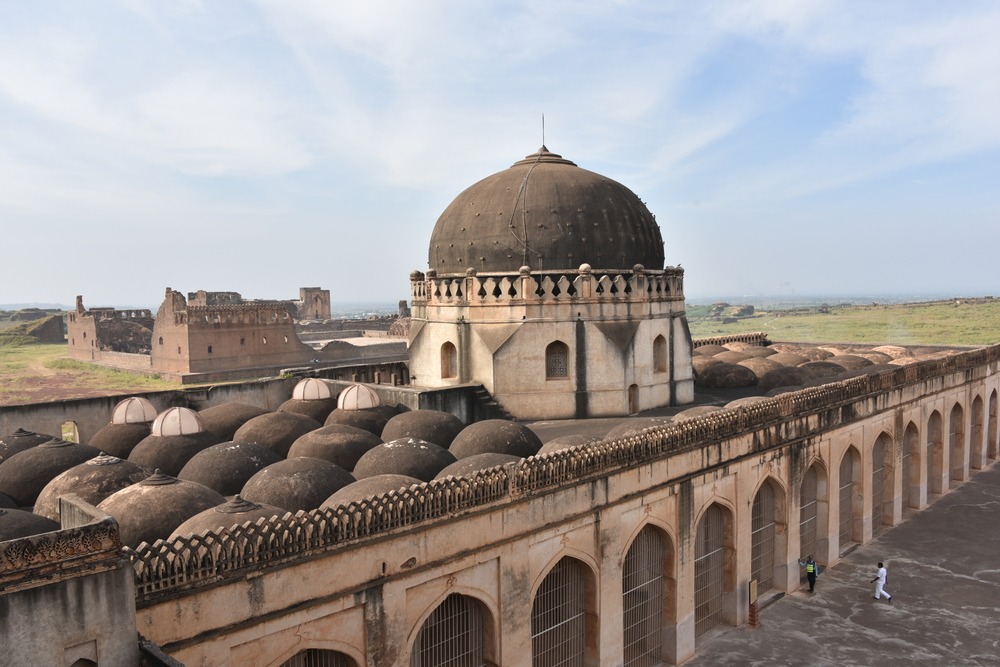
Among Bidar's must-see attractions, count the "Bidar Fort" which will surely captivate architecture enthusiasts. Built by Ahmad Shah Wali Bahman, this vast estate distinguishes itself through its structure and the elements that compose it. It features a double defensive fortification and a Takht Mahal located at the Kalmadgi gate. Within its grounds lies a temple of Virasangayya with an ancient water reservoir. Also admire the steep cliffs all around that provide natural protection to the site.
To continue your tour of Bidar, head to the Tarkash Mahal, which was built for the Sultan's wife. Within this residence, admire the beauty and refinement of the decorative work on the walls. Visit the grand harem and the ladies' quarters adorned with stucco.
Another noteworthy attraction, the citadel fort is described as a complex protected by three moats. It includes two entrance gates called Sharza Darwaza and Gumbad Darwaza, a zigzag passage and ancient bridges.
Do you love art? Visit the Rangeen Mahal to discover colored tile decorations, carved wooden objects, ornaments made of mother-of-pearl or black jet stone, and more. Notice the floral motifs and calligraphic texts depicted. This establishment showcases the art of stucco work.
On the historical sites side, include in your itinerary the Memorial, the open tomb of Ali Bareed surrounded by those of his 61 wives. Organize a visit to the Narasimha Jharni cave temple, an incarnation of a Hindu deity. To reach the true sanctuary under the tunnel, beneath Manichoola hill, you must venture into the cave. You will see bats hanging from the tunnel ceiling. Finally, plan an outing to the former madrasa converted into an Islamic college. Dating from the 15th century, this nationally important edifice showcases Indo-Islamic architecture.
Climate in Bidar
Bidar is dominated by a desert climate with moderate rainfall. For a successful stay in the city, choose dates in December, as it is the driest period. The month of August proves to be the wettest. In May, during the peak summer season, temperatures in Bidar can reach 32°C.
To make the most of your outings in Bidar and for your safety, it is preferable to rent a vehicle.
What to Do?
- Visit the madrasa of Vizier Mahmud Gawan
- Admire the cenotaphs of the Barid Shahi
- See the cenotaphs of the Bahmani, etc.
Want to discover this destination?
Our local advisors design your tailor-made trip.