Nahargarh Fort
Nahargarh Fort
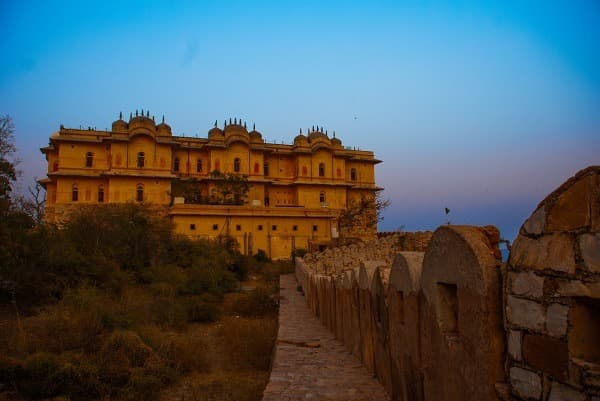
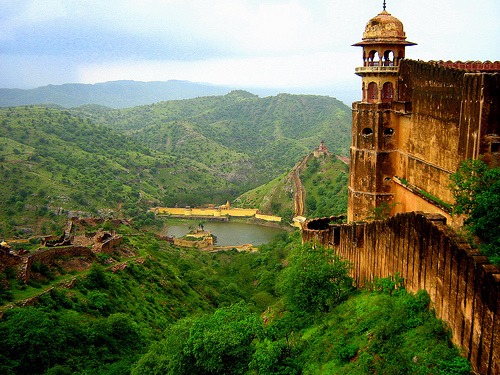
Perched on the Aravalli hills, Nahargarh Fort has dominated Jaipur since 1734. Rajput history, painted palaces and sweeping views over the pink city.
Nahargarh Fort, sentinel of Jaipur on the Aravalli
Perched on the Aravalli hills, Nahargarh Fort has dominated the pink city of Jaipur since 1734. Built originally as a royal retreat by Maharaja Sawai Jai Singh II, founder of the city, it forms with the forts of Amber and Jaigarh the historic defensive triad of Rajasthan's capital. Its name means "abode of tigers", honouring a local legend that marked its construction.
Why visit Nahargarh Fort
The site combines several attractions: sweeping panoramas over Jaipur and the surrounding plains, Indo-European architecture evident in the Madhavendra Bhavan palace, and a history interwoven with Rajput legends, diplomatic treaties and episodes from the 1857 uprising. Away from the bustle of the bazaars, the fort offers a quieter experience than other monuments in the city, particularly enjoyed in late afternoon for the light catching the ramparts.
History of the fort
The monument was originally called Sudarshangarh. According to local tradition, the spirit of Nahar Singh Bhomia, a Rathore prince, obstructed the construction work. To appease it, workers built a temple in his memory within the walls, and the fort was renamed Nahargarh, "abode of tigers".
Completed in 1734 during the reign of Maharaja Sawai Jai Singh II, founder of Jaipur, the fort was designed as a retreat for the royal family. Long fortification walls extended across neighbouring hills, linking Nahargarh to the former capital of Amber.
The fort never witnessed a major siege, but it accompanied several important political episodes: treaties were negotiated with Maratha forces in the 18th century, and during the 1857 uprising, King Sawai Ram Singh had Europeans from the region transferred here for their protection. In 1868, this same ruler undertook major renovations, including the construction of a series of palaces that form the heart of what visitors see today.
What to see on site
The Madhavendra Bhavan
A work of architect Vidhyadhar Bhattacharya, this palace is the fort's main attraction. It is organised around successive courtyards and housed the royal apartments. The fourth courtyard was reserved for court ladies, while the Mardana Mahal accommodated the men of the royal family. The interiors retain finely worked wall paintings and stucco finishes.
The wax museum and Sheesh Mahal
Near the main entrance, a wax museum displays figures of Indian and international personalities. Beside it, the Sheesh Mahal ("palace of mirrors") echoes Rajasthani tradition with glass mosaic decoration. Access to these two spaces requires a separate ticket.
Nahargarh Biological Park
Laid out below the fort, the park extends across granite rock formations and thorn forests characteristic of the Aravalli foothills. It is home to tigers, leopards, and captive Asian lions. The park is visited separately, by vehicle.
Practical information
- Duration: allow 1.5 to 2.5 hours for the fort; longer if you include the biological park.
- Fees: moderate entrance fee for the fort, additional charges for the wax museum and Sheesh Mahal, as well as for photography and video. Rates differ for Indian and foreign visitors.
- Opening: the fort welcomes visitors year-round. Check updated hours before your visit, particularly for evening restaurant services.
- What to bring: comfortable shoes (uneven ground), water, hat or scarf for the sun.
When to visit
The best period runs from October to March, when Rajasthan temperatures remain manageable during the day. April and May are marked by intense heat, poorly suited to walking the ramparts. The monsoon (July–September) greens the hills but may make the access road slippery. In any season, late afternoon is ideal for light on the city and sunset from the terrace.
How to get there
Jaipur's international airport is about 10 km from the fort and serves major Indian cities as well as several international destinations; Sanganer airport handles domestic flights. Jaipur's main railway station, approximately 4 km away, is connected to India's wider rail network.
From the city centre, the simplest option is to arrange a taxi or autorickshaw for the winding drive up to the fort. Local buses also serve Jaipur, but the final approach to the fort is best made by private vehicle.
Nearby
Northern Jaipur concentrates several major sites accessible within the same day or over two days:
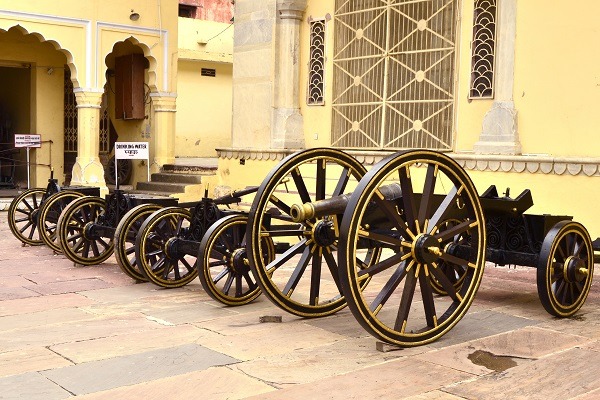
- Jaigarh Fort, connected to Nahargarh by a ridge path, houses one of the world's largest wheeled cannons.
- Amber Fort, the former Rajput capital, below the ridge.
- Jal Mahal, a palace rising from Man Sagar lake, on the return route.
- To explore further Rajasthan's fortresses, Taragarh Fort in Bundi and City Palace in Alwar are worth the detour.
FAQ
Frequently asked questions
Allow 1.5 to 2.5 hours for the fort and Madhavendra Bhavan. Add an hour for the wax museum and Sheesh Mahal, and an extra half-day if you include the biological park.
Yes. The two forts are connected by the old ramparts and accessible from each other by vehicle. A full day allows you to visit both sites without rushing.
Nahargarh means "abode of tigers". The fort was originally called Sudarshangarh; it was renamed in memory of Nahar Singh Bhomia, a Rathore prince whose spirit, according to legend, obstructed the construction.
No major siege against Nahargarh is documented. The site nonetheless played a role in several political episodes, including treaties with the Maratha in the 18th century and sheltering Europeans during the 1857 uprising.
October to March, when temperatures remain moderate. Late afternoon is particularly rewarding for views over Jaipur at sunset.
Planning your Rajasthan trip
Nahargarh fits naturally into an itinerary around Jaipur, a major stop on India's golden triangle. To build a custom journey including Rajput forts, sacred cities and the Thar desert, explore our India trips.
Interested in this visit?
We can include it in your personalised itinerary.