Dundlod Fort
Dundlod Fort
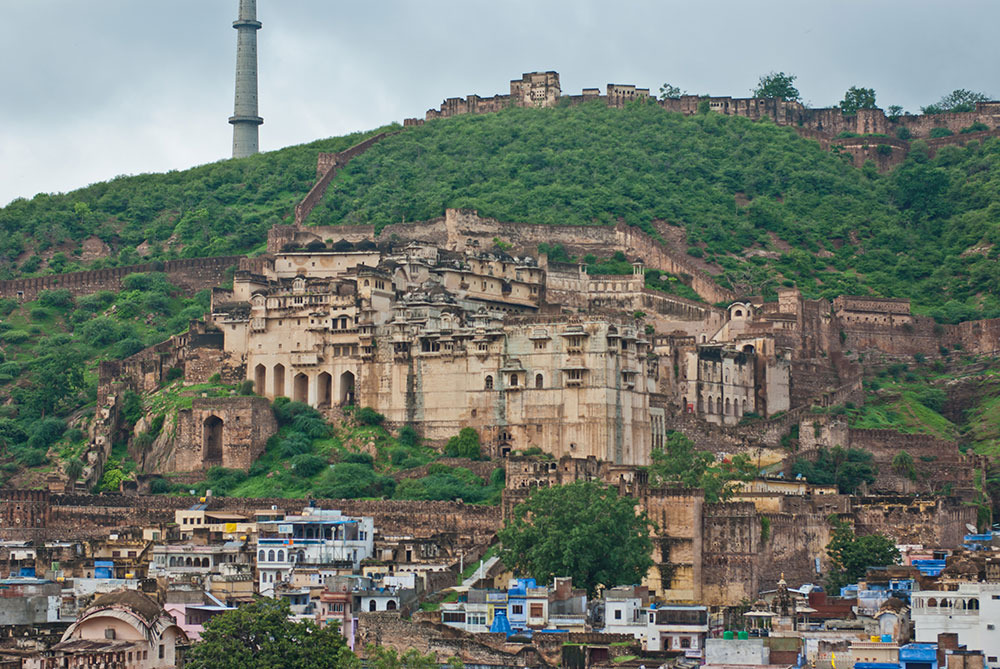
Built in 1750 in Shekhawati, Dundlod Fort showcases the fusion of Rajput and Mughal architecture and now houses a heritage hotel.
Dundlod Fort stands at the heart of the Shekhawati region in northern Rajasthan, celebrated for its painted havelis. Erected in the mid-18th century by a Rajput nobleman, it combines defensive architecture with refined interiors, testament to the intersection of Rajput traditions and Mughal influences.
Why visit Dundlod Fort
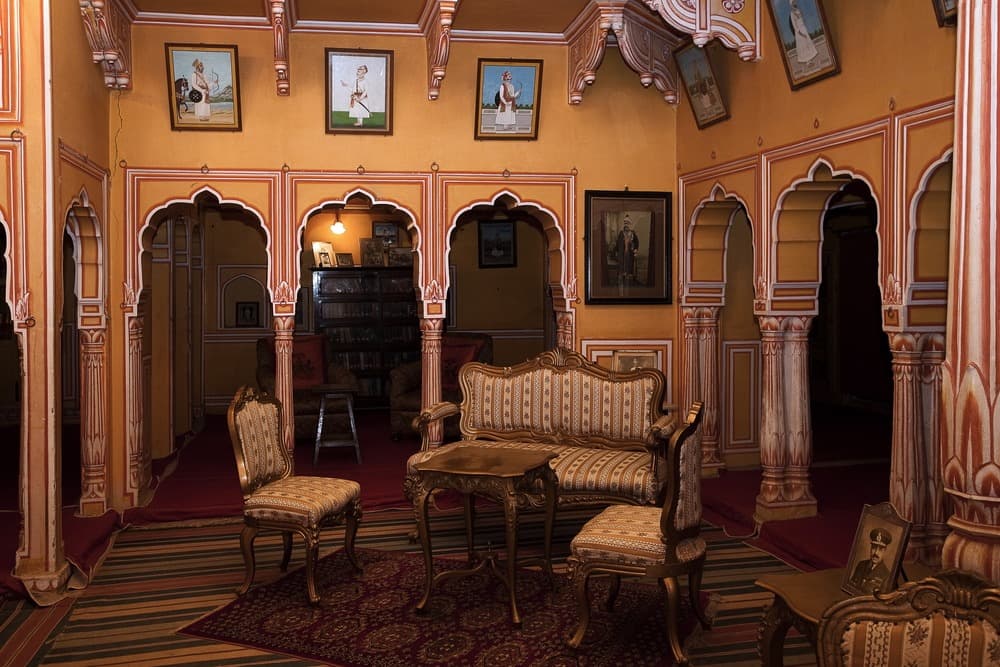
The fort commands attention for three reasons. First, its architecture, which blends Rajput and Mughal styles: arcades, jharokhas (projecting balconies), painted floral motifs, and minarets coexist within a single ensemble. Second, its history, tied to two successive lineages—the Singhs, 18th-century founders, then the Goenkas, a merchant family who made it their residence in the late 19th century. Finally, its conversion into a heritage hotel, which allows free exploration of its noble spaces: inner courtyards, decorated salons, library, terraces.
Compared to the grander forts of Rajasthan, Dundlod offers a human-scaled visit. It's a coherent entry point for exploring Shekhawati, whose neighboring villages concentrate one of the subcontinent's highest densities of painted havelis.
History of the fort
The fort was built in 1750 by Thakur Keshri Singh, a Rajput chief of the Shekhawat lineage. The original structure reflected the typical military and residential use of thikanas (feudal estates) in the region.
In the early 19th century, his descendant Sheo Singh undertook significant additions, expanding reception spaces and interior ornamentation. Under his direction, the fort acquired the more palatial appearance it has today, with its murals and state rooms.
In 1888, Ram Chandra Goenka added a well and a Chhatri (cenotaph) dedicated to Ram Dutt Goenka, marking the fort's passage under the influence of this prosperous merchant family. The fort subsequently served as a residence for the Goenka merchant family for several generations.
Converted into a heritage hotel in the 20th century, the building has retained most of its original décor, making it both a lodging destination and a visitable site.
What to see on-site
The visit revolves around several remarkable spaces:
- The Duchatta Hall: a room designed as an observation area for judicial proceedings in Purdah for the women of the household, who could follow hearings without being seen. It concretely illustrates the social codes of Rajput aristocracy.
- The library: it houses a collection of rare books on Indian history, inherited from the Goenka period.
- The murals: floral motifs, mythological scenes, and martial representations (arrows, shields) adorn several rooms.
- The courtyards and terraces: they offer a clear reading of the original layout and good viewpoints over the village.
The fort also offers activities: Jeep safaris through surrounding villages and performances of Rajasthani folk songs and dances, organized seasonally.
Practical information
Allow approximately 1 to 1.5 hours for a visit of the accessible spaces. The establishment's status as a heritage hotel means that certain areas may be reserved for guests; check at reception about visiting conditions for the day. Entry fees are moderate. Photography is generally permitted in common areas.
When to visit
Shekhawati has a semi-arid climate, with very hot summers (April-June, temperatures exceeding 40°C) and monsoon rains from July to September. The most comfortable period extends from October to March, with mild days and cool nights in December-January. February-March offers a good compromise for combining a fort visit with a tour of nearby havelis.
How to get there
Dundlod is located in northeastern Rajasthan, in Jhunjhunu district.
- By air: Jhunjhunu Airport is approximately 30 km away, but its connections remain limited. Jaipur's international airport, about 160 km away, remains the main option for international travelers.
- By train: the nearest station is Mukundgarh, a few kilometers away. Connections exist to Jaipur and Bikaner.
- By car: Dundlod is accessible from Delhi (approximately 250 km), Jaipur (approximately 160 km), and Bikaner (approximately 230 km). Roads in Shekhawati are in good overall condition.
Nearby attractions
Dundlod fits naturally into a circuit around Shekhawati's painted towns: Mandawa, Nawalgarh, and Mukundgarh, all accessible within less than an hour's drive. To extend your itinerary across Rajasthan, several sites lend themselves to onward travel, notably the Ajit Singh Memorial in Jodhpur, or further west the Amar Sagar Lake near Jaisalmer. Heritage enthusiasts can also put Dundlod in perspective with other northern sites, such as the Alchi Monastery in Ladakh, or smaller forts like Anjengo Fort in Kerala.
Planning your trip
Dundlod Fort fits naturally into a Rajasthan itinerary combining Jaipur, Shekhawati, and the Thar Desert. To craft a custom stay incorporating this region, still relatively untouched by mass tourism, explore our travel to India.
Nearby
Interested in this visit?
We can include it in your personalised itinerary.