Dhobi Ghat
Dhobi Ghat
Beneath the Mahalaxmi bridge in Mumbai, 730 dhobis hand-wash nearly one million items daily at the world's largest open-air laundry.
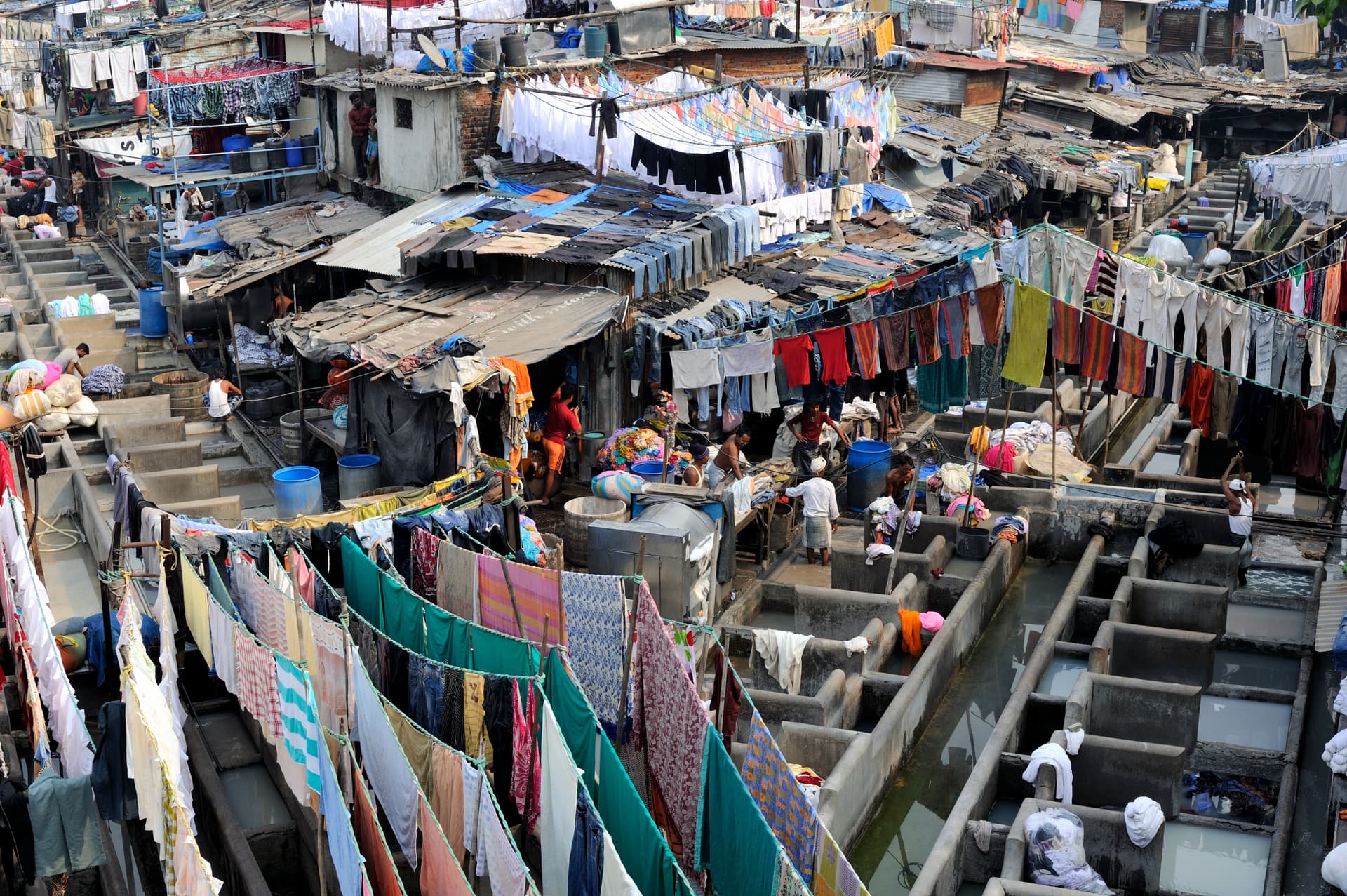
The Dhobi Ghat of Mahalaxmi, in Mumbai, is the world's largest unmechanized open-air laundry. Beneath the Mahalaxmi bridge, over 730 dhobis hand-process nearly one million items daily, in a codified ballet that has endured since the late 19th century. This is not a curated tourist site: it is a working neighborhood and living quarter, which makes it a fascinating place to observe but one to approach with respect.
Why visit Dhobi Ghat
Three main reasons motivate a visit:
- An extraordinary organization: one million pieces of laundry washed, dried, ironed and returned each day, without sorting errors thanks to a manual marking system.
- Living heritage: the caste of dhobis, for whom laundering is a hereditary occupation, perpetuate here a unique urban craft in India.
- A world record: in March 2011, the site entered the Guinness Book of Records for the largest number of people hand-washing laundry in the same location.
The word "Dhobi" refers to the Indian caste whose primary occupation is laundering, and "ghat" designates these open-air laundries structured as pools.
History of the site
The Mahalaxmi Dhobi Ghat was created in 1890 to serve Bombay's English and Parsi populations. At that time, the colonial elite and urban bourgeoisie entrusted their laundry to specialized washers, grouped in this vast complex built around stone pools fed by a dedicated water network.
More than 130 years later, the organization has remained largely unchanged. The dhobis live on-site with their families, in dwellings adjoining the pools. The site today serves hotels, hospitals, hair salons and private households across the metropolis.
What to see and observe on site
The washing pools
The dhobis begin work before sunrise. Laundry is sorted by origin, soaked in soapy water, beaten against stones to remove dirt, wrung out, then hung to dry on long lines that stripe the sky above the complex. Hundreds of white shirts lined up have become the emblematic image of the place.
Ironing and return to depot
Once dry, each item passes through the hands of an ironer (often with a charcoal iron) before being returned to the local depot that submitted it. The complete chain comprises sorting, soaking, washing, wringing, air-drying, ironing, then return.
The marking system
No garment is ever lost. Each piece receives a small piece of cotton marked with indelible ink, bearing the abbreviation of the local hub followed by an item number. This code, legible only to the dhobis, allows the owner to be found among hundreds of thousands of pieces in circulation.
The viewpoint from the bridge
The best overview is obtained from the road bridge above the site, which runs alongside Mahalaxmi station. It is from here that most visitors photograph the complex without disrupting work.
Practical information
Dhobi Ghat has no official ticket office or posted hours: it is a working place freely accessible from the street. Local guides often offer tours descending into the interior alleyways, for a negotiated tip on-site. Allow approximately 30 minutes to 1 hour to observe the site from the bridge, longer if you hire a guide.
Ethical note: this is a neighborhood where families live and work. Ask permission before taking close photographs, avoid blocking work alleys, and favor an English-speaking guide from the community if you descend inside. Modest clothing is appreciated.
When to go
Early morning (between dawn and mid-morning) is the best time: this is when activity is in full swing, when light is soft for photography, and when heat remains manageable. Early afternoon also allows you to see the drying and ironing phases. Avoid the monsoon (June to September) when operations are slowed and drying disrupted. The dry season, from November to February, offers the best conditions for visiting Mumbai.
How to get there
The site is located right next to Mahalaxmi station, on the Western Line of Mumbai's suburban railway network. From Churchgate or Mumbai Central, expect a short suburban train journey; exiting the station, the bridge overlooking Dhobi Ghat is a few minutes' walk away. By taxi or rickshaw, ask for "Mahalaxmi Dhobi Ghat" or "Mahalaxmi station bridge".
Nearby
- Haji Ali Dargah: a Sufi shrine on an islet connected to the mainland by a causeway, about 1.5 km away.
- Mahalaxmi Racecourse: historic racing grounds, facing the station.
- Mahalakshmi Temple: one of the city's most visited Hindu temples, in immediate proximity.
To extend your itinerary in India, you can combine Mumbai with other stops such as Anjuna Beach in Goa, or heritage stops such as the City Palace in Udaipur and Bagore Ki Haveli in Rajasthan.
Frequently asked questions
Frequently asked questions
Include Mumbai in your itinerary
Dhobi Ghat fits naturally into a day exploring southern and central Mumbai. For a bespoke journey combining the megacity, Rajasthan, Kerala or Goa, consult our circuits in India designed with local agencies.
Nearby
Interested in this visit?
We can include it in your personalised itinerary.