Bhedaghat (Bheraghat)
Bhedaghat (Bheraghat)
Twenty kilometers from Jabalpur, Bhedaghat features a marble gorge, Dhuandhar Falls and a medieval temple dedicated to yoginis on the banks of the Narmada River.
About twenty kilometers from Jabalpur, in Madhya Pradesh, Bhedaghat (sometimes spelled Bheraghat) borders the Narmada River and has established itself as one of the most visited natural sites in central India. Nicknamed the "Grand Canyon of India," the locality owes its reputation to marble cliffs that can reach around thirty meters in height, the Dhuandhar waterfall, and a medieval temple dedicated to yoginis. This guide brings together the essentials for planning your visit: what to see, when to come, how to get there, and which attractions to combine in the surrounding area.
Why visit Bhedaghat
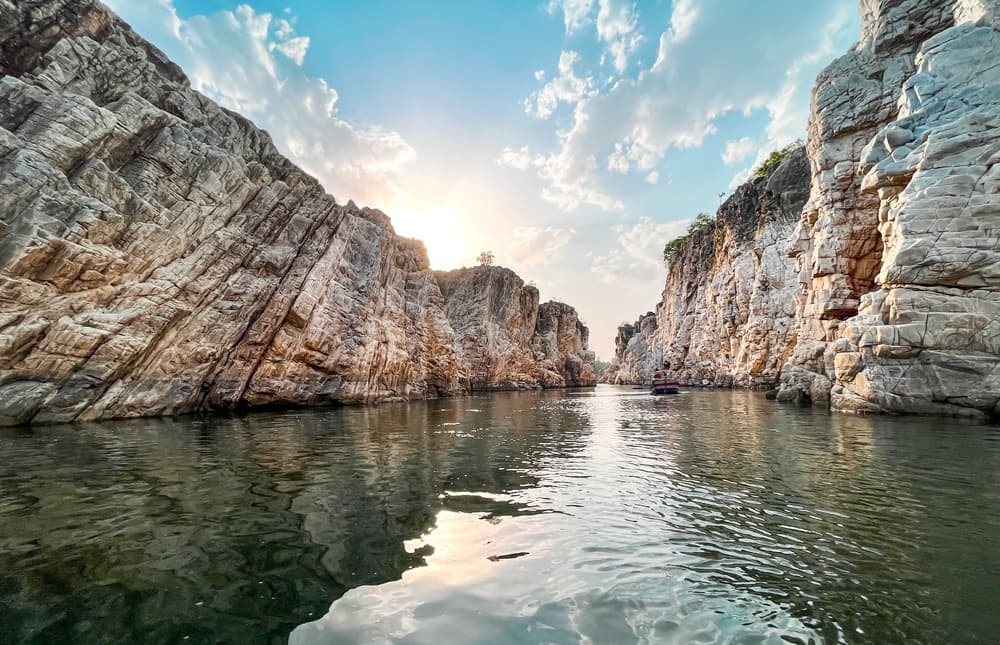
Three elements make this site unique. First, the geology: over nearly three kilometers, the Narmada flows through a marble gorge whose colors range from white to gray, passing through gold, dark green, and black—the latter shades coming from volcanic veins. Next, the spectacular hydrology: at the exit of the gorge, the river plunges about 30 meters to form the Dhuandhar Falls. Finally, the heritage: the Chausath Yogini temple, perched above the river, bears witness to over a thousand years of regional religious history.
Bhedaghat also interests Indian cinema enthusiasts. Several Bollywood scenes have been filmed here, including the song "Raat Nasha Abhi" from the film Asoka, starring Shah Rukh Khan and Kareena Kapoor.
Origins and identity of the site
Several traditions explain the name Bhedaghat. One version associates it with the sage Bhrigu, who is said to have retired on the banks of the Narmada. Another, supported by archaeological remains, refers to an ancient place of worship called Bhairavi Ghat, dedicated to the goddess Shakti. A third interpretation links the place name to the word "Bhada" ("meeting"), a possible allusion to a river confluence—though this last etymology remains debated.
The region has yielded fossils attesting to a very ancient geological history, and the banks of the Narmada were a cultural hub under the Kalachuri dynasty (10th–12th centuries), to which the site's main monument is owed.
What to see in Bhedaghat
The marble cliffs (Marble Rocks)
The gorge is the main attraction. The Narmada flows between marble walls patiently polished by the current, in places rising about thirty meters high. Light constantly shifts the stone's hues, particularly in late afternoon and during full moon nights, when silvery reflections transform the canyon's atmosphere.
Local guides point out several formations: the "elephant's foot," the "cow's horns," and the Bandar Kodini viewpoint, where the cliffs draw so close that monkeys can leap across them in a single bound.
Dhuandhar Falls
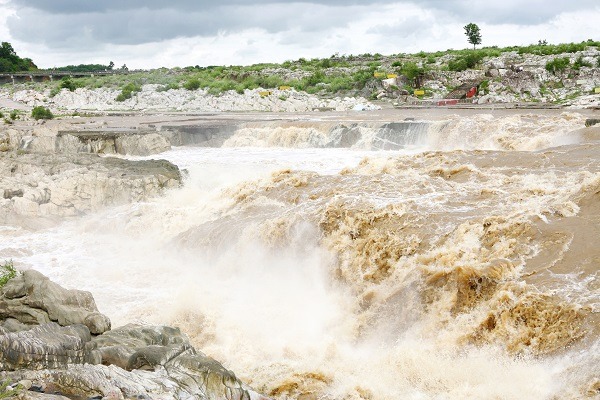
At the exit of the gorge, the Narmada plunges about 30 meters. The name combines the Hindi words dhuan (smoke) and dhar (current), referring to the mist that rises from the water's impact. The roar is heard long before you glimpse the falls. A cable car allows you to soar over the site and take in the falls and marble rocks at a glance; it is secure and family-friendly.
Chausath Yogini temple
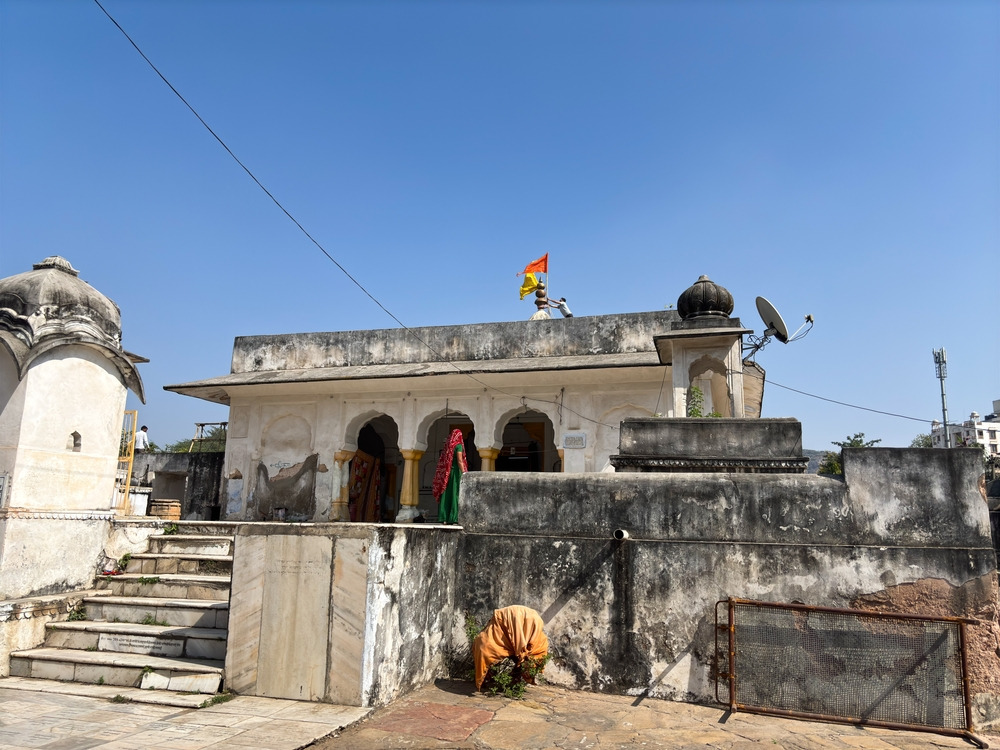
Built in the 10th century under the Kalachuri Empire, this circular sanctuary dedicated to Durga ranks among the rare temples dedicated to yoginis still preserved in India. It originally housed a large number of sculptures of these divine feminine figures associated with tantric energies; some have been damaged over the centuries, yet the whole ensemble remains remarkable. Access is via a flight of about 150 steps, which opens onto a panoramic view of the marble gorge and the Narmada valley.
Boat ride
The crossing through the gorge in a boat takes between 45 minutes and 1 hour. The boatmen are happy to comment on the rock formations and filming stories. The experience becomes particularly special during full moon nights, when the marble seems to glow above the water. During monsoon season, trips are suspended for safety reasons.
Local craftsmanship
Marble has been worked on-site for generations. Along the stairs leading to the river and around the market nicknamed "The Soapstone," small shops offer religious statues, lingams, jewelry, and hand-carved decorative objects. Prices remain generally moderate, and the pieces bear witness to locally transmitted craftsmanship.
Practical information
- Recommended visit duration: half a day for the essentials (cliffs + Dhuandhar), a full day if you include Chausath Yogini temple and local crafts.
- Prices: site entry and boat ride at moderate cost; cable car is an additional fee. Prices change, so inquire on-site.
- What to bring: comfortable shoes for the temple stairs, water, sun protection, camera.
- Safety: during rainy periods, do not attempt to approach the falls or take a boat if the activity is suspended.
When to visit
The most favorable period extends from November to May. The climate is dry, temperatures are bearable, and boat rides operate normally. The monsoon, from June to October, brings abundant rain: Dhuandhar Falls gain power and spectacle, but river outings are then suspended for safety reasons. Full moon nights, outside the monsoon season, offer the most memorable experience of the gorge.
How to get to Bhedaghat
By air
Jabalpur Airport (JLR) is the closest, about twenty kilometers away. It is connected to major Indian cities. Taxis provide the link to Bhedaghat.
By train
Jabalpur Junction station, about twenty kilometers away, is very well served on the national network. A small local halt, Bhedaghat Railway Station, also exists, but few long-distance trains stop there. Rickshaws and taxis then take over.
By road
From Jabalpur, taxis, auto-rickshaws, and local buses reach Bhedaghat in about thirty minutes. The site combines well with a stop in the national parks of Kanha, Bandhavgarh, or Pachmarhi.
By boat
An approach by water is possible from Panchvati Ghat, a picturesque option for approaching the marble cliffs.
Combinations in the surrounding area
Bhedaghat fits naturally into a broader itinerary through Madhya Pradesh and northern India. About 70 km away, the archaeological site of Bahoriband preserves a remarkable Jain statue from the Kalachuri period. Further on, in Lucknow, the Bara Imambara illustrates 18th-century Nawabi architecture. For a cultural stop in Rajasthan, Bagore Ki Haveli in Udaipur offers a costume museum and traditional dance performances.
Frequently asked questions
Frequently asked questions
Bhedaghat is a semi-urban village located about twenty kilometers from Jabalpur, in the state of Madhya Pradesh, in central India, on the banks of the Narmada River.
Over nearly three kilometers, the Narmada flows at the bottom of a gorge bordered by marble cliffs that can reach 30 meters. This spectacular configuration earns it comparison to the American canyon.
Allow between 45 minutes and 1 hour for the crossing through the gorge. Outings may extend into the evening during full moon nights, but are suspended during the monsoon.
Access is via about 150 steps. Those with reduced mobility or unaccustomed to steep stairs should take this into account. The view from the top rewards the effort.
From November to May, outside the monsoon season. The climate is dry, boats operate, and nearby sites are fully accessible.
Planning your trip
Bhedaghat fits naturally into a circuit dedicated to Madhya Pradesh or central India, complementing the region's great wildlife parks. To build a tailor-made itinerary including the marble gorge, Chausath Yogini temple, and surrounding cultural stops, consult our suggestions for travel to India.
Interested in this visit?
We can include it in your personalised itinerary.