Bilhari
Bilhari
About thirty kilometres from Katni, the village of Bilhari preserves 10th-century Kalachuri temples protected by the Archaeological Survey of India.
Bilhari is a village in Madhya Pradesh located about thirty kilometres from Katni. Little known to mainstream tourism circuits, it preserves a collection of early medieval Indian archaeological remains that bear witness to the power of the Kalachuri dynasty of Tripuri. Two main sites here are protected by the Archaeological Survey of India: the Kamakandla fort with its Shiva temple, and the Vishnu Varaha temple.
Why visit Bilhari?
Bilhari holds rare appeal for travellers drawn to Indian archaeology and sacred art. The village brings together within a compact perimeter structures from the 10th and 11th centuries, largely unrestored and thus faithful to their original condition. The absence of tourist traffic allows for a peaceful, almost contemplative visit to the temples and their sculptures.
There is also historical significance: Bilhari was an important religious centre under the Kalachuris, and certain inscriptions found on site have contributed to reconstructing the genealogy of this medieval dynasty of central India.
History: the Kalachuris of Tripuri
The Kalachuris of Tripuri, sometimes linked to the lineage of the Chedi kings, ruled over a vast portion of central India between the 8th and 13th centuries, with their capital at Tripuri (near present-day Jabalpur). During their reign, the region experienced significant development in stone architecture, Shaivite and Vaishnava temples, as well as its own sculptural school.
The principal monuments of Bilhari are attributed to the reign of Maharaja Yuvarajadeva I, in the 10th century. The village was then part of a network of religious and political centres linked to the Kalachuri court. The current remains—fort, temples, stepped wells—date from this period, with some later ornamental additions.
What to see in Bilhari?
The Kamakandla fort and Shiva temple
Although called a "fort", the Kamakandla complex does not follow purely defensive architectural codes. It is an ensemble blending religious function and the display of power, erected during the reign of Maharaja Yuvarajadeva I of the Kalachuris of Tripuri in the 10th century.
The entrance is marked by a large statue of Hanuman and by a stepped well that local tradition describes as never running dry. Inside, several ruined structures, galleries and high walls give an idea of the former scale of the site.
The Shiva temple forms its heart. The mandapa has disappeared, and only the sacred chamber remains. The original lingam is absent: it is now replaced by a simple yoni. The sculpted façades and the preserved height of the sanctuary remain impressive.
The Vishnu Varaha temple
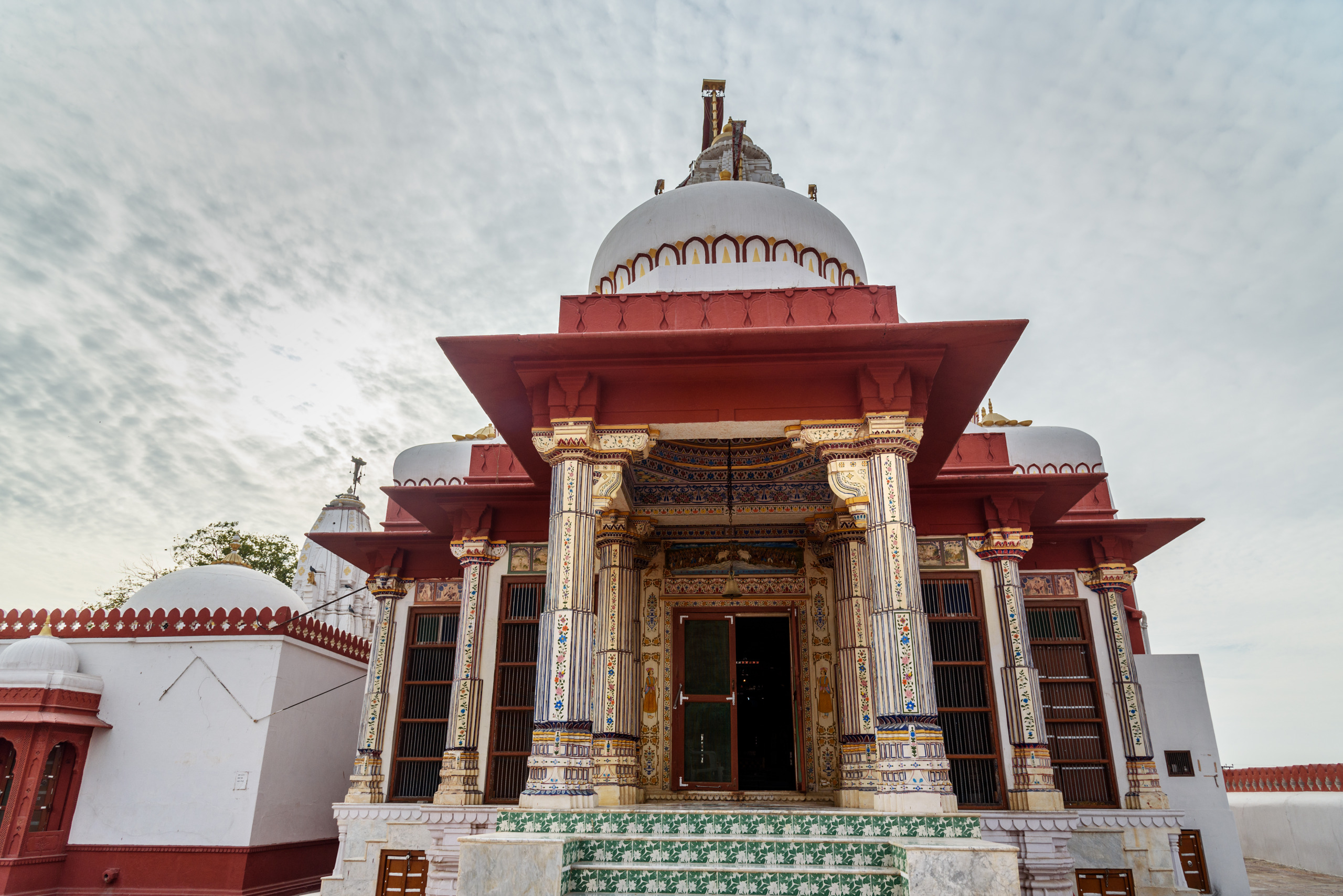
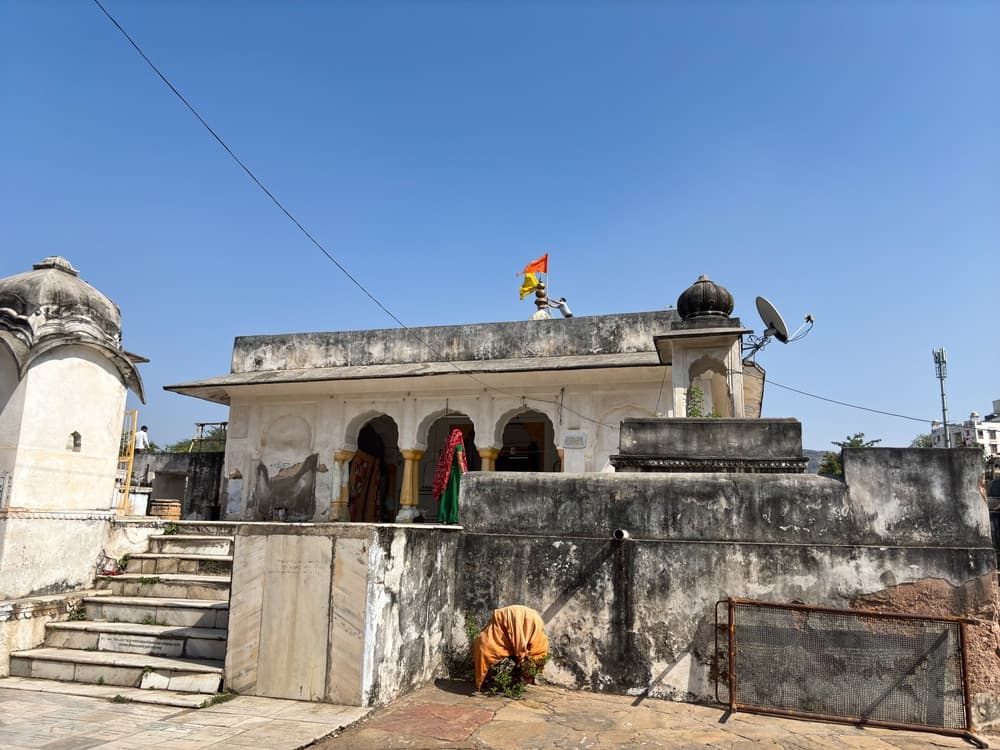
A few steps from the fort stands the Vishnu Varaha temple, also dated to the 10th century, the era of the Chedi kings. The building rests on a high platform. The pillared mukha mandapa is the only intact element of the original structure; it opens onto the garbha griha, the inner sanctuary.
The ribbed dome and certain ornaments display later Islamic influence, added after the Kalachuri period. In the courtyard, several Hindu sculptures from the 11th century remain and provide an insight into local sacred art.
The statue of the Lord Varaha, the boar incarnation of Vishnu, is still venerated. According to local tradition, it survived the invasions that damaged the rest of the building, which reinforces its sacred character for the faithful who still visit it.
Practical information
A visit to the two main sites requires approximately two to three hours. The temples are freely accessible, with no organized ticketing. Clothing that covers shoulders and legs is recommended, and shoes should be removed before entering active sanctuaries. As the sites are poorly marked, enlisting a driver familiar with the area greatly facilitates the visit.
When to visit Bilhari?
The most favourable period extends from November to February. Temperatures are mild, humidity is low, and conditions are ideal for walking between the various remains. March to June are hot months, and the monsoon, from July to September, can make certain tracks difficult to access.
How to get to Bilhari?
- By air: the nearest airport is Jabalpur (JLR), approximately 100 to 110 km away. Taxi or bus then allow you to reach Katni, and subsequently Bilhari.
- By train: Katni Junction station (KTE) is a major railway hub, well connected to Delhi, Mumbai, Kolkata and Chennai. From Katni, allow about 30 km by taxi or rickshaw to reach Bilhari.
- By car: Bilhari is accessible by road from towns across Madhya Pradesh and neighbouring states. Road conditions are generally good.
What to see around Bilhari?
Chhindwara
About 35 km away, the town of Chhindwara offers a peaceful setting and several ancient temples, ideal for a day excursion.
Patalkot valley
Located about 40 km away, Patalkot valley is a forested depression appreciated for hiking and camping.
Pench National Park
About 70 km away, Pench National Park is home to tigers, leopards, sloth bears and numerous bird species. Jeep safaris and birdwatching are the main activities.
Satpura National Park
About 120 km away, Satpura National Park is distinguished by its wildlife, including the Indian bison (gaur), and its trekking opportunities in forested terrain.
Pachmarhi
About 150 km away, Pachmarhi is a hill station renowned for its waterfalls, caves and Shaivite temples such as Jatashankar and Mahadev.
To further explore Madhya Pradesh, the State Museum of Bhopal allows you to put Kalachuri sculptures in regional context.
Frequently asked questions
Allow two to three hours to explore the Kamakandla fort, the Shiva temple and the Vishnu Varaha temple. Combined with travel time from Katni, plan for a full half day.
The simplest way is to reach Katni by train (Katni Junction station), then hire a taxi or auto-rickshaw for the thirty kilometres to the village. Direct public transport is rare.
Outdoor photography is generally permitted at sites protected by the Archaeological Survey of India. Inside the active sanctuary of Vishnu Varaha, it is best to ask the permission of worshippers or the priest and avoid using flash during pujas.
Preparing your trip
Bilhari fits into a broader exploration of central India, between Kalachuri temples, national parks and hill stations of Madhya Pradesh. To build a tailor-made itinerary incorporating this type of off-the-beaten-path archaeological site, consult our India travel suggestions.
Interested in this visit?
We can include it in your personalised itinerary.