Yamunotri
Yamunotri
Yamunotri, sacred source of the Yamuna River and first stage of the Char Dham Yatra: trekking, temple, hot springs and practical tips for the Himalayan pilgrimage.
Perched in the Garhwal Himalayas, Yamunotri stands as one of the most sacred sites in northern India. The mythical source of the Yamuna River and dwelling place of the goddess of the same name, it draws pilgrims and trekkers each year seeking purification and serenity within a backdrop of majestic natural beauty.
Yamunotri, a Stage of the Char Dham Yatra
Yamunotri is one of four sacred sites of the Char Dham Yatra, a major Hindu pilgrimage that also includes Gangotri, Kedarnath and Badrinath. This circuit, located in Uttarakhand state, symbolizes the spiritual quest toward the divine sources of the Ganges and Yamuna—the two most revered rivers of India.
Pilgrims often begin their journey at Yamunotri, the westernmost of the four destinations. The site is dedicated to the goddess Yamuna, daughter of the Sun god (Surya) and sister of Yama, the god of death. According to belief, bathing in the Yamuna protects against premature death and washes away sins.
History
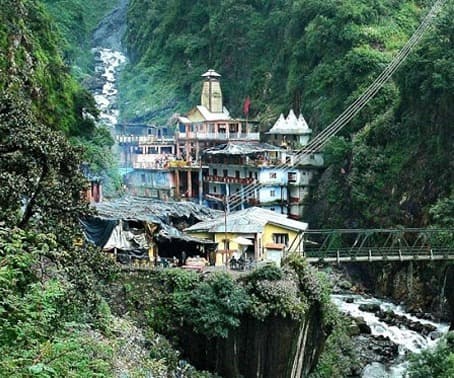
The Yamunotri Temple was first built in 1839 by the king of Tehri, Naresh Sudarshan Shah, then rebuilt in the 19th century by the maharani of Jaipur, Gularia Devi, following an earthquake. Constructed of granite stone and crowned by a conical tower in yellow bordered with red, it embodies simplicity and purity. The sanctuary houses a statue of the goddess Yamuna in black marble, accompanied by a white effigy of Ganga, symbolizing the union of the two sacred rivers.
What to See and Do at Yamunotri?
Trekking to the Temple
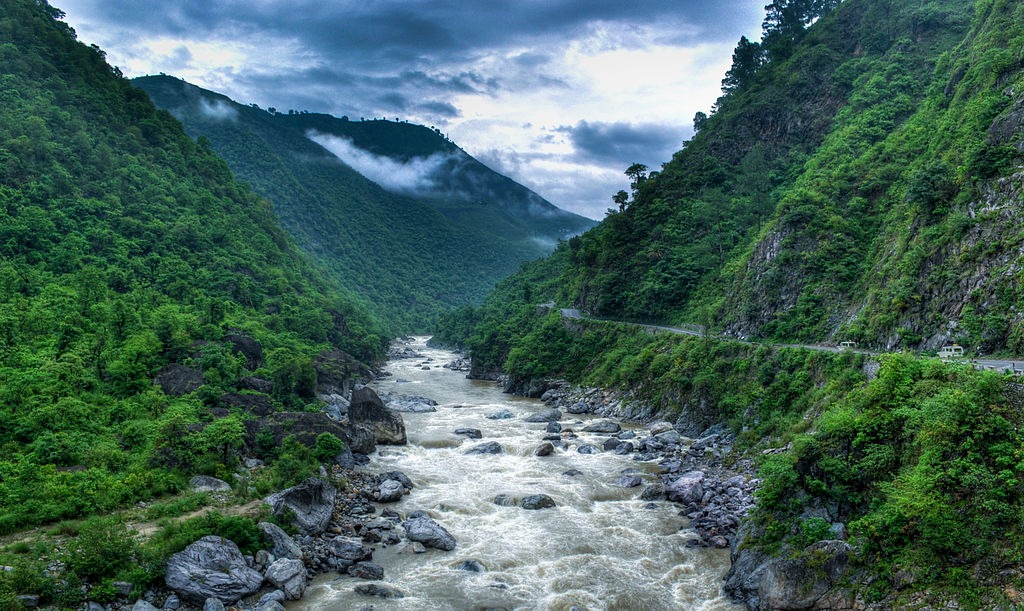
Access to the temple is exclusively on foot. From Janki Chatti, the last village accessible by road, a 5 to 6 km trail winds through forests, waterfalls and suspension bridges. The climb, taking two to three hours depending on your pace, can also be done on mule-back, in a palanquin or accompanied by a porter (pithoo). The trek is itself a complete spiritual and natural experience.
Yamunotri Temple
The main sanctuary of the temple (garbha griha) houses the idol of Yamuna. The prayer hall (mandap) welcomes devotees.
Surya Kund
Just beside the temple lies the Surya Kund, a natural hot spring whose temperature reaches nearly 88°C. Pilgrims cook prasad (ritual offerings) by immersing rice or potatoes wrapped in cloth into its waters. The water is renowned for its healing properties and solar symbolism, since Surya, the Sun god, is the father of the goddess Yamuna.
Divya Shila
Before entering the temple, the faithful bow before the Divya Shila, a sacred rock considered the stone of divine light. Praying here is believed to purify the spirit and strengthen devotion before encountering the goddess.
Hanuman Chatti
Located 13 km from Yamunotri, Hanuman Chatti is a small mountain village at the confluence of the Hanuman Ganga and Yamuna rivers. It marks the former starting point of the trek before the road opened to Janki Chatti. The site houses a temple dedicated to Hanuman, the monkey god, and serves as a base for several treks, including those to Darwa Top and Dodital.
Saptrishi Kund
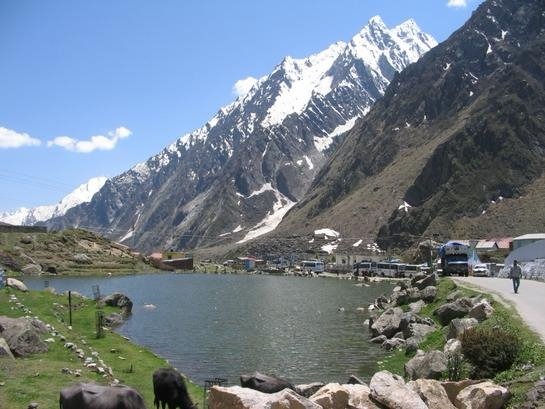
The Saptrishi Kund is an alpine lake perched at 4,421 meters. It is considered the true source of the Yamuna. Its difficult access, often snow-covered, makes it a trek reserved for experienced hikers.
Practical Information
Yamunotri is not directly accessible by car. The furthest point you can reach by road is Janki Chatti. After that, you must trek to reach the temple.
Here is the route breakdown:
- You drive or take a taxi/shared vehicle to Barkot, a mountain town on the route.
- From Barkot, you continue by road to Janki Chatti. The distance between Barkot and Janki Chatti is approximately 45 km, roughly 1.5 to 2 hours of driving.
- Once at Janki Chatti, you have the final 5-6 km trek left to reach Yamunotri Temple.
When to Visit?
The temple is open from May to October, corresponding to the dry season. The months of May to June and September to October are the most pleasant for pilgrimage.
Avoid the monsoon (July-August), which makes trails slippery and increases risks of landslides. In winter, snow blocks access and the goddess statue is moved to Kharsali.
Frequently Asked Questions About Yamunotri
Which deity is worshipped at Yamunotri?
The temple is dedicated to the goddess Yamuna, personification of the sacred river. Daughter of the Sun god (Surya) and sister of the god of death (Yama), she embodies purity, strength and longevity.
What is the difference between Yamunotri and Gangotri?
Yamunotri is the source of the Yamuna River, while Gangotri marks that of the Ganges. Both are part of the Char Dham Yatra, but Yamunotri is the first stage of the circuit. Their temples are found in different valleys, respectively on the slopes of Bandarpoonch for Yamunotri and Shivling Peak for Gangotri.
What is the meaning of Yamunotri?
The word Yamunotri comes from "Yamuna" (the sacred river) and "–otri" meaning "source" or "origin". The name thus designates the place where the Yamuna is born, a symbol of life and purity in Hindu mythology.
Is Yamunotri open now?
The temple typically opens in early May and closes in mid-October, according to the religious calendar and climatic conditions. Outside this period, the site remains inaccessible due to snow.
Where to stay in Yamunotri?
You will find simple accommodations in Janki Chatti and Hanuman Chatti: guesthouses, lodges, dharamshalas and small pilgrimage hotels. For more comfort, Barkot offers more varied options and stunning mountain views.
At what altitude is Yamunotri located?
The Yamunotri Temple stands at approximately 3,293 meters altitude, at the foot of Kalind Parvat.
Want to discover this destination?
Our local advisors design your tailor-made trip.