Leh
Leh
Capital of Ladakh at 3,500 m altitude, Leh blends Tibetan monasteries, Himalayan valleys and caravan traditions. Complete guide to planning your journey.
Nestled in the heart of the Himalaya's grand landscapes, Leh invites travelers to experience a unique adventure, between ancient traditions and breathtaking panoramas. As the capital of Ladakh State, it is an old Tibetan city, once a pivotal hub on the Silk Route from China. Perched at 3,500 meters above sea level, this place is often an essential stop on circuits through Leh district. Whether you're a trekking enthusiast, history buff, or simply nature lover, Leh opens the doors to a fascinating world, marked by the splendor of its monasteries, the hospitality of its people, and the raw beauty of the Indus Valley.
History
Research demonstrates that Leh city sits on the Silk Route. This once lay between China and India, passing through Ladakh, from the Kushan Empire of the 1st to 3rd century, and also during the Tang Dynasty reign from 618 to 907.
Thanks to its position on the Silk Route, Leh emerged as a thriving caravan center. This lively caravan atmosphere, fueled by cross-border commerce, profoundly shaped the city's cultural identity. However, the city witnessed wars of influence over Ladakh's territories between Tibetans and Chinese during the 7th century. Until India's independence and during Sino-Indian conflicts, Leh maintained a route connecting it to Yarkand.
After Langdarma's death, assassinated by a Buddhist monk in 842, and subsequent succession disputes, the Tibetan empire began to collapse in the 9th century. The Yarlung Dynasty's reign ended in 877. Tibet thus entered a period of fragmentation from the 9th to 10th century.
This decline ended only towards the late 10th century, with the ascension of Tibetan prince Skyid Ide Nyima Gon, a descendant of the anti-Buddhist king Langdarma. After refounding his kingdom, the sovereign managed to conquer western Tibet with merely 300 soldiers at the outset. Nyima Gon is believed to have initiated the construction of numerous cities and castles, with Shey's main sculptures among the principal ones. An inscription states that the king built these monuments in homage to the Tsangpo and for the religious benefit of Ngari's people, proof of the end of Langdarma's opposition to Buddhism at that time. Located 15 km east of modern Leh, Shey was the former seat of Ladakh's rulers.
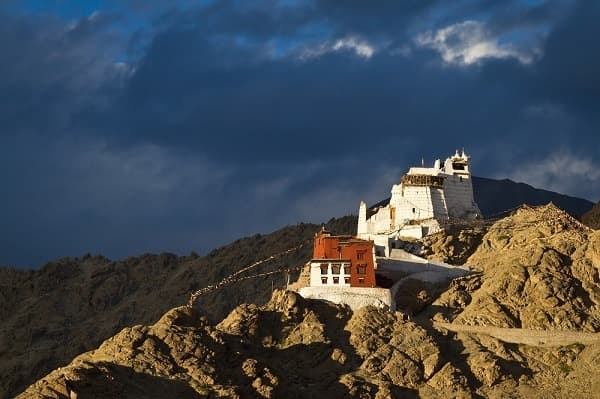
The city houses the imposing Victory Peak fortress, known as Namgyal Tsemo and built by Tashi Namgyal (1500–1532). In 1533, the region was finally unified into a single great kingdom through the efforts of Raja Sengge Namgyal. He decided to move his capital from Shey to Leh. The locals still regard the descendants of the Namgyal dynasty as Ladakh's principal rulers.
From 1834, Dogra troops compelled by Gulab Singh undertook successive attacks on Ladakh. The region's inhabitants were forced to flee their homeland and seek refuge in Tibet. Noting the weakness of Ladakhi and Tibetan armies, General Zorawar Singh launched a conquest of western Tibet and seized the cities of Routok and Gartok. The situation took a different turn in autumn 1841. The Tibetan response was fierce and the cities were reconquered one by one. Zorawar Singh lost his life on the battlefield at the edge of Purang.
In 1842, the Tibetan army finally arrived at Leh but surrendered to the Dogras. The troops were forced to retreat to Ngari, abandoning captured Tibetan officers imprisoned in the city. Nevertheless, this battle likely left scars on the Dogras. The region entered a period of negotiation resulting in a peace treaty in September 1842 at Maharaja Gulab Singh's residence. The borders between Tibet and Ladakh were finally determined and a friendship engagement signed. A new commercial agreement strengthened the Ladakhi-Tibetan peace treaty in 1852.
Today
Suiting all types of stays, this picturesque city appeals to both adventurers and tourists seeking a tranquil place to recharge. Thus, leisure-minded travelers can quietly enjoy cultural events organized in the city's hotels, while budding explorers will venture through Zanskar where rafting promises a good dose of adrenaline.
Leh holds many monuments awaiting your visit, starting with the Likir and Lamayuru monasteries. Solo, as a couple, or with family, outings in this city combine escape and discovery in a serene atmosphere. Camera in hand, immortalize your escapades in centuries-old temples, characterful stupas, perched palaces, and more. Hop on a bicycle or rent a car and traverse the Border Roads Organization routes to reach Spituk Gompa, the Shanti Stupa, and the Thiksey monastery. Along the way, the playful signs from the Border Roads Organization add cheerfulness to your day. You'll see quirky messages like "Love your neighbor, but not while you're driving!", friendly advice to save your dalliances for after your journey.
Alternatively, stop in the heart of the Indus Valley, where the river winds majestically through mineral and fertile landscapes. If you enjoy group excursions, the Nubra Valley makes the perfect base. The site's natural and peaceful environment is ideal for a night of camping overlooking the multicolored Pangong Lake.
Back in the heart of Leh city, enjoy a little shopping session in local markets. Discover countless Tibetan curiosities there, including kitsch jewelry, Buddha heads, prayer wheels, and more. A visit to Leh's main market lets you explore local craftsmanship and taste traditional culinary specialties. For decoration enthusiasts, antique shops offer unsuspected treasures: ancient Buddhist pieces, rare textiles, hand-carved furniture, etc.
For extended stays, Leh also boasts good infrastructure, including healthcare professionals present in clinics and modernized hospitals nearby, essential due to potential discomforts or illnesses at high altitude. Moreover, the region also benefits from an important beautification process undertaken by local authorities to restore its historical heritage and modernize its infrastructure without altering its old-world charm.
When to Visit Leh?
Spared from intense heat, Leh enjoys a pleasant summer season from April to September with temperatures ranging from 20°C to 30°C. The monsoon constitutes instead the period of heavy rainfall. From October to March, the winter season is characterized by more or less Siberian cold. Given the climate and the influx of tourists, the best time to visit Leh is therefore between June and September.
Leh has an airport with connections to Delhi, Mumbai, and Srinagar. By road, the city is connected to Manali. Various categories of buses make the journey daily, unless you prefer rental cars or jeeps available in Manali and Srinagar. By rail, the nearest stations to the city are at Chandigarh, Pathankot, and Kalka.
Many transport options are available in Leh. You can travel by rickshaw or taxi, use buses, or rent a car.
Attractions in Leh
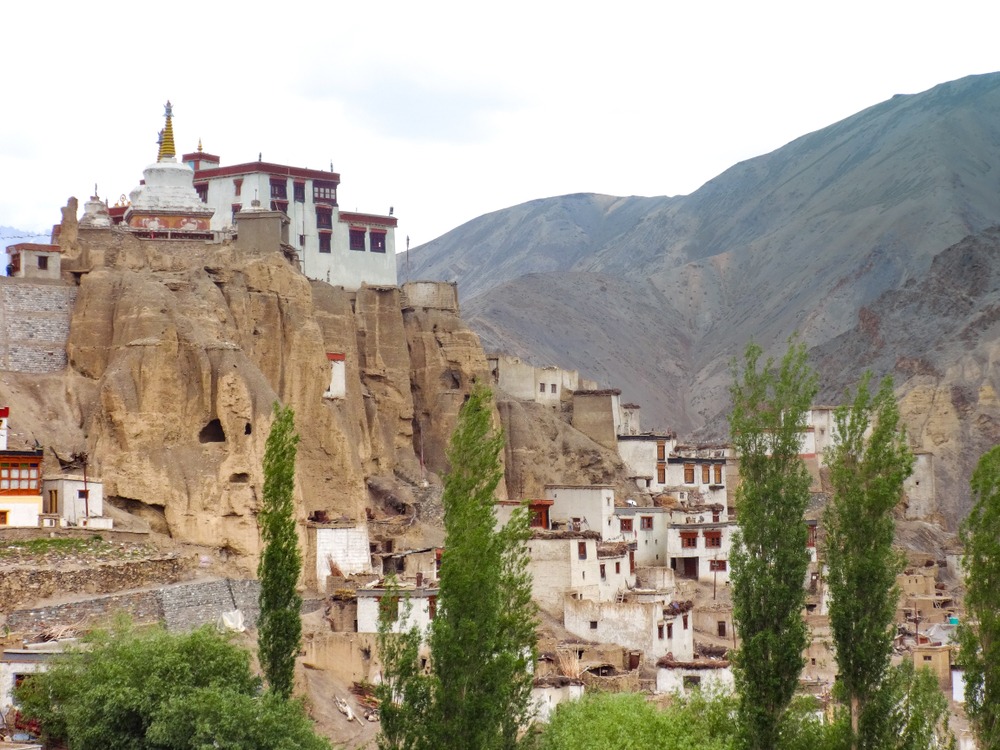
Monastère d’Alchi
À 67 km de Leh, le monastère d'Alchi conserve des fresques bouddhiques d'origine cachemirienne du XIᵉ siècle, parmi les plus anciennes du Ladakh.
Leh Palace
Perché sur un éperon rocheux au-dessus du vieux bazar de Leh, le palais royal du Ladakh s'élève sur neuf étages. Fresques bouddhistes, chapelle royale et panoramas sur la vallée de l'Indus en font un passage incontournable au Ladakh.
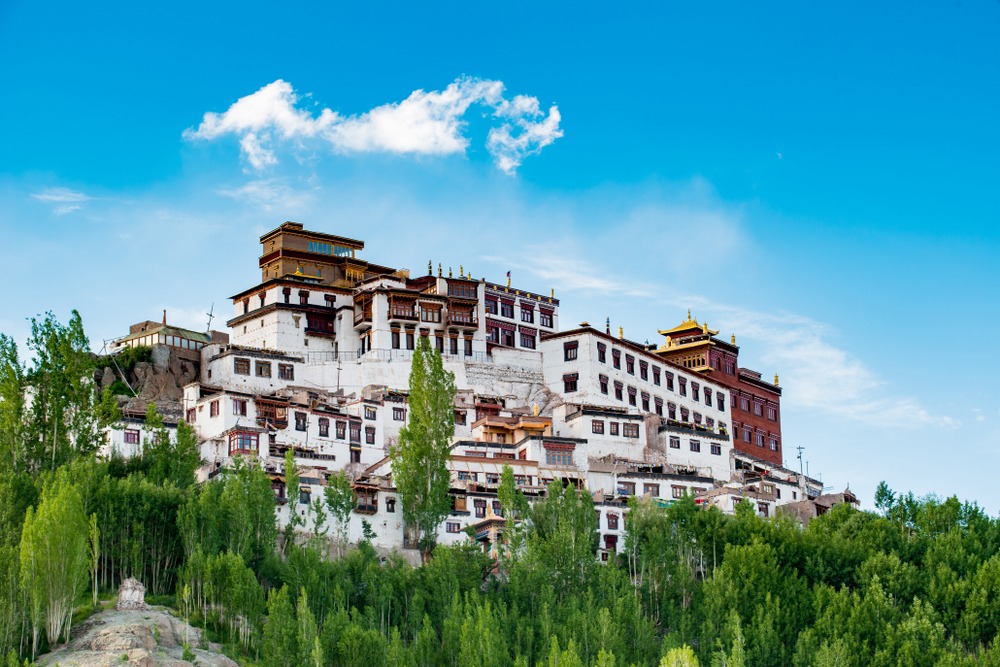
Monastère de Matho
À 26 km de Leh, le monastère de Matho est le seul gompa du Ladakh rattaché à l'ordre Sakya. Histoire, thangkas, festival Nagrang et oracles.
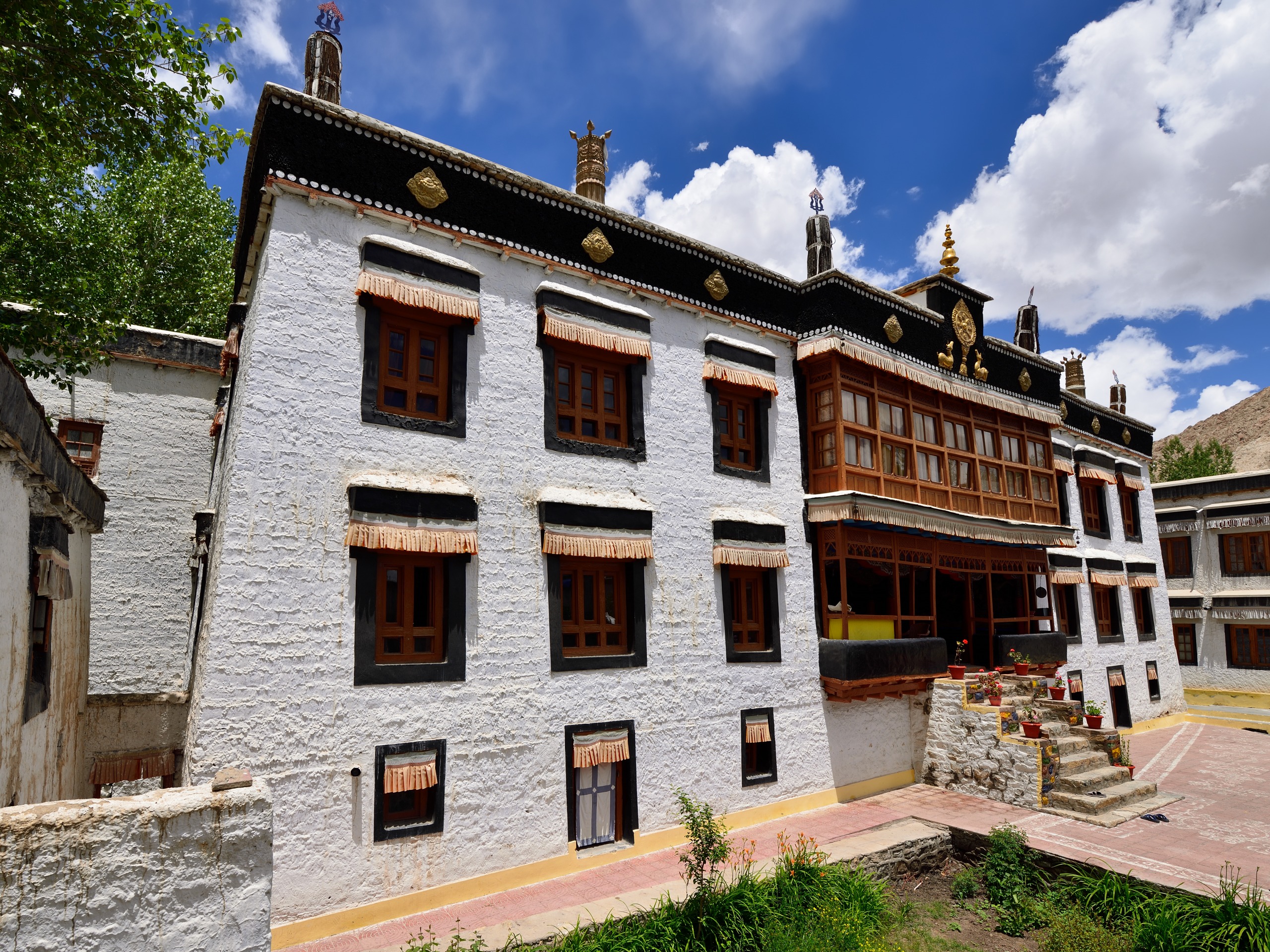
Sankar Gompa
Monastère Gelugpa à 3 km de Leh, résidence officielle de Kushok Bakula Rinpoché. Dukhang orné de mandalas et festival annuel en octobre-novembre.
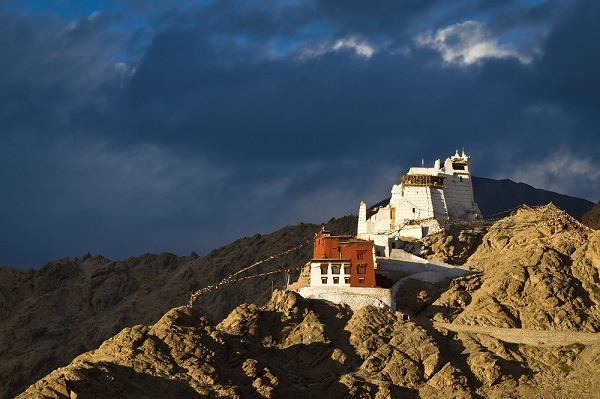
Namgyal Tsemo Monastery
Fondé au XVe siècle sur une crête dominant Leh, le monastère de Namgyal Tsemo abrite une imposante statue de Maitreya et offre un panorama à 360° sur la vallée de l'Indus et les sommets du Ladakh.
Spituk Monastery
À 8 km de Leh, le monastère de Spituk domine la vallée de l'Indus depuis une colline rocheuse. Masques rituels, chapelle de Kali et festival Gustor en janvier en font un site bouddhiste dense et vivant.
Accommodation in Leh
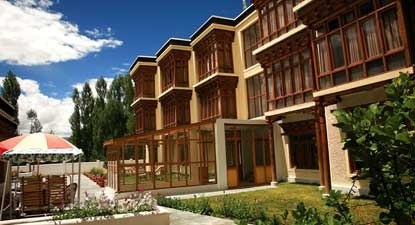
Hotel Mansarovar
Hotel modeste de 24 chambres avec balcon privé, restaurant multi-cuisines incluant le ladakhi traditionnel. Une étape simple pour un voyage culturel en Inde.
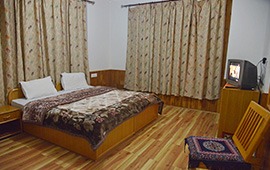
Barath Hotel & Guest House
Maison d'hôtes familiale à Leh, capitale du Ladakh : capacité étendue pour groupes et familles, services hôteliers et localisation pratique près des monastères.
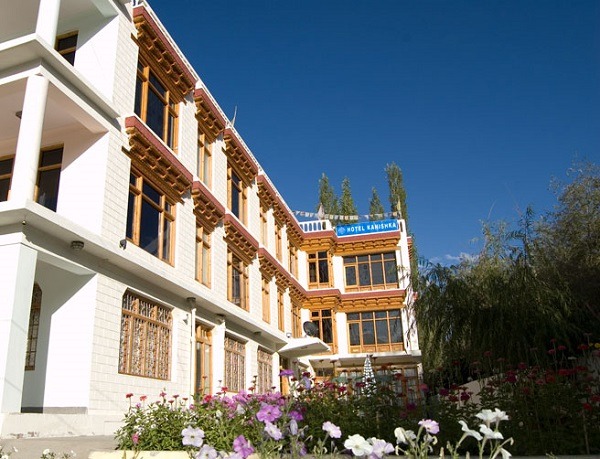
Hotel Kanishka
Hôtel d'altitude au Ladakh, à environ 3 500 m, base confortable pour explorer les monastères et vallées de l'Himalaya indien.
Want to discover this destination?
Our local advisors design your tailor-made trip.