Dausa
Dausa
Just 55 km from Jaipur, Dausa conceals Chand Baori, the world's largest stepwell, and the Bhangarh Fort—unmissable sites in an off-the-beaten-path Rajasthan.
Nestled in Rajasthan, Dausa captivates with its authenticity and still-hidden treasures. This city, rich in historical heritage, preserves fascinating remnants that echo its role as the first capital of Dundhar. Far from overcrowded tourist circuits, it invites you to discover exceptional temples, forts, and stepwells amid a uniquely rich cultural and spiritual landscape.
Dausa, a Hidden Gem of Rajasthan
Little known among travelers, Dausa remains an exceptional destination in Rajasthan. The city is notably home to Chand Baori, the world's largest stepwell, a masterpiece of engineering and symmetry. Yet its appeal extends far beyond: ancient temples, local legends, pilgrimage sites, and mysterious fortifications compose a heritage of rare richness.
Located a mere 55 km from Jaipur, Dausa offers a more discreet and authentic face of Rajasthan, where traditions and spirituality still pulse through daily life. Exploring it means immersing yourself in a world where the history of the Rajputs, Hindu worship, and folk narratives intersect. Between cultural visits and unexpected discoveries, this city promises a different experience, far removed from the bustle of major cities.
History
The history of Dausa reaches back to the medieval period, when it became the first capital of the Dundhar region. From the 10th century onward, the city was ruled by the Chauhans, then by Raja Sodh Dev (996–1006), followed by his son Raja Dulha Rai, who reigned until 1036. Subsequently absorbed into the princely state of Jaipur, it remained under the authority of the Kachwaha Rajputs until India's independence.
The city is also associated with significant figures in contemporary history. It gave rise to freedom fighters such as Tikaram Paliwal, the first Chief Minister of Rajasthan in 1952, and Ram Karan Joshi, a pioneer of the Panchayati Raj system. Dausa is also the birthplace of the mystical poet Sunderdas, author of around forty philosophical and spiritual works. These legacies bestow upon the city a distinctly historical, political, and cultural identity.
What to See in Dausa?
1. The Abhaneri Step Well (Chand Baori)
Among Dausa's must-see sites, Chand Baori stands as the most spectacular. Built between the 8th and 9th centuries by King Chanda of the Nikumbh dynasty, this stepwell ranks among the world's largest and deepest, featuring 3,500 perfectly symmetrical steps distributed across 13 levels.
Far more than a water reservoir, Chand Baori represented an engineering marvel, essential for addressing the region's droughts. Its walls, adorned with geometric patterns and refined sculptures, testify to the skill of artisans of the era. Surrounding the well, temples such as Harshat Mata reinforce the site's religious dimension. Today, it captivates through its scale and haunting atmosphere—a true immersion into the architectural ingenuity of ancient India.
2. The Harshat Mata Temple
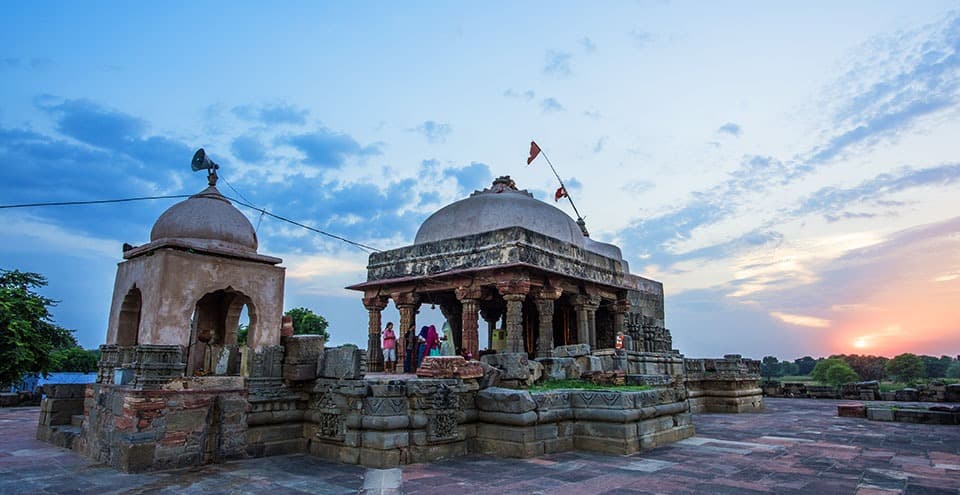
Erected in the 9th century and dedicated to the goddess of joy, the Harshat Mata Temple retains its aura despite the ravages of time. Sculpted columns, bas-reliefs, and divine representations illustrate the refined artistry of the period. Situated near Chand Baori, it completes the site visit by bringing a spiritual dimension.
3. The Mehandipur Balaji Temple
The Mehandipur Balaji Temple is a renowned pilgrimage site dedicated to Hanuman. Visitors come seeking healing from spiritual and physical ailments through specific rituals often linked to exorcism practices. The atmosphere is intense, marked by the fervor of the faithful. Its traditional architecture and vibrant colors underscore the importance of popular faith in this corner of Rajasthan.
4. Bhangarh Fort
Encircled by the Aravallis, Bhangarh Fort intrigues as much as it fascinates. Built in the 17th century by King Bhagwant Das, it is renowned as one of India's most haunted sites. Tales of curses, ghost stories, and a mysterious atmosphere shroud its ruins. Yet beyond this reputation, Bhangarh offers superb remnants of palaces, temples, and bazaars—witnesses to a glorious past now frozen in silence.
5. Gatolav
The Gatolav is an ancient water reservoir in Dausa, once a vital source for inhabitants and travelers. Set within pleasant natural surroundings, it also served as a halt for caravans journeying between Jaipur and Agra. Today, it remains a peaceful spot cherished by locals for waterside strolls and its tranquil atmosphere. It also stands as a tangible reminder of the central role hydraulic systems played in traditional Rajasthan.
6. Giriraj Dharan Mandir
Dedicated to Krishna, the Giriraj Dharan Mandir draws the faithful and visitors into a setting steeped in spirituality. Traditional-style sculptures and decorations, combined with its serene natural surroundings, make it a place conducive to meditation.
7. The Neelkanth Temples
Located at the heart of the Sariska Reserve, the Neelkanth Temples date from the 10th and 11th centuries and are dedicated to Shiva. Their fine sculptures and stone structures impress despite the wear of time.
Practical Information
Climate and Temperature
Dausa's climate is semi-arid. Summers are extremely hot, frequently exceeding 40°C, while winters remain mild, with nighttime temperatures hovering around 10°C. The ideal visiting period spans October to March, when the weather is cooler and more pleasant.
Location and Access
Dausa lies 55 km from Jaipur and 240 km from Delhi, on the Jaipur–Agra highway (NH-21). It is accessible by bus and train, with the railway station situated on the Delhi–Jaipur line. The nearest international airport is Jaipur's, approximately 60 km away.
Want to discover this destination?
Our local advisors design your tailor-made trip.