Bangalore
Bangalore
India's Silicon Valley, garden city and beer capital: discover Bangalore among maharaja palaces, ancient temples and vibrant nights.
Bangalore, or Bengaluru, is one of India's most dynamic and cosmopolitan cities, situated on the Deccan Plateau. Located in the south-east of Karnataka State, of which it is the capital, this city represents a fascinating destination where technology, culture and nature coexist harmoniously, attracting visitors from around the world. A visit to Bangalore is a journey into the heart of modern India, while remaining firmly anchored in its historical and spiritual heritage.
History
The name Bangalore is the Anglicized adaptation of the Kannada term Bengaluru, whose origins trace back to the 9th century. An inscription discovered at Begur, dating from 890 CE, mentions the city under the name Bangaval-uru, which means "city of guards" in old Kannada (Halegannada).
A popular legend, however, attributes the name's origin to an anecdote from the 12th century involving King Hoysala Veera Ballata II. Lost in a forest, he is said to have been welcomed by an elderly woman who offered him boiled beans. Moved by this gesture, he reportedly named the place "Benda-kaal-uru", meaning "city of boiled beans", a name that gradually evolved into Bengaluru.
Until the 16th century, several dynasties from South India (the Western Gangas, the Cholas, and the Hoysalas) ruled the present-day Bangalore region. In 1537, Kempe Gowda I, a feudal chief under the Vijayanagara Empire, had an earthen fort built there, considered the founding act of the modern city. This fortress was reinforced with stone in 1761.
From 1638 onwards, Bangalore changed hands several times. It was first conquered by the Marathas, who governed it for nearly 50 years, before ceding it to the Mughals. The latter subsequently sold the city to the Kingdom of Mysore, ruled by the Wadiyar dynasty.
During the Fourth Anglo-Mysore War in 1799, the city of Bangalore came under British control, though its administration was returned to the Maharaja of Mysore. The city then became the capital of the Princely State of Mysore, a territory under nominal British Raj dominion.
In 1809, the British relocated their military cantonment outside the old city, thereby stimulating the creation of a new quarter under their administration. Bengaluru subsequently became one of the seats of British administration in India from 1831 to 1881, before being returned to the Maharaja of Mysore. Thanks to the British, the city experienced rapid growth, benefiting from new infrastructure: railway networks, telecommunications, grand government buildings, parks and gardens.
Following India's independence in 1947, Bangalore remained the capital of the State of Mysore, before becoming the capital of Karnataka in 1956, during the reorganization of Indian states. The old city of Bangalore and the British cantonment were merged in 1949, forming a single entity or urban area. Today, the city is home to many impressive skyscrapers, such as the UB Tower.
Languages and Cultures
Bangalore is a multilingual city, where Kannada is the official and most widely spoken language. However, due to its status as an economic and cultural hub, many other languages are spoken there, notably English, Hindi, Tamil, Telugu and Malayalam, spoken by various migrant communities. Konkani, Marathi, Urdu and Tulu are also present.
Moreover, Bangalore's population is predominantly Hindu, but the city is also home to significant Muslim, Christian and Jain communities. Furthermore, its cultural dynamism is reflected in its many religious and traditional festivals, with Dasara and Bangalore Karaga among the most popular. This linguistic and religious melting pot gives Bengaluru a unique identity blending local traditions and modern influences.
Bangalore is a strategic hub in South India's transport networks, benefiting from efficient road, rail and air connectivity.
By Road
Located on the country's main north-south axis, the city is connected by highways to Mumbai, Chennai, Hyderabad and Kerala via Mysuru.
By Train
The railway network, part of the South Western Railway zone, serves major Indian metropolitan areas such as Delhi, Mumbai, Chennai and Kolkata, through two main stations: Bangalore City Junction (SBC) and Yeshwantpur Junction.
By Air
As for Kempegowda International Airport (BLR), located 40 km north of Bangalore at Devanahalli, it provides domestic and international connections.
Bengaluru faces heavy traffic, particularly during peak hours, due to the rapid increase in the number of vehicles. To address congestion, several solutions have been implemented, notably an extensive bus network managed by the Bangalore Metropolitan Transport Corporation (BMTC).
Bangalore's metro, inaugurated in 2011, also plays a key role in easing traffic flow. With an east-west line, followed by a north-south line from 2014-2015, it enables rapid and efficient travel.
In addition, taxis and auto-rickshaws remain popular means of transport for navigating this dynamic metropolis.
Bangalore Today
In the 1990s, Bangalore established itself as a major technology hub. The city rapidly became a benchmark for information and communication technologies (ICT), and hosts numerous foreign companies, earning it the nickname "India's Silicon Valley". Events such as the machine tools trade show, for example, offer opportunities to discover various innovative technological solutions. A visit to Electronics City Park is also a chance to see new information technologies.
Bangalore's agglomeration has also made a name for itself in aerospace, biochemistry and the military industry, with key organizations such as ISRO, Hindustan Aeronautics and Bharat Electronics, among others. However, this rapid development has brought challenges and problems in terms of infrastructure and the environment.
In parallel, Bengaluru is an educational and scientific hub, home to prestigious institutions and university centers such as the Indian Institute of Science (IISc), the Indian Institute of Management Bangalore (IIMB) and the National Law School of India University (NLSIU), among others.
What to See in Bangalore?
Bangalore is full of fascinating places to explore. Here's an overview of the attractions to discover during a visit to this city:
Palaces and Historic Monuments
Bangalore is dotted with imposing structures that bear witness to its rich past. The Palace of the Maharaja of Mysore, inspired by Windsor Castle, is a symbol of the age of maharajas. The Vidhana Soudha, a masterpiece of neo-Dravidian architecture, houses the Karnataka government. The forts and palaces of Tipu Sultan immerse visitors and residents in the region's military history. Among other remarkable sites are the High Court of Attara Kacheri, Raj Bhavan and Mayo Hall.
Green Spaces
Bengaluru is also nicknamed India's "garden city", thanks to its numerous green spaces. Lalbagh Botanical Garden, with its greenhouses and ancient granite boulder, and the vast Cubbon Park, for example, are perfect places for a nature escape. Lakes and waterfalls, such as Ulsoor Lake and Sankey Tank, are popular spots with locals for leisurely walks or water activities.
Temples and Spiritual Sites
Bangalore is also a major spiritual center with impressive temples. The ISKCON Temple is a modern and vast place of worship dedicated to Krishna, while the Bull Temple houses a giant statue of Nandi. Shivoham Shiva Temple, with its gigantic statue of Shiva, and the Basilica of Saint Mary, a fine example of Gothic architecture, enrich the city's religious heritage. Furthermore, there are also Sikh and Muslim sites, such as Gurudwara Guru Singh Sabha and the Jamia Mosque, among others.
Museums
Bangalore offers a variety of captivating museums covering a wide range of themes:
- Visvesvaraya Industrial and Technological Museum
- Government Museum
- HAL Aerospace Museum
- NIMHANS Museums
- HMT Heritage Museum
- Kempegowda Museum
- Philatelic Museum
- Legends Motorcycle Museum
- Jawaharlal Nehru Planetarium
What to Do in Bangalore?
For thrill-seekers, Bangalore offers exhilarating activities such as ultralight flights. Adventure sports enthusiasts can also practice paramotoring or take hot air balloon rides under certain weather and regulatory conditions. For more land-based activities, Sarjapur Road, Yeshwantpur and Kanakapura Road host facilities for quad biking, karting and paintball.
The city is also renowned for its vibrant nightlife. Nicknamed India's "beer capital", it is brimming with acclaimed craft breweries. Music and dance enthusiasts can head to clubs and discotheques. If you're more interested in culture, theaters such as Ranga Shankara and Jagriti Theatre offer performances in English and Kannada. Meanwhile, strolling along Mahatma Gandhi Road, you can appreciate the many monuments and historic buildings.
Lastly, Bangalore is a veritable shopping paradise, blending the buzz of modern boutiques with traditional markets. Brigade Road and MG Road are, for example, must-visit streets for purchasing international brand clothing and unique souvenirs. Bangalore residents also gather at Chickpet Market and Commercial Street for shopping.
Attractions in Bangalore
ISKCON Temple Bangalore (Sri Radha Krishna Mandir)
Le temple ISKCON de Bangalore, inauguré en 1997, est l'un des plus grands temples vaishnavas du monde. Sanctuaires richement ornés, musée interactif et cérémonies d'arati quotidiennes en font une étape spirituelle et culturelle majeure de la ville.
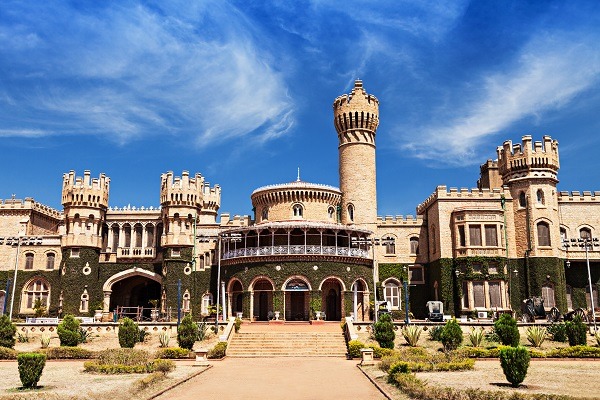
Palais de Bangalore
Résidence royale Wadiyar du XIXᵉ siècle inspirée du château de Windsor, le Palais de Bangalore mêle architecture Tudor, salle Durbar et jardins paysagers.
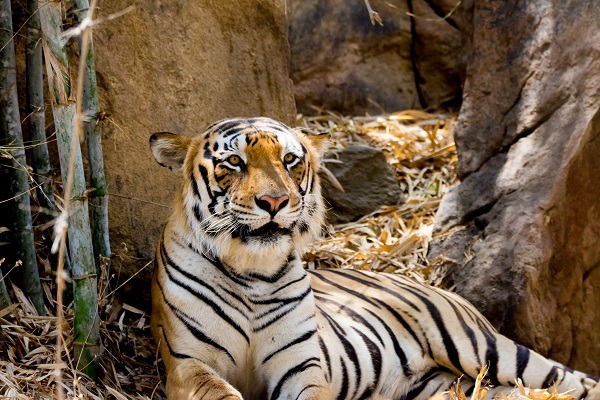
Parc national de Bannerghatta
À 22 km au sud de Bangalore, Bannerghatta combine réserve forestière, safaris, zoo et parc aux papillons sur 260 km² dans les collines d'Anekal.
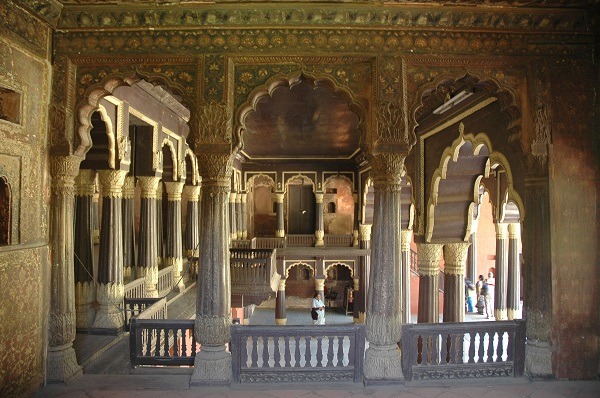
Tipu Sultan's Summer Palace
Construit en teck au XVIIIe siècle, le palais d'été de Tipu Sultan est l'un des rares monuments du sultanat de Mysore encore debout à Bangalore, à deux pas du Fort et du KR Market.
Want to discover this destination?
Our local advisors design your tailor-made trip.