Gateway of India (Mumbai)
Gateway of India (Mumbai)
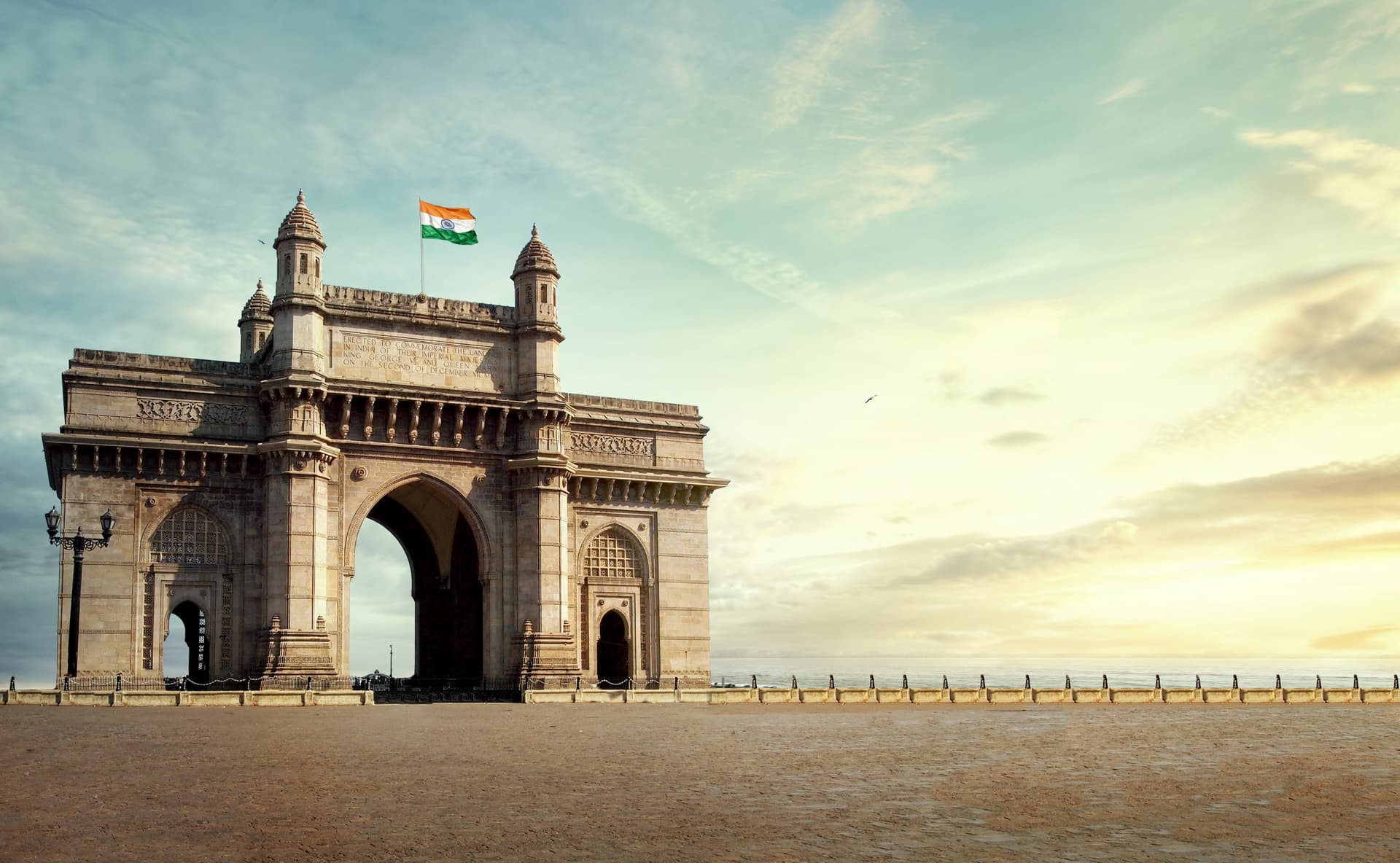
A 26-meter basalt arch overlooking the Arabian Sea, the Gateway of India is Mumbai's emblematic monument and the embarkation point for Elephanta.
Nicknamed the "Taj Mahal of Mumbai," the Gateway of India stands facing the Arabian Sea in the Colaba district, at the southern tip of India's economic capital. This 26-meter-high yellow basalt arch blends references to Roman triumphal arches with Gujarat's Islamic architectural vocabulary. More than a monument, it is an anchor point for Mumbai's identity, where chai vendors, street photographers, pilgrims heading to the Elephanta caves, and locals seeking the evening breeze converge.
Why visit the Gateway of India
Three reasons make this monument central to any Mumbai visit. First, its historical weight: erected to honor an empire and becoming, in 1948, the symbolic site of the departure of the last British troops, it encapsulates a century of Indian history. Second, its location: the plaza bordering it opens onto the Arabian Sea and faces the Taj Mahal Palace hotel, forming one of the country's most recognizable urban panoramas. Finally, its role as the departure point for ferries to Elephanta Island and its UNESCO-listed rock-cut sanctuaries.
A history of royal visits and independence
The Gateway of India was erected to commemorate the visit of King George V and Queen Mary in December 1911, on the occasion of their proclamation as Emperor and Empress of India. The foundation stone was laid by the Governor of Bombay, George Sydenham Clarke, on March 31, 1911. During their passage, the royal couple saw only a cardboard model of the future monument: the final construction was not completed until 1924.
The project was entrusted to Scottish architect George Wittet, who incorporated 16th-century Islamic styles from Gujarat into his design. The work was carried out by Gammon India Limited over four years of construction. During the British period, the arch served as a symbolic point of entry and exit to the subcontinent: it was through here that newly appointed viceroys disembarked, and it was also through here that the last British troops departed in February 1948.
The monument also bears witness to darker episodes. On August 25, 2003, twin bombings struck the Gateway of India area and the Zaveri Bazaar, killing 54 and injuring 244. Five years later, on November 26, 2008, ten members of the Lashkar-e-Taiba group arrive by boat on the waterfront and coordinate twelve attacks across the city, including the emblematic attack on the nearby Taj Mahal Palace. The death toll exceeds 150, Indian and foreign nationals alike. A plaque and reinforced security presence today bear witness to this episode.
What to see on site
The central arch rises 26 meters high and its main dome measures approximately 15 meters in diameter. Four finely carved stone lattice towers frame the ensemble, constructed in yellow basalt and reinforced concrete. Behind the walkway, stairs descend directly to the Arabian Sea, where fishing boats, tour boats, and private yachts are moored.
On the esplanade before the arch, two equestrian and standing statues command attention:
- The statue of Chhatrapati Shivaji, founder of the Maratha Empire, inaugurated on January 26, 1961, perceived as a symbol of regional pride.
- The statue of Swami Vivekananda, which commemorates the philosopher's journey from Mumbai to Chicago, where he delivered his famous address to the Parliament of Religions in 1893.
Opposite the monument stands the Taj Mahal Palace hotel, opened in 1903, whose silhouette is an integral part of the visual composition of the site. At dusk, the lighting of the arch and hotel attracts dense crowds of strollers.
Practical information
Access to the Gateway of India is free and the surrounding plaza is open at all times. Allow approximately 30 to 45 minutes to walk around the monument, observe the statues, and enjoy views of the bay. If you plan to board a ferry to the Elephanta caves from the nearby dock, budget an additional half-day.
A few points to anticipate:
- Crowds are heavy in late afternoon, on weekends, and public holidays; early morning hours offer softer light and limited crowds.
- Security screening (bags, metal detectors) is in place at the entrance perimeter.
- Street vendors and photographers are numerous; a polite refusal generally suffices.
- No ticket is required for the monument, but ferries to Elephanta are paid and operate during daylight hours only.
When to visit
The best time to visit the Gateway of India extends from October to March, during the dry season: pleasant temperatures, clear skies, calm sea. The monsoon, from June to September, regularly transforms the waterfront into a wind and wave-battered zone, which often suspends ferry connections. April and May are viable but marked by heavy, humid heat.
How to get there
The Gateway of India is located at the southern tip of Mumbai, in the Apollo Bunder district. Several options to reach it:
- Local train: the Western line serves Churchgate station, and the Central and Harbour lines terminate at Chhatrapati Shivaji Maharaj Terminus (CST). From either station, allow 10 to 15 minutes by taxi.
- Bus: lines 111 and 112 serve the monument directly from the south of the city. From Colaba Depot, RC Church, or Navy Nagar, the "Regal" stop is within walking distance.
- Car or taxi: from the northern suburbs, the Bandra-Worli Sea Link offers the fastest route to south Mumbai. Black and yellow taxis as well as ride-hailing services are omnipresent.
Nearby
The Colaba district concentrates several points of interest to explore in succession:
- The Taj Mahal Palace hotel, just across, whose public spaces are freely accessible.
- The Elephanta caves, accessible by ferry from the Gateway of India dock (approximately 1 hour crossing).
- Colaba Causeway, a popular shopping and dining hub.
- The Fort district, with its colonial buildings and the Chhatrapati Shivaji Maharaj Vastu Sangrahalaya museum.
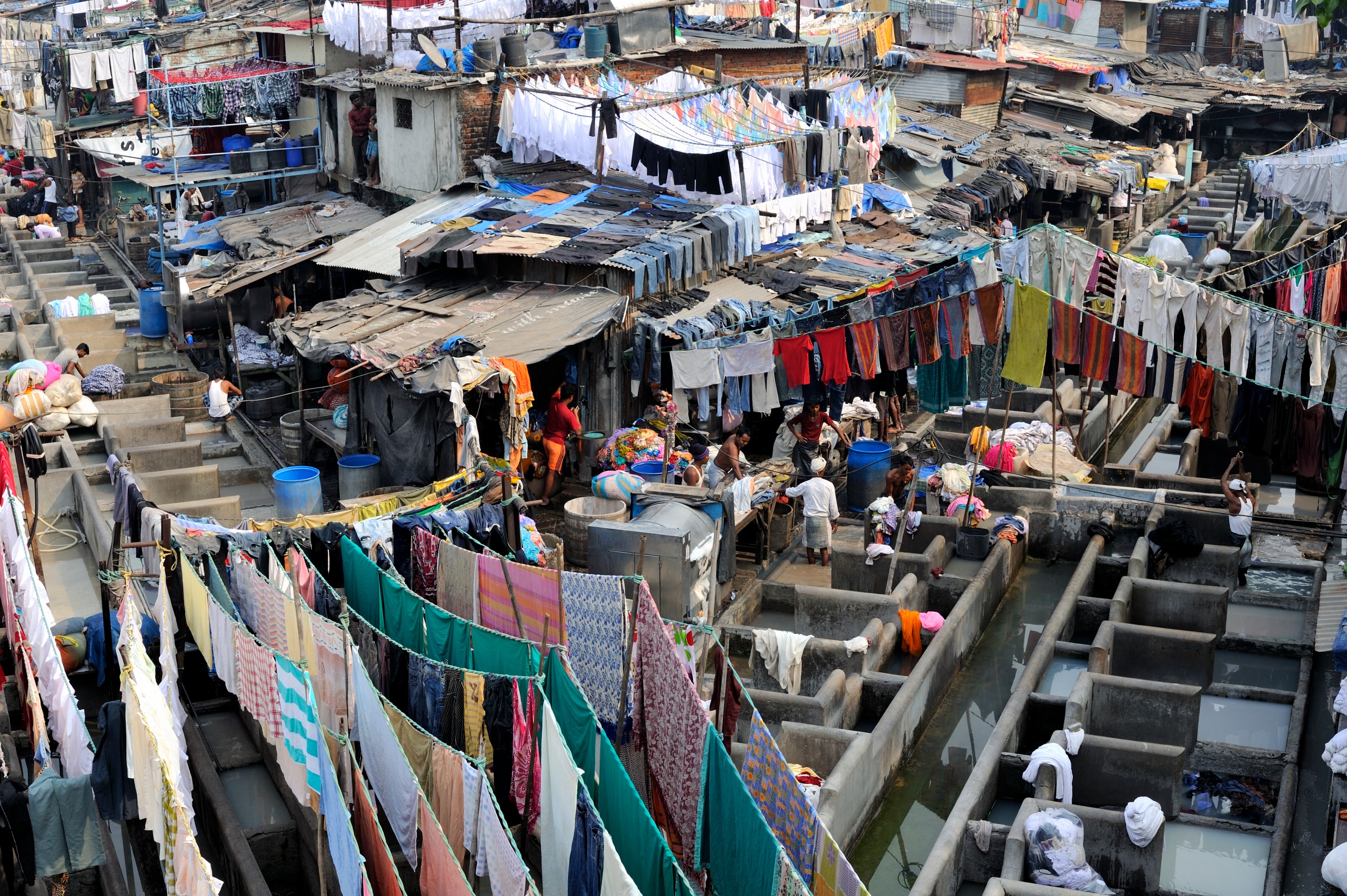
- Further north, the famous Dhobi Ghat, a vast open-air laundry, completes a contrasting vision of Mumbai.
To extend your exploration beyond Mumbai, Fort Aguada in Goa and the British Residency in Hyderabad offer other perspectives on India's colonial heritage.
Frequently asked questions
Frequently asked questions
Include the Gateway of India in your itinerary
The Gateway of India naturally fits into a 2 to 3-day urban stopover in Mumbai, which can be followed by Goa, Rajasthan, or South India sites. To build a custom journey integrating this monument and other facets of the country, consult our India travel suggestions.
Nearby
Interested in this visit?
We can include it in your personalised itinerary.