Ranthambore National Park
Ranthambore National Park
Located 15 km from Sawai Madhopur, Ranthambore Park combines 282 km² of jungle, one of India's finest spots for Bengal tigers, and a UNESCO-listed fort.
Located 15 km from the town of Sawai Madhopur in Rajasthan, Ranthambore National Park spans 282 km² of dry forests, lakes and cliffs home to one of India's most closely monitored Bengal tiger populations. Once a hunting ground of the maharajas of Jaipur, the site is today a protected reserve frequented by naturalists and travellers heading through Rajasthan.
Why visit Ranthambore
- One of India's finest reserves for observing the Bengal tiger in its natural habitat.
- A medieval fort inscribed on the UNESCO World Heritage List standing at the heart of the park.
- Over 300 bird species recorded, from fish eagles to Indian peacocks.
- Straightforward logistics from Jaipur, Delhi or Agra by train.
The park's history and Project Tiger
The heart of the 282 km² park was once the hunting ground of the maharajas of Jaipur. Facing the collapse of big cat populations, the Indian government banned tiger hunting here in 1970. Three years later, in 1973, the area became one of the first parks to join the Project Tiger, a national conservation programme launched under Indira Gandhi.
Protection has not been a smooth journey. Between 2002 and 2004, a wave of organised poaching struck the reserve: around twenty tigers were captured or killed by professional gangs. The crisis triggered a major overhaul of surveillance, with the installation of surveillance cameras and reinforced patrols. By 2017, the population had stabilised at around sixty tigers, including 18 young ones, and has continued to grow since. The 2023-2024 season saw the park welcome over 156,000 foreign visitors and over 497,000 Indian visitors.
What to see and do
Safari by gypsy or canter
The park is divided into 10 zones open to the public, each with marked trails and zone assignment by random draw at booking. Two types of vehicles operate: the gypsy, an open jeep seating 6, more manoeuvrable and discreet, and the canter, a vehicle with around 20 seats, cheaper and more communal. Outings run at dawn and late afternoon, the windows when animals are most active.
Beyond the Bengal tiger, wildlife includes leopards, hyenas, sloth bears, jackals, deer, crocodiles and peacocks. The park also permits boat rides on certain water bodies, useful for approaching crocodiles and water birds without disturbing the banks.
Ranthambore Fort
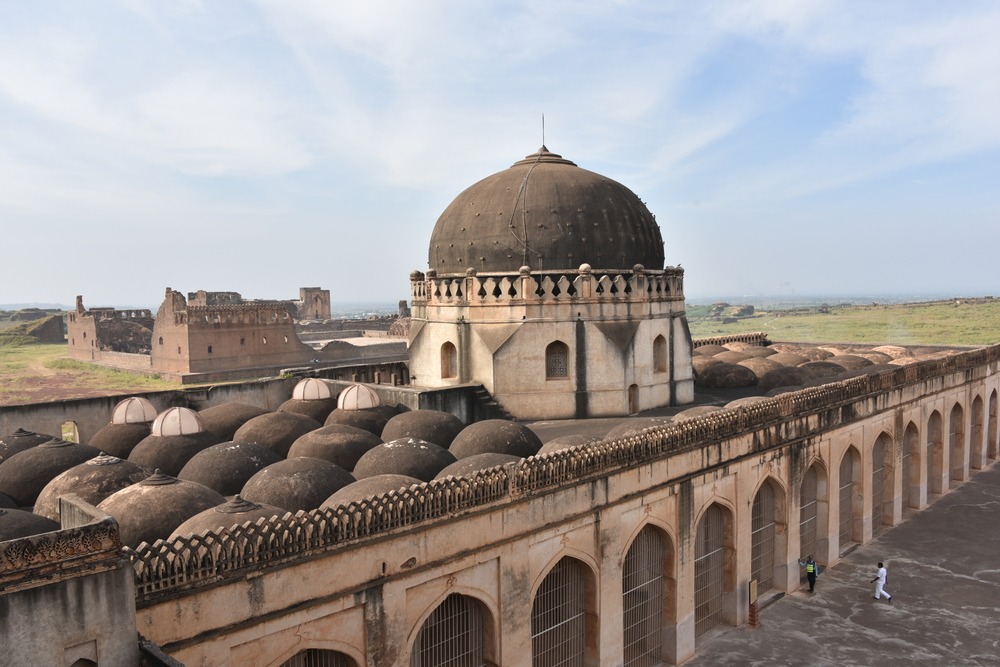
Perched on a rocky outcrop overlooking the jungle, Ranthambore Fort is associated with king Hammiradeva, the last Chauhan ruler to fall at the siege of 1301. The citadel was refashioned several times over the centuries. It was inscribed on the UNESCO World Heritage List in 2013, as part of a series of six hill forts in Rajasthan.
Inside stand ruined palaces, water tanks, and an active Ganesh temple that receives pilgrims daily who leave offerings and letters. The ascent is on foot and requires sturdy shoes.
Bird watching
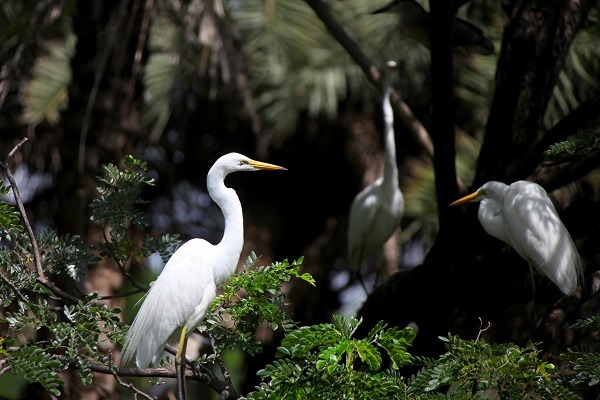
With over 300 species recorded, Ranthambore ranks among the leading birdwatching sites in northern India. A mosaic of lakes, dry forests and wetlands attracts fish eagles, kingfishers, owls, parakeets, storks and the ubiquitous Indian peacock. Winter months concentrate migratory species.
When to go
The park is open from October to April, with partial closure during the monsoon: zones 1 to 5 close from July to September due to impassable trails and breeding season protection.
- October-December: vegetation still dense, mild temperatures, abundant migratory birds.
- January-February: cool mornings, good visibility.
- March-April: heat rises, vegetation thins, animals cluster around water points — the most favourable window for tiger spotting.
Practical information
- Booking: essential, especially in high season. Permits are arranged online several weeks in advance, with zone assignment by random draw.
- Rates: significantly higher for foreign visitors, with a marked gap between the gypsy (pricier, 6 seats) and the canter (budget option). An entire private vehicle costs several times the individual rate. Factor in GST and possible booking fees.
- Duration of visit: allow at least two nights on-site to do two safaris and visit the fort under good conditions.
- What to bring: neutral clothing, fleece for winter mornings, hiking shoes for the fort, binoculars.
How to get there
The access point is Sawai Madhopur, 15 km from the main entrance.
- From Jaipur (180 km): direct train in roughly 3 hours, or car in roughly 4 hours.
- From Delhi: regular rail connections of around 6 hours.
- From Agra: direct train possible, travel time varies by service.
- Nearest airport: Jaipur, connected to major Indian cities.
Nearby and other parks in India
Ranthambore fits naturally into the classic Delhi – Agra – Jaipur triangle and pairs easily with further stops across Rajasthan. To extend the wildlife theme, two other Indian reserves complement the experience well: Bandhavgarh National Park, in Madhya Pradesh, renowned for its tiger density, and Bannerghatta National Park, near Bangalore, more accessible from the south of the country.
FAQ
Frequently asked questions
From March to April, when vegetation thins out and animals gather around water sources. Dawn and late afternoon safaris maximise viewing chances.
Yes. Permits are capped by zone and time slot, and fill quickly in high season (October to April). Local agencies and the official platform open bookings several weeks ahead.
The gypsy (6-seater jeep) costs more but is more discreet and comfortable for photography. The canter (≈ 20 seats) remains a solid option if the gypsy is full or for a tighter budget.
Two nights minimum allow for two safaris in different zones and a fort visit. Three nights give better headroom if the first outing yields no sightings.
No. Zones 1 to 5 close from July to September during the monsoon. Some outlying zones remain accessible, but the main experience runs from October to April.
Include Ranthambore in your trip
Ranthambore fits naturally into a Rajasthan circuit or a Delhi – Agra – Jaipur loop. To build an itinerary combining safari, forts and desert towns, explore our bespoke India journeys.
Interested in this visit?
We can include it in your personalised itinerary.