Kapaleeswarar Temple
At the heart of Mylapore, Kapaleeswarar Temple stands as one of Chennai's most active Shaivite shrines. Its polychrome gopuram, sacred tank and daily rituals make it a major center of Tamil religious life.
Kapaleeswarar Temple rises at the heart of Mylapore, a historic neighborhood in Chennai. Dedicated to Shiva in his form as Kapaleeswarar and his consort Karpagambal, this Dravidian temple ranks among the city's most vibrant religious centers. Its gopuram, covered in polychrome sculptures, dominates the quarter and has shaped local religious life for centuries. Note: while legacy records sometimes reference Mahabalipuram, this temple is definitively located in Chennai — two distinct Tamil Nadu cities.
Quick reference information
- Entry: free for devotees and visitors; certain special pujas require a donation
- Dress code: covered clothing required; men must remove their shirt to enter the main sanctuary (dhoti provided at entrance)
- Footwear: must be left outside
- Non-Hindu access: entry to the inner sanctum (garbhagriha) is reserved for Hindus
- Recommended duration: 45 minutes to 1.5 hours depending on interest in rituals
- Transport: located in Mylapore, accessible by auto-rickshaw, MTCNL bus or metro (Mylapore station on the expanding line)
What to see
The eastern gopuram, rising roughly thirty meters, concentrates hundreds of mythological figures painted in vivid colors. The temple houses a large sacred tank, the Kapali Theertham, bordered by ghats where ritual ablutions take place. Within its inner chambers stand secondary sanctuaries dedicated to Murugan, Ganesha and the 63 saints known as the Nayanmars.
History and context
Tradition traces the temple's origins to the Pallava period (7th century), though the present structure dates largely to the Vijayanagara era and later reconstructions under the Nayaks. The original shrine was reportedly destroyed during Portuguese incursions in the 16th century and rebuilt at its present location. Mylapore itself ranks among Chennai's oldest quarters, referenced in classical Tamil Sangam literature.
Highlights of your visit
The eastern gopuram and its sculptures
The eastern tower gateway concentrates the temple's iconographic richness: deities, demons, epic scenes from the Ramayana and Mahabharata rendered in stone. Each figure is repainted during major festivals. Viewing from street level reveals the composition without requiring entry to the inner temple.
The Kapali Theertham
The sacred tank, surrounded by colonnades, pulses with activity at dawn. Devotees bathe here before morning prayers. The atmosphere here feels more meditative than within the main precinct.
Daily pujas
Several pujas unfold each day according to strict ritual time. The dawn puja (thiruvanandal) and evening ceremony (ardhajama puja) draw the largest congregations. Nadaswaram music and Tevaram chanting create a characteristic soundscape.
The Arubathimoovar festival
This annual celebration, held in Panguni (March–April), honors the 63 Nayanmar saints. Processional chariots traverse Mylapore's streets for several days — among Chennai's most attended religious events.
Etiquette and visitor rules
- Covered clothing mandatory: shoulders and knees covered for all visitors
- Men entering the main sanctuary must wear a dhoti (available at entrance) and remove their shirt
- Shoes deposited at shoe racks near the entrance
- The inner sanctum (garbhagriha) is reserved for Hindus
- Avoid turning your back to the principal idols during puja
- Silence phones; maintain a reverent demeanor during rituals
Photography tips
Photography is generally permitted in outer courts and around the tank, but forbidden inside the sanctuaries. Morning light (before 9 a.m.) illuminates the eastern gopuram frontally. For reflections in the Kapali Theertham, golden hour evening light works best. Always request permission before photographing devotees at prayer.
Location and access
The temple stands in Mylapore, south of central Chennai. The neighborhood is densely populated and bustling; auto-rickshaw from downtown (Egmore, T. Nagar) remains the most convenient option. MTCNL buses serve Mylapore from multiple terminals. Accessibility for persons with reduced mobility is limited due to steps and uneven ground.
Immediately nearby lie the San Thome museum and basilica (minutes on foot) and Mylapore's market, renowned for ritual flowers and silk shops.
In the vicinity
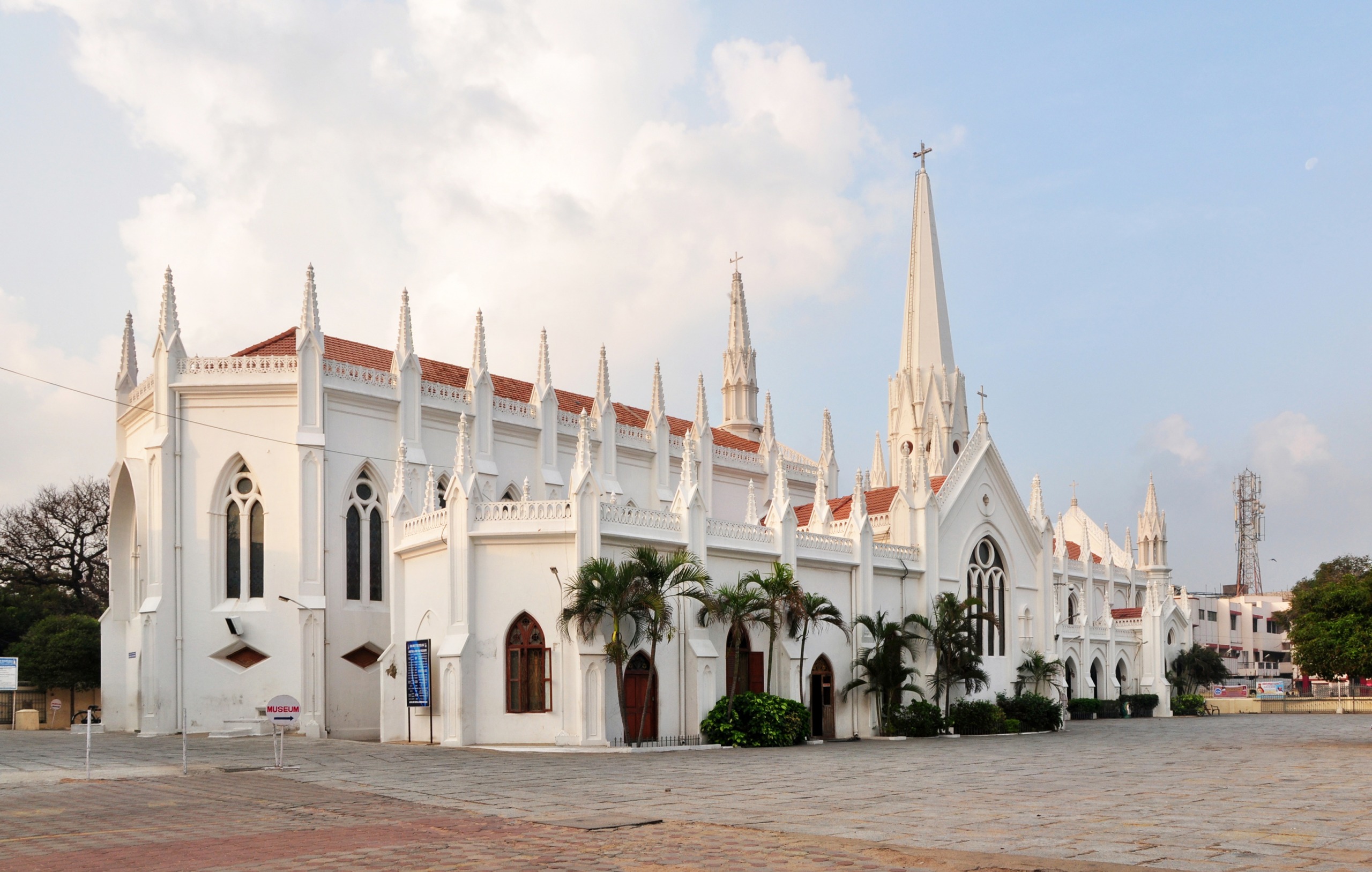
- San Thome Basilica — a neo-Gothic cathedral built above the presumed tomb of Apostle Thomas, a short walk away.
- Government Museum of Chennai — one of South Inde's foremost collections of Chola bronzes, in the Egmore quarter.
- Marina Beach — among the world's longest urban beaches, a few kilometers from Mylapore.
- Parthasarathy Temple (Triplicane) — a Vaishnava shrine from the 8th century, one of Chennai's oldest temples.
Interested in this visit?
We can include it in your personalised itinerary.