Kalighat Kali
Kalighat Kali
A major sanctuary in Kolkata dedicated to the goddess Kali, Kalighat Temple is one of the 51 Hindu Shakti Peethas. History, architecture and rituals.
The Kalighat Kali Temple, in south Kolkata, ranks among the 51 Shakti Peethas, those Hindu sanctuaries scattered across the subcontinent and associated with different parts of the body of Sati, Shiva's first wife. A major pilgrimage site dedicated to Kali, a goddess both formidable and protective, it has concentrated Bengali devotion for centuries.
Why visit Kalighat Kali
The site offers three compelling reasons: religious, as one of the most frequented Shakti Peethas; historical, with worship attested since the 4th century; and cultural, since the neighbourhood gave birth to Kalighat painting, a pictorial style that emerged in the 19th century. The temple's daily fervour also makes it a living testament to Shakta Hinduism as practised in West Bengal.
History and legend of the sanctuary
According to Hindu tradition, Kalighat marks the spot where the big toe of Sati's right foot is said to have fallen when her body, carried by Shiva, was dismembered to end his mourning. Another account tells of a devotee who discovered on the bank of the Bhagirathi river a stone shaped like a toe, accompanied by a lingam of Shiva named Nakuleshwar Bhairav, and who founded a cult to Kali there.
Historical sources suggest the site was already venerated in the time of Chandragupta II, in the 4th century. The first stone temple was built in the early 16th century under Raja Man Singh I, general of Mughal emperor Akbar. The current building dates from 1809, funded by the Sabarna Roy Chowdhury family, then owners of the surrounding land.
Between 2016 and 2023, a major restoration reinforced the Nat Mandir, passages and staircases while respecting the original Bengali architecture.
What to see on site
Bengali architecture
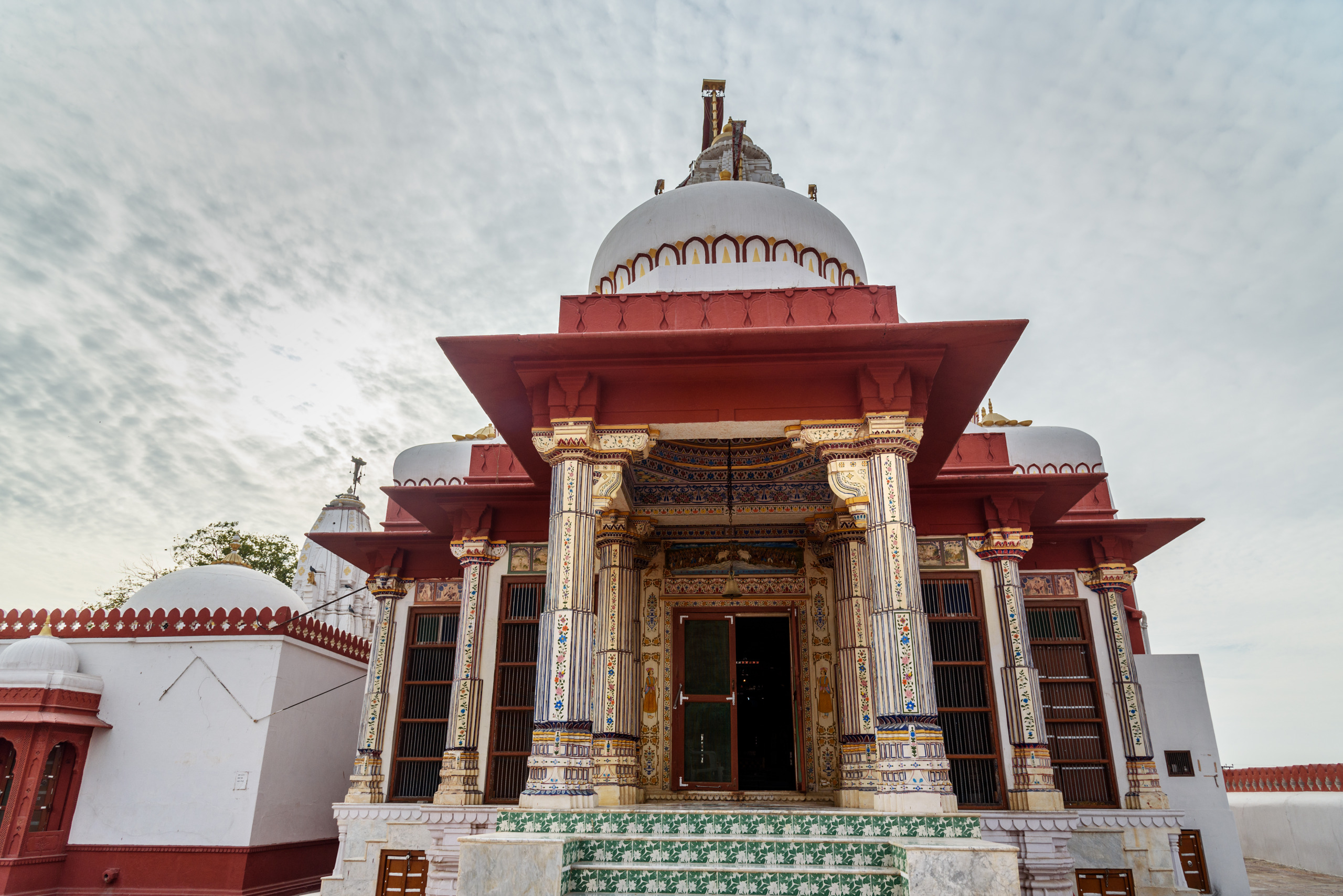
The temple exemplifies traditional Bengali architectural style, recognizable by its curved roof known as chala, inspired by rural huts. The complex comprises several elements:
- The main sanctuary or garbhagriha, which houses the icon of Kali.
- The Nat Mandir, an assembly hall where devotees sing and pray.
- A temple dedicated to Radha-Krishna.
- A sanctuary of Shiva.
The icon of Kali
The goddess's representation departs from standard depictions. She has three prominent eyes, a golden protruding tongue and four gilded arms. Two of her hands hold a scimitar and the head of a demon (local tradition identifies this as Shumbha), symbolizing the destruction of evil; the other two are raised in blessing.
Daily rituals
Temple life is governed by precise rituals: the Bhog offering (sacred meal presented to the goddess) and the Snan Yatra, a ritual bathing during which priests cover their eyes, as the icon is considered too sacred to behold at that moment.
Practical information
The temple is open daily, with extended morning and evening hours, and closure during midday for Bhog. It is best to check opening times on site, as they may vary depending on the day and festivals. Entry is free and photography is strictly forbidden inside.
Modest dress recommended (shoulders and legs covered), shoes removed before entry. The temple surroundings are frequented by intermediaries offering "guided tours" or paid offerings: you may politely decline and proceed directly to the main entrance.
When to visit
The temple is accessible year-round, though certain periods draw considerable crowds:
- Kali Puja (October-November): the main event dedicated to the goddess, with night prayers and offerings.
- Durga Puja: one of Bengal's greatest festivals.
- Poila Boishakh: Bengali New Year, in April.
- Makar Sankranti: harvest festival, in January.
For a quieter visit, come early in the morning on weekdays, outside festival periods. The dry season, from November to March, remains the most comfortable time to explore Kolkata.
How to get there
The temple is located in the Kalighat neighbourhood, south of Kolkata.
- By metro: Kalighat station (blue line) is just a few minutes' walk away.
- By bus or taxi: many routes serve the area.
- By rickshaw: convenient for navigating the narrow lanes of the old quarter.
Nearby attractions
Kalighat is more than just its sanctuary. The neighbourhood is home to vibrant markets and artist studios perpetuating Kalighat painting, a pictorial style born in the 19th century around the temple. In Kolkata itself, the ghats lining the Hooghly offer another perspective on Bengali religious fervour. To extend your journey, the Bara Imambara in Lucknow illustrates northern India's Muslim heritage, while the Himalayan Mountaineering Institute in Darjeeling appeals to travellers heading towards the Himalayan foothills. Further west, Bhedaghat and its marble gorges make for an appreciated nature-based stop.
Frequently asked questions
Frequently asked questions
Yes, access is generally permitted for non-Hindu visitors, provided you respect the dress code and rules of conduct. Only the inner sanctum may be restricted to devotees at certain times.
Modest dress covering shoulders and legs is recommended. Shoes are removed before entering the sacred precinct.
No, photography is strictly forbidden within the sanctuary. This rule is enforced vigilantly by temple staff.
Intermediaries often offer "tours" or paid offerings. You may politely decline and proceed directly to the entrance. Entry to the temple itself is free.
Allow 1 to 1.5 hours on site, or longer during festivals or if you wish to explore the neighbourhood's lanes and artist studios.
Plan your trip
Kalighat Kali Temple fits naturally into a broader discovery of Kolkata and Bengal. To build a bespoke itinerary blending religious heritage, colonial legacy and regional escapes, explore our travels in India.
Nearby
Interested in this visit?
We can include it in your personalised itinerary.