Dashavatara Temple
Dashavatara Temple
The Dashavatara Temple in Deogarh, Uttar Pradesh, is one of the oldest stone Hindu temples still standing. Gupta reliefs, Vishnu iconography, practical guide.
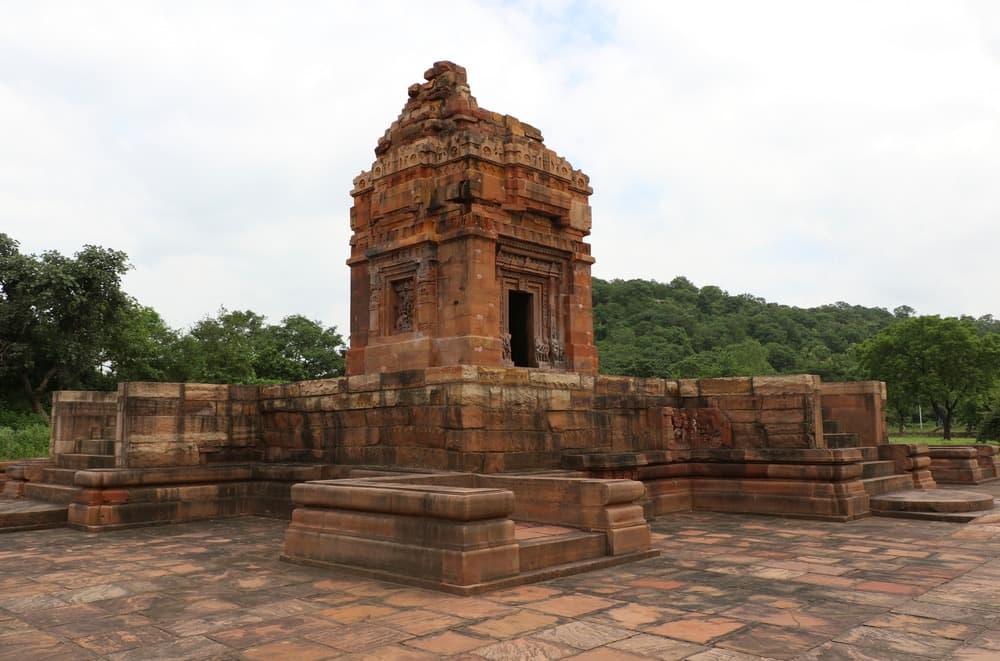
The Dashavatara Temple, dedicated to the god Vishnu, ranks among the oldest stone Hindu temples still standing. Built around 500 CE, it rises in Deogarh, in Lalitpur district, in the southwestern Uttar Pradesh. Its sculpted reliefs recount the ten incarnations (Dashavatara) of Vishnu and illustrate the artistic apex of the Gupta dynasty.
Why visit the Dashavatara Temple
This temple appeals to enthusiasts of Indian history, religious architecture, and Hindu iconography alike. Three concrete reasons justify the detour:
- Exceptional antiquity: at roughly 1,500 years old, it documents the transition between wooden sanctuaries and the first stone temples on the subcontinent.
- Preserved narrative reliefs: the southern façade houses one of the most complete sculptural representations of the Vishnuite pantheon from the Gupta period.
- An off-the-beaten-path site: away from major tourist circuits, it can be visited in peace and quiet, facilitating detailed observation of the sculptures.
History of the Gupta Temple of Vishnu
Built around 500 CE (6th century), the Dashavatara Temple is one of the oldest Hindu temples in stone structure still in existence. Also called the Gupta Temple of Vishnu, it marks a pivotal step in the evolution of Indian religious architecture, at the moment when stone replaced perishable materials like wood.
The edifice belongs to the golden age of the Gupta dynasty (4th–6th centuries), a period sometimes dubbed the "Hindu Renaissance of India" by historians, owing to the simultaneous flourishing of the arts, Sanskrit literature, sciences, and religious thought. The temple's iconographic program—centered on the Dashavatara, the ten incarnations of Vishnu—reflects a precise theological intention: to display the god's cosmic sovereignty upon the very walls of the sanctuary.
The original pyramidal roof, or shikhara, collapsed over the centuries, but the architectural foundations endure and allow the initial silhouette to be reconstructed.
What to see on-site
The architecture
The temple follows a square plan and rests on an elevated platform adorned with narrative friezes, accessible by a central staircase. At the heart of the building, the central sanctuary (garbhagriha) was designed to house a statue of Vishnu, now lost. Niches carved into the outer walls once held subsidiary deities, several of whose reliefs remain legible. The austere volumes contrast with the density of sculptural decoration.
The Dashavatara reliefs
The southern façade bears the site's most celebrated relief: Vishnu reclining on the cosmic serpent Ananta, floating upon the primordial waters. The goddess Lakshmi massages his feet, while Brahma emerges from a lotus flower born from Vishnu's navel—a foundational scene in Hindu cosmogony.
Two other major panels complete the iconography:
- Varaha, Vishnu's boar-man avatar, saving the goddess Earth from the waters.
- Narasimha, Vishnu's lion-man avatar, slaying the demon Hiranyakashipu.
The friezes of the platform add secondary scenes (musicians, dancers, mythological creatures) that also document court life of the Gupta era.
Practical information
The site is open daily during daylight hours and is managed by the Archaeological Survey of India. Entry fees remain modest, with a reduced rate for Indian visitors and a slightly higher rate for foreigners; expect just a few tens of rupees. Plan for 1 to 1.5 hours to observe the reliefs in detail.
Recommendations on-site:
- Favor morning or late afternoon light: it brings out the modeling of the sculptures.
- Modest, covering clothing recommended, as at most Indian religious sites.
- Bring water: there are no shops in the immediate vicinity.
When to visit
The best period extends from October to March, when temperatures remain manageable (59–82 °F on average) and the sky is generally clear. Avoid the hot season (April–June), when temperatures frequently exceed 104 °F in this part of central India, as well as the monsoon (July–September) which can complicate road access. A morning visit remains preferable year-round.
How to get there
By air
The most useful airports for reaching Deogarh are those of Gwalior and Khajuraho, both several hours' drive away, with regular connections from Delhi. Delhi's international airport remains the primary option for international travelers, followed by a train or car journey.
By train
Lalitpur railway station, located roughly thirty kilometers away, is the most practical rail terminus. It is served by trains connecting Delhi, Bhopal, and Jhansi on the central Delhi–Mumbai line. A taxi or auto-rickshaw will then take you to Deogarh.
By road
From Lalitpur or Jhansi, the road leads to Deogarh through the Bundelkhand countryside. Renting a car with an English-speaking driver remains the most flexible option for combining a visit here with other sites in the region.
Combining with other stops
To enrich an itinerary across central and northern India, several architectural and cultural sites pair well with a visit to Deogarh:
- The City Palace in Udaipur, a Rajasthani palatial complex with refined decoration.
- The Ajit Singh Memorial, a landmark in modern Indian history.
- The Basilica of Bom Jesus in Goa, a testament to Portuguese heritage in Inde.
Frequently asked questions
Frequently asked questions
No, the site now functions as an archaeological monument managed by the Archaeological Survey of India. The statue of Vishnu in the sanctuary has vanished and no regular ceremonies take place there.
Plan for 1 to 1.5 hours on-site to examine the sculpted platform, the reliefs on the façades, and the central sanctuary.
No, the original shikhara collapsed over the centuries. Only the architectural foundations remain, but they allow the initial pyramidal silhouette to be visualized.
The great panel of Vishnu reclining on Ananta on the southern façade, as well as the scenes of Varaha saving the Earth and Narasimha slaying Hiranyakashipu.
Not mandatory, but useful for decoding Hindu iconography. Failing that, a good printed or digital guide allows you to identify each sculptural scene.
Organize your trip
The Dashavatara Temple fits naturally into an itinerary dedicated to ancient temples and Gupta sites in northern Inde. To build a bespoke itinerary integrating Deogarh and the country's major cultural stops, consult our travels in Inde.
Interested in this visit?
We can include it in your personalised itinerary.