City Palace Udaipur
City Palace Udaipur
On the shores of Lake Pichola, Udaipur's City Palace stretches 800 meters of courtyards, pavilions and galleries, bearing witness to four centuries of Mewar history.
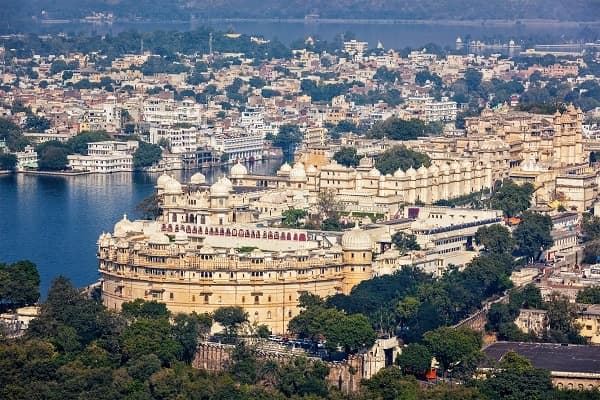
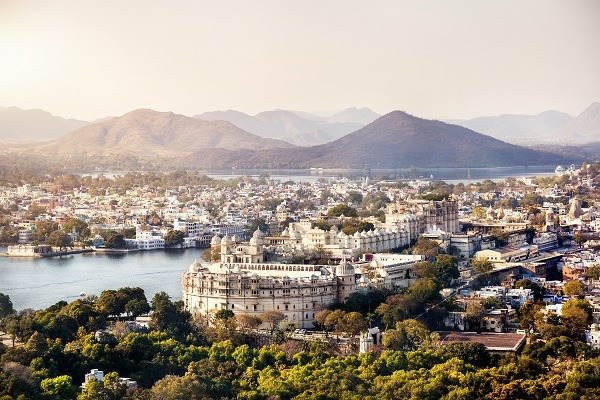
On the shores of Lake Pichola, Udaipur's City Palace unfolds its white facades across nearly 800 meters of length, at the foot of the Aravalli Hills. Commissioned by Maharana Udai Singh II in 1559 when he relocated the Mewar kingdom's capital from Chittorgarh to Udaipur, the complex was enlarged by his successors over nearly four centuries. A royal residence, administrative seat and then museum since 1969, it brings together courtyards, pavilions, hanging gardens and galleries testifying to the long history of the Mewar dynasty.
Why visit the City Palace
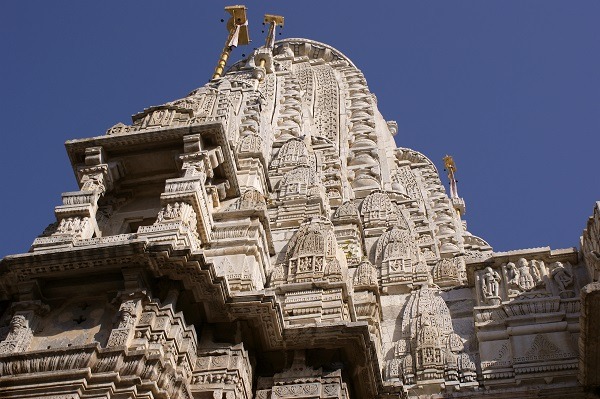
The City Palace is one of Rajasthan's most expansive palatial complexes. Its architecture blends Rajput, Mughal and European styles, the result of successive additions by each Mewar sovereign. The visit combines multiple points of interest: an architectural journey through monumental gateways and inner courtyards, a museum rich in court paintings, ancient weapons and royal objects, and panoramic views over Lake Pichola, Lake Palace and Jag Mandir. Allow 2 to 3 hours to explore the entire complex at a leisurely pace.
History of the palace
Construction began in 1559 when Maharana Udai Singh II, founder of Udaipur, chose this strategic site protected by the Aravalli Hills and the waters of Lake Pichola. Each subsequent Mewar sovereign left their mark, adding courtyards, pavilions and gardens. The reign of Maharana Pratap marked a period of prosperity, before a decline began in the 18th century following attacks from the Marathas.
After India's independence in 1947 and the integration of princely states, the Maharanas, stripped of their titles, retained much of their family heritage and converted certain wings into luxury hotels. The complex opened to the public as a museum in 1969, at the initiative of the royal family.
What to see at the City Palace
Monumental gateways and courtyards
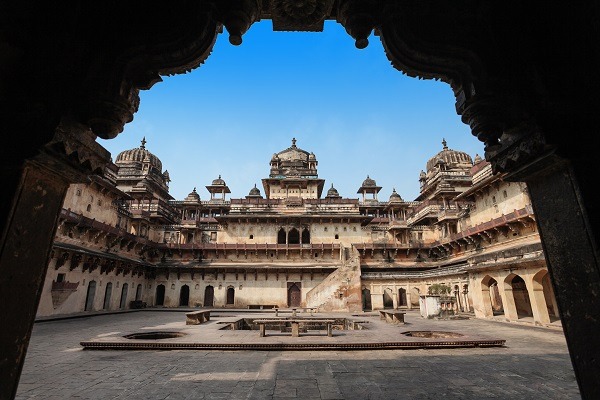
Entry is through the Bara Pol (Great Gate), whose three arches lead to the Tripolia Pol. Beyond stands the Haathi Pol (Gate of Elephants), through which sovereigns made their triumphal entries on elephant-back. Near this passage, eight marble arches recall a particular custom: kings were weighed against gold or silver, the value of which was then redistributed to the poor. Nearby, the former arena hosted elephant fights, a royal entertainment of old.
Remarkable rooms and pavilions
- Mor Chowk: courtyard adorned with glass peacock mosaics, depicting the birds in various postures.
- Sheesh Mahal: the Palace of Mirrors, designed to be lit by candlelight, multiplying the light in plays of reflection.
- Zenana Mahal: former quarters of royal women, decorated with frescoes and paintings.
- Durbar Hall: throne room where royal audiences were held.
- Badi Mahal: pavilion perched on a 27-meter rock outcrop, opening onto the city.
- Krishna Vilas: miniature paintings of hunting scenes and court life.
- Manek Mahal: collection of crystal and porcelain.
- Amar Vilas: highest point of the complex, hanging gardens and views of Lake Palace, Jag Mandir and Jagdish Temple.
- Bhim Vilas: paintings dedicated to Radha and Krishna.
- Chini Chitrashala: known for its Dutch faience.
The museum
Opened in 1969, the City Palace museum holds a collection of Mewar school court paintings spanning the 17th to 20th centuries, as well as weapons, armor, royal costumes, portraits, ceremonial tableware and traditional musical instruments. The Shambu Niwas wing, in a style influenced by British taste, once hosted Lord Minto. Several thematic galleries complement the visit: the Crystal Gallery (crystal furniture and objects), the Symphony of Mewar (royal musical instruments), the Splendor of Silver (royal wedding objects) and the Choti Chitrachali (gallery of traditional decorative details). An audio guide in several languages facilitates the visit.
Practical information
The palace and museum are open daily during daylight hours. Rates distinguish between palace access and museum entry, with reductions for children, students and seniors, and free admission for very young children. A guide can be reserved on-site for an additional fee. As rates and hours change regularly, verify current conditions before your visit. Bring water and comfortable shoes: the route includes many stairs.
Note: the palace hosted in 2014 the private wedding of actress Rani Mukerji and filmmaker Aditya Chopra, an event that strengthened its international reputation.
When to visit
The best period runs from October to March, when Rajasthan temperatures remain manageable for walking tours (15 to 28 °C during the day). April to June months are very hot, with temperatures exceeding 40 °C unsuitable for extended outdoor exploration. The monsoon, from July to September, brings greener vegetation around Lake Pichola but occasional showers. For light, favor late afternoon: the white facades take on a golden hue and the view from Amar Vilas lends itself well to sunset.
How to get there
City Palace is located in Udaipur's old city, on the eastern shore of Lake Pichola. From most accommodations in the historic center, access is on foot through the narrow streets or by rickshaw for a few minutes' journey. Maharana Pratap Airport (Dabok), located about 25 km east of the city, is connected to the center by taxi in 45 minutes to 1 hour depending on traffic. Udaipur railway station, about 4 km away, has connections from Delhi, Jaipur, Ahmedabad and Mumbai. The palace's main entrance is through the Bara Pol, accessible from Lake Palace Road.
Nearby attractions
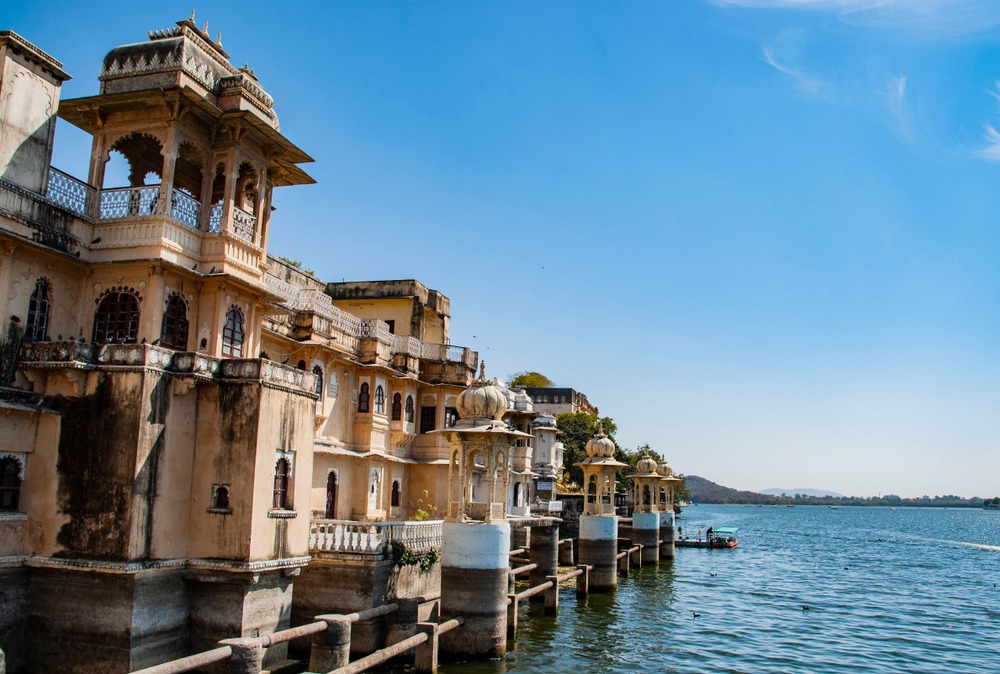
- A boat ride on Lake Pichola, which offers different views of the palace facades and allows you to reach Jag Mandir.
- Jagdish Temple, a few minutes' walk north of the palace, dedicated to Vishnu and built in the 17th century.
- Bagore Ki Haveli, a former aristocratic residence converted into a museum, which hosts a Rajasthani folk dance performance every evening.
- The ghats and markets of the old city, to explore at the end of the day.
To further explore Indian palatial heritage, also consult our guide on the Bara Imambara in Lucknow or the historic city of Chanderi.
Frequently asked questions
Frequently asked questions
Allow 2 to 3 hours to explore the palace and museum. If you add a boat ride on Lake Pichola and Jagdish Temple, plan for a full half-day.
The complex has many narrow stairs and ancient passages that make wheelchair access difficult. Some lower courtyards and galleries are passable, but the elevated pavilions, such as Amar Vilas or Badi Mahal, remain poorly accessible.
Photography is permitted in most courtyards and pavilions, sometimes for an additional fee for cameras. Some museum rooms, notably the painting galleries and Crystal Gallery, may prohibit photography: follow signage on-site.
Opening in the morning allows you to avoid the heat and crowds of tour groups. Late afternoon is also recommended for the golden light on the facades and the view of Lake Pichola from Amar Vilas.
Preparing your trip
City Palace naturally fits into a Rajasthan circuit combining Udaipur with Jodhpur, Jaipur and Pushkar. To organize your itinerary in Northern India, consult our custom-made India trips.
Interested in this visit?
We can include it in your personalised itinerary.