Chandigarh
Chandigarh
At the gateway to the Himalayas, Chandigarh unfolds Le Corbusier's visionary urban planning: UNESCO Capitol Complex, Rock Garden, parks and Sukhna Lake.
Chandigarh, the first city built after India's independence, is far more than a regional capital. Situated at the threshold of the Himalayas, this avant-garde metropolis captivates through its large-scale urban design, its structure conceived like a human body, and its harmony between modernity and verdure. It embodies a futuristic vision made of reinforced concrete, monumental buildings, and perfectly organized circulation routes. Between lake, minimalist homes, emblematic sculptures, and lush parks, Chandigarh offers a rare equilibrium—a city where humanity, nature, and design coexist with fluidity. An urban model unique in India, and a fascinating playground for those passionate about architecture, history, and serenity.
History
The capital of Chandigarh powerfully expresses the birth of the new Indian state. The city takes its name from the tutelary deity Chandi, who has a temple (Chandi Mandir) in a neighboring district, and from a fort called Garh located within the temple's grounds. Chandigarh—"the fort of Chandi"—is a strong city that fulfills a mission of unity and peace for the Indian people, after years of conflict, strife, and struggle for freedom during India's independence.
It all began when Lahore, the former capital of Punjab, came under Pakistani authority. Upon the dissolution of the colonial Indian empire in 1947, the eastern portion of Punjab province was divided into five parts: Indian Punjab, Himachal Pradesh, Haryana, Chandigarh, and Pradesh.
In search of a new capital for the Punjab state, Prime Minister Nehru enlisted the services of Le Corbusier, a brilliant French architect. He took over a project initially begun by Albert Mayer, an American urban planner, and his colleague Matthew Nowicki, who had died tragically. An original city emerged: terraced roofs, tree-lined streets, reinforced concrete homes in sober tones that bore the unmistakable signature of their creator.
The large-scale urban plan was refined through the invaluable collaboration of Pierre Jeanneret, Jane Drew, and Maxwell Fry, all major architects of the 20th century. It was on the hills of the Shivaliks, in Ambala district, that the province rebuilt its heart to compensate for the loss of Lahore.
Chandigarh presents itself as a model city in full prosperity. It is one of the rare human-scaled cities in India, one that escapes demographic overload, overcrowding, and poverty. In establishing the new capital, Le Corbusier aspired to give it the appearance of smart cities, where everything is possible without excess, where production and industrialization occur without compromising nature's integrity, where business districts adjoin green spaces to satisfy the need for escape.
Home to over 1 million inhabitants—a moderate population by Indian standards—Chandigarh's boundaries are surrounded by magnificent public squares. The architect designed no major road through the city center, thus making the capital "a pedestrian's paradise."
Western travelers know Chandigarh as an architecture city with its famous futuristic buildings, such as those bordering the Capitol Complex. Being a young city, this destination is admittedly sparse in monuments and historical landmarks. Chandigarh charms above all through its avant-garde character, which combines the assets of technological development with the splendor of nature. The city's numerous parks, such as Leisure Valley, the Rose Garden, the Fragrance Garden, and Hibiscus Park, and children's play areas attest to this. Furthermore, among museums worth visiting, one can mention the Art Gallery and the Government Museum, both enriched by the modernist design heritage.
Urban Planning
The city emerged between 1950 and 1960, following an impressive large-scale urban plan. The capital is considered one of the finest masterpieces of contemporary architecture. In Le Corbusier's conception, Chandigarh is built in the image of the human body, with a head, intellect, heart, lungs, and circulatory vessels:
- The head is represented by the Capitol Complex (Sector 1). It houses three major architectural ensembles: the Palace of Assembly (or Legislative Assembly), the Court of Justice, and the General Secretariat, which are the capital's main attractions. The Tower of Shadows, located within this complex, illustrates a technical feat of solar architecture.
- The intellect is represented by educational institutions.
- The circulatory vessels are the roads. The city boasts a network of seven-armed streets that protect citizens from traffic nuisances, unlike what occurs in Delhi. The V1 is the main artery through which foreigners reach the city. There are also commercial streets, pedestrian and cyclist routes, and internal roads within sectors. Chandigarh motorists travel without traffic jams.
- The lungs are green spaces, sports, and leisure centers.
The façade of buildings displays a brutalist style: raw concrete, long sequences of windows, sparse ornamentation, sloped terraced roofs—giving the city its distinctive character. Some walls measure several meters in length, accentuating the monumental effect intended by the architect.
When to Visit
Chandigarh's climate varies significantly throughout the year, and choosing your travel period wisely can make all the difference. The best time to visit extends from late October through March. Temperatures are pleasant, ranging from 10 to 25°C, ideal for strolling through green spaces, visiting emblematic reinforced concrete buildings, or wandering around Sukhna Lake, a landmark of the city.
Conversely, April through June are marked by intense heat. The thermometer regularly exceeds 40°C, which can make visits challenging, especially midday. The monsoon, between July and September, brings more humid conditions and frequent downpours. While vegetation becomes luxuriant and the city more tranquil, some activities may be disrupted by the weather.
Chandigarh is well connected to the rest of India thanks to its modern infrastructure, making it easily accessible.
By Air
Chandigarh International Airport (IXC) is located approximately 13 km from the city center. It serves several major Indian cities such as Delhi, Mumbai, Bangalore, Hyderabad, and Jaipur, with regular flights. Some international connections are also available, notably to the Middle East.
By Train
Chandigarh Railway Station is well served, with direct trains from New Delhi, Amritsar, Kolkata, Jodhpur, and Shimla (via Kalka). Popular trains such as the Himalayan Queen or the Jodhpur Kalka Express offer efficient and affordable connections.
By Road
Chandigarh is connected by an excellent road network. From Delhi, the journey by car or bus takes approximately 4 to 5 hours via highway NH44. Air-conditioned buses (Volvo or deluxe) are available throughout the day from the capital. If you prefer greater freedom, you can rent a car with or without a driver.
Getting around Chandigarh is surprisingly straightforward. The city has an efficient public bus system, ideal for reaching major tourist sites. For greater flexibility, auto-rickshaws, taxis, or services like Uber allow easy movement from one sector to another. It is recommended to negotiate rickshaw fares before departure.
Chandigarh also stands out for its walkability and bikability. Thanks to its pedestrian paths, cycling lanes, and a center free from major road axes, the city offers a smooth and pleasant experience for leisurely exploration. Those wishing to venture into neighboring regions, such as Himachal Pradesh, can opt for a car with a driver—a comfortable mode of transportation well suited to excursions.
What to Do and See in Chandigarh
It's impossible to be bored in Chandigarh. Charming, verdant, and vibrant all at once, the capital of Punjab and Haryana offers much to see and visit:
- The city's tree-lined parks: enjoy a peaceful walk in the Rose Garden, the Fragrance Garden, or the Rock Garden, or in other green spaces conducive to children's play.
- Sukhna Lake: an artificial lake designed by Le Corbusier to escape the city's bustle. It provides an ideal backdrop for photographers and nature enthusiasts.
- Chandigarh's architectural masterpieces: visit the Secretariat and Court of Justice, not forgetting the Tower of Shadows and the Palace of Assembly.
- The Open Hand: an emblematic sculpture of the city that symbolizes peace and brotherhood.
- Taste local specialties: Chicken Tikka or other delights of Punjab.
Attractions in Chandigarh
Sukhna Lake
Créé en 1958 au pied des collines Shivalik, le lac Sukhna est le principal espace naturel de Chandigarh. Promenades, pédalos et oiseaux migrateurs en hiver font de ce site un contrepoint apaisant à la ville planifiée de Le Corbusier.
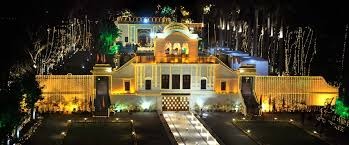
Les jardins de Pinjore
Sept terrasses moghole du XVIIᵉ siècle au pied de l'Himalaya : pavillons, bassins et festivals à 22 km de Chandigarh, sur la route d'Ambala à Shimla.
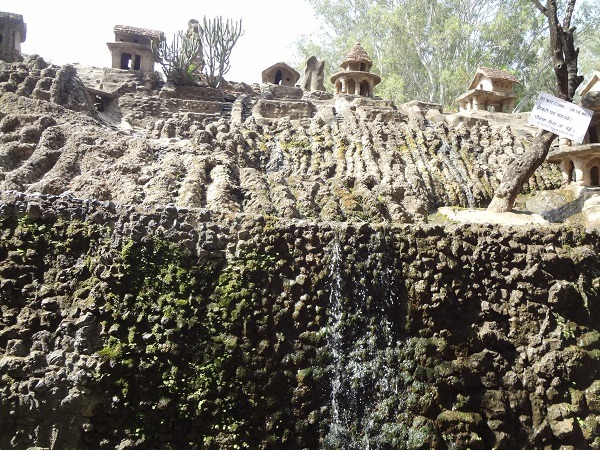
Rock Garden of Chandigarh
Créé clandestinement par Nek Chand à partir de déchets industriels, le Jardin de Roches de Chandigarh déploie sur 40 acres un labyrinthe de sculptures en céramique, de cascades et de cours secrètes. Un site artistique hors du commun.
Accommodation in Chandigarh
See all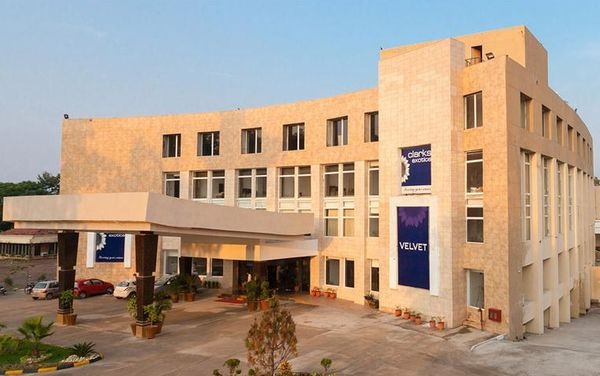
Velvet Clarks Exotica
Hôtel urbain indien de 54 chambres en centre-ville, bien relié par air, route et rail. Étape fonctionnelle pour voyageurs d'affaires ou de transit.
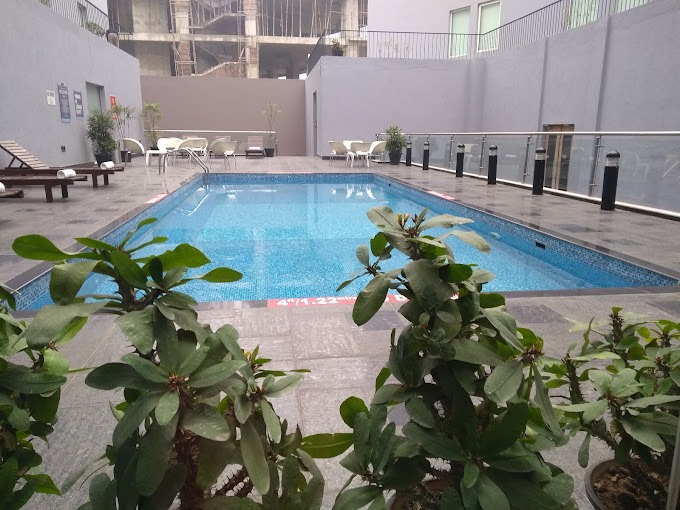
Aloft Chandigarh
Hôtel 4 étoiles de la marque Aloft à Zirakpur, à proximité de l'aéroport de Chandigarh. 170 chambres, restauration toute la journée, piscine et spa.
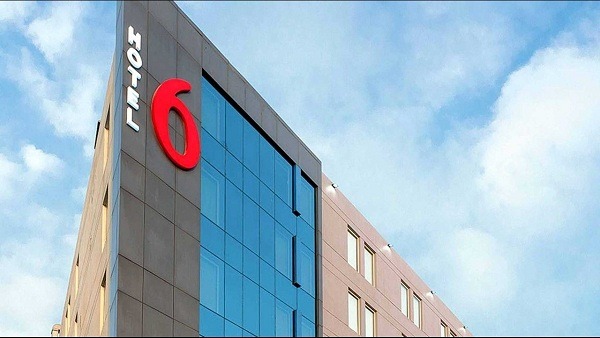
Hotel 6 Chandigarh
Hôtel d'affaires contemporain à Zirakpur, au sud de Chandigarh, avec 175 chambres, restaurant multicuisine et bar, à proximité de l'aéroport et du parc technologique Rajiv Gandhi.
Want to discover this destination?
Our local advisors design your tailor-made trip.