Rock Garden of Chandigarh
Rock Garden of Chandigarh
Built clandestinely by Nek Chand from industrial waste, the Rock Garden of Chandigarh sprawls across 40 acres in a labyrinth of ceramic sculptures, waterfalls, and secret courtyards. An extraordinary artistic site.
The Rock Garden of Chandigarh is a unique environmental sculpture created entirely from industrial waste and salvaged materials. Nestled in Sector 1 of the city, this maze of courtyards, waterfalls, and thousands of ceramic figurines spans more than 40 acres. Its creator, Nek Chand, built it clandestinely for years before authorities officially recognized it in 1976. Today, it ranks among India's most visited artistic sites.
Essential Information at a Glance
- Admission: Paid entry (reduced rates for children)
- Location: Sector 1, Chandigarh, near Sukhna Lake
- Recommended Duration: 2 to 3 hours to explore the entire garden
- Dress Code: No specific restrictions; comfortable walking shoes recommended (uneven terrain)
- Accessibility: Limited due to numerous stairs and narrow passages
What You'll Discover
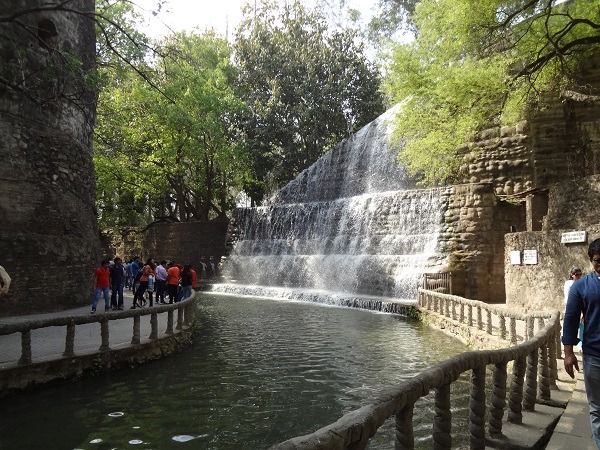
The garden unfolds across successive phases built by Nek Chand over time. You'll encounter hundreds of human and animal sculptures fashioned from broken bangles, ceramic tiles, electrical wire, and construction debris. Artificial waterfalls, stone arches, and vaulted passages create an atmosphere of a fantastical city. Around each corner awaits a surprise: an army of ceramic soldiers, frozen dancers, rearing horses.
History and Context
Nek Chand Saini, a roads inspector in Chandigarh, began constructing this secret garden in 1957 on government forest land. For eighteen years, he worked at night, hidden from view, salvaging debris from demolished villages to build the new city. Discovered in 1975, the site narrowly escaped demolition thanks to public support. Authorities then granted it official status and a team of workers. Nek Chand continued his work until his death in 2015.
Highlights of Your Visit
The First Courtyard: Stepping Into Another World
Upon crossing the threshold, walls covered in colorful ceramic mosaics set the tone. The first sculptures—expressive human figures—announce Nek Chand's singular universe. Take time to observe the materials: each piece is a transformed fragment of waste.
Waterfalls and Pools
Throughout the garden, several artificial waterfalls feed basins where sculptures emerge from the water. The effect is striking, especially mid-morning when light catches the wet mosaics. These spaces form the architectural heart of the work.
The Army of Figurines
Hundreds of characters lined up—women carrying water jars, musicians, warriors—form silent processions. Created from bangles and tile fragments, they illustrate Nek Chand's gift for bringing life to what others discarded.
Later Phases of the Garden
Sections built after 1976, with official team support, are larger and more spectacular. Here you'll find more elaborate architectural structures, bridges, and open spaces that contrast with the intimacy of the earliest courtyards.
Photography Tips
Early morning light (before 10 a.m.) is ideal: it avoids harsh shadows and brings out the colors of the mosaics. Waterfalls photograph well from below, shot from the lower pools. Avoid peak weekend hours when school groups crowd the pathways. No photography restrictions known for individual visitors.
Location and Access
The Rock Garden sits in Sector 1 of Chandigarh, at the northern edge of the city planned by Le Corbusier. It adjoins Sukhna Lake, accessible on foot in minutes. The Chandigarh Capitol Complex (also in Sector 1) is a short distance away. Rickshaws and taxis are available from downtown. Accessibility is challenging due to uneven terrain and narrow passages.
Nearby Attractions
- Sukhna Lake — artificial lake with promenades, ideal for a break after your garden visit.
- Capitol Complex — Le Corbusier's architectural ensemble, a UNESCO World Heritage site.
- Chandigarh Museum and Art Gallery — collections of paintings and sculptures from Punjab and Haryana.
- Zakir Hussain Rose Garden — one of Asia's largest rose gardens, a few sectors away.
Frequently asked questions
The dry season, October through March, offers pleasant temperatures. Avoid June to August: heat and monsoon rains make exploring this uneven terrain uncomfortable.
Allow at least two hours to cover the main sections. Visitors interested in the sculpture details and site history easily spend three hours here.
Yes, the two sites are adjacent. Half a day is sufficient to visit the garden and then stroll along Sukhna Lake on foot or by boat.
No restrictions known for personal photography. Commercial or professional equipment photography may require prior authorization from site management.
Yes, the colorful sculptures and waterfalls captivate children. Supervise them on narrow passages and irregular stairs. Open spaces in newer sections allow for free play.
No dress code restrictions. Wear closed-toe shoes with good grip: surfaces are often irregular stone, often wet near waterfalls.
Photos
Interested in this visit?
We can include it in your personalised itinerary.