Ahmedabad
Ahmedabad
India's first UNESCO-listed city, Ahmedabad weaves together labyrinthine pols, Gandhi's ashram, and modern architecture by Kahn and Le Corbusier.
Ranked among the ten largest metropolises of the Indian subcontinent, Ahmedabad possesses an eclectic, captivating character. Here, historical monuments subtly contrast with modern architectural gems. You'll find a variety of attractions too—parks, a zoo, and an entertainment center dedicated to children.
Where is Ahmedabad Located?
Situated in the state of Gujarat, in western India, Ahmedabad is a vibrant city at the crossroads of history, culture, and modernity. Traversed by the Sabarmati River, it became a major hub of the independence movement thanks to Mahatma Gandhi's presence, and his ashram remains an emblematic site.
What Was Ahmedabad's Former Name?
Ahmedabad was founded by King Solanki Karandev in the 11th century. The city's former name was Karnavati. It was renamed Ahmedabad in 1411 by Sultan Ahmed Shah, who ushered in an era of prosperity.
History
Sultan Ahmed Shah commissioned the construction of the Jama Masjid in Ahmedabad, one of the city's finest mosques, in a style blending Hindu and Islamic influences. Furthermore, the city became one of the most prosperous former capitals under successive reigns, particularly that of Mahmud Begada, renowned for developing the Bhadra fort and strengthening the water supply system through the construction of sophisticated stepped wells.
In 1630, the region underwent a devastating famine that hindered its growth. Conquered by the British East India Company following the decline of the Mughal Empire in 1753, Ahmedabad was annexed to the Bombay Presidency and transformed into a major industrial and intellectual center. During this era, the city became an attractive destination for numerous ethnic communities establishing trade and preserving traditions.
Later, in the 1920s, the city emerged as a primary center of the Indian independence movement. Gandhi launched the famous "Salt March" from here on March 12, 1930. Once independence was secured, Ahmedabad became the capital of the newly created state of Gujarat.
What to See and Do in Ahmedabad?
Ahmedabad ranks among India's top 10 most populous cities, with approximately 5,570,585 inhabitants. Described as the "City of Dust" with two distinct facets, Ahmedabad features picturesque quarters dominated by Indo-Muslim architecture, as well as modern sectors with buildings designed by Louis Kahn (who deeply admired and drew inspiration from American architect Frank Lloyd Wright), Le Corbusier, and Charles Correa. The renowned Sanskar Kendra museum, conceived by Le Corbusier, epitomizes this blend of modernity and tradition, as does the Calico Dome, a former textile showroom with futuristic design.
Ahmedabad is an ideal base for admiring Indo-Saracenic architecture, which fuses Hindu art with Islamic architectural style. You'll discover a variety of distinctively shaped mosques. Among them, the Sidi Sayed Mosque, founded in 1573, stands out with its semi-circular windows and finely carved geometric patterns. These decorative elements perfectly reflecting Indo-Saracenic style are called "Jalis." Another architectural jewel in Ahmedabad is the Teen Darwaja, with its ornate decoration, standing on three arches. Built in 1411 during the reign of Sultan Ahmed Shah, this imposing viaduct, which once served as the entrance to the royal palace, now stands as one of the city's symbols.
Beyond historical buildings, Ahmedabad boasts other recreational destinations that attract numerous travelers. At Kankaria Lake, a body of water constructed in 1451 in the Maninagar area at the behest of Sultan Qutubdub-Din, you'll find a wealth of attractions. From an aquarium to a zoo, parks, and a water sports club, activities are diverse and facilities pleasantly appointed. Discover too a natural history museum for an outing filled with discoveries. In the middle of the lake sits a peninsula featuring a garden and a summer palace called Nagina Wadi. If you want to delight your children, plan a visit to the zoo. Built in 1951, the reserve houses some 450 different species of mammals, 2,000 birds, and 140 reptiles. Among the site's stars are the famous Bengal tigers, elephants, and anacondas. Another attraction for children near the zoo is Kids City. The city's life is reproduced in miniature in a playful spirit, with public spaces, small shops, and various administrative buildings.
Slightly further from the city center, the Gandhi Ashram awaits you on the banks of the Sabarmati River. The birthplace of non-violent resistance, this monastery was established in 1917 and served as the departure point for Gandhi's march across India. You can still see the small Hridaya Kunj cottage, a UNESCO World Heritage site, where the spiritual guide resided.
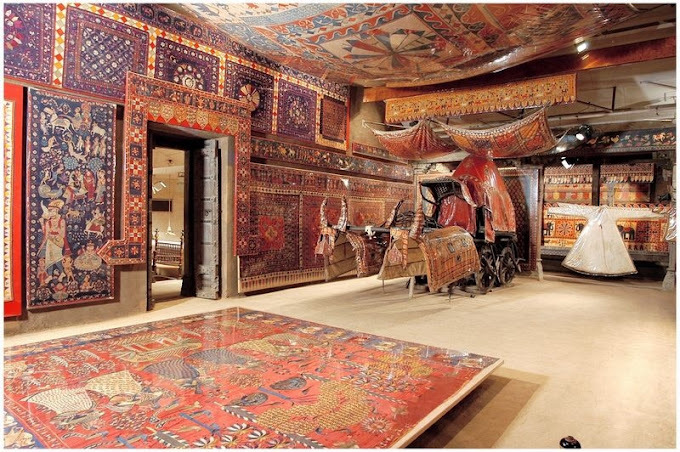
Nicknamed the "Manchester of the Orient," Ahmedabad once boasted a flourishing textile industry. This activity continues today in select shops and stalls along the market streets. Among local creations, take a look at "tie and dye" garments and hand-embroidered fabrics.
Don't miss the House of MG either, a former residence transformed into a hotel-museum, which allows you to appreciate the traditional wooden houses of the old city. The charm of these buildings, often adorned with finely sculpted small balconies, reveals the spirit of a bygone era. In the surrounding streets, culture enthusiasts will also be captivated by the kite museum, which pays homage to a very popular local tradition.
Furthermore, Ahmedabad is marked by pervasive spirituality. The sun god is still venerated in certain local temples, including a small, discrete temple on the city's outskirts dedicated to Surya. Moreover, near the city, the vestiges of the port of Surat recall the historical commercial ties between Ahmedabad and the coast.
What is Ahmedabad's Culinary Specialty?
Regarding gastronomy, Gujarati cuisine will astound you! Head to restaurants or small eateries lining the streets to taste local dishes. Although recipes are predominantly vegetarian, meat-based dishes are quite rare. You can try the Gujarati thali, dhokla, khandvi, undhiyu, and more. Each bite promises an explosion of flavors and tastes. Also treat yourself to the artisanal ice creams for which the city is renowned.
Climate
Ahmedabad experiences particularly hot weather, with temperatures reaching up to 40°C during the summer season. The city experiences three main seasons. Winter extends from November to March, while summer lasts from April to June. The monsoon season runs from July to October. If you're planning a vacation in Ahmedabad, favor the winter period to avoid the intense summer heat and monsoon-related flooding.
Sardar Vallabhbhai Patel Airport in Ahmedabad handles both regional and international flights. By rail, the city has Kalupur Station, which connects to major Indian cities. By road, Ahmedabad is served by an extensive highway network connecting to cities in Gujarat and other regions. Buses are available for travel.
In Ahmedabad, several types of public transportation are available. You can hire a rickshaw for inexpensive travel, take a bus, or rent a bicycle.
Things to Do in Ahmedabad
- Visit architectural monuments
- Picnic on the shores of Kankaria Lake
- Arrange outings to the zoo or Kids City
- Explore textile workshops
- Taste Gujarati cuisine, and more
Accommodation in Ahmedabad
Want to discover this destination?
Our local advisors design your tailor-made trip.