Indian Clothing and Traditional Costumes
India's wonders are also reflected in its diverse clothing traditions. While Western fashion increasingly dominates urban areas, particularly among young people, Indians remain deeply committed to preserving their traditional garments and costumes. During your trip to India, you'll have no difficulty discovering the vibrant clothing traditions of the country.
India's wonders are also reflected in its diverse clothing traditions. While Western fashion increasingly dominates urban areas, particularly among young people, Indians remain deeply committed to preserving their traditional garments and costumes. During your trip to India, you'll have no difficulty discovering the vibrant clothing traditions of the country.
History and Origins of Indian Clothing
Indian garments have a long and storied past. Their history traces back to the 5th millennium B.C., when cotton was already being woven in the Indus Valley. Over the centuries, numerous influences have shaped Indian fashion: the refined elegance of the Mughals with their elaborate embroidery and sumptuous fabrics, and the cuts introduced during British colonial rule. This fusion of local and foreign elements created the unique style that defines Indian fashion today.
Traditional Women's Clothing in India
In India, women wear a variety of iconic garments, each with its own distinctive style and purpose. Let's explore the most renowned.
The Sari
It's almost impossible to think of Indian fashion without envisioning the sari. This elegant garment consists of a long piece of fabric—typically 5 to 9 meters—wrapped around the body and worn with a fitted blouse (choli) and a petticoat.
The way a sari is worn varies by region. In Andhra Pradesh, the nivi drape is preferred; in Bengal, a more voluminous style prevails, while in Maharashtra, the sari is wrapped to leave the legs free. Fabrics range from lightweight cotton for everyday wear to luxurious silk for ceremonial occasions.
The Salwar Kameez
Comfortable and elegant, the salwar kameez is an ensemble comprising a long tunic (kameez), pants tapered at the ankles (salwar), and a scarf (dupatta). Extremely popular in northern India and Pakistan, it's worn both on the streets and at celebrations, available in simple cotton versions or richly ornate designs for major festivities.
The Lehenga Choli and Ghagra Choli
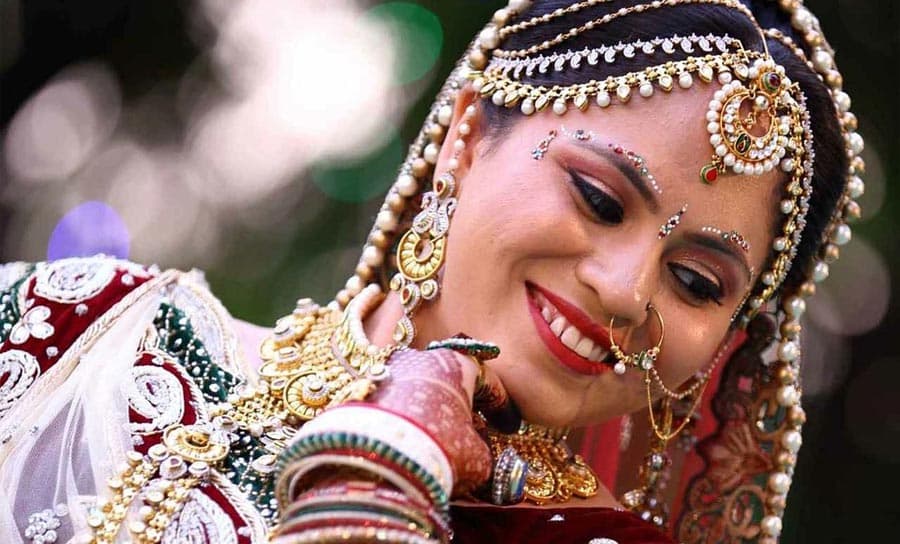
For weddings, festivals, and grand celebrations, women often choose the lehenga choli or ghagra choli. Both ensembles consist of a full, decorative skirt, a fitted short blouse, and a matching scarf. The fabrics are meticulously crafted: pearls, mirrors, gold thread—every detail matters.
Traditional Indian Women's Accessories
In India, an outfit is never truly complete without accessories. The bindi, bracelets, necklaces, and scarf (dupatta) perfect the ensemble and often carry cultural or spiritual significance.
Traditional Men's Clothing in India
Indian men also have access to a variety of traditional garments suited to both everyday life and special occasions. Here are the most common:
The Kurta-Pyjama
The kurta-pyjama is the all-purpose staple of Indian men. Equally comfortable, it comprises a long tunic (kurta) paired with straight or loose-fitting trousers (pyjama). Seen everywhere from daily life to grand receptions, it comes in cotton for hot weather or silk for a more formal appearance.
The Sherwani
For weddings and official ceremonies, the sherwani takes center stage. This long, structured jacket is often tailored in silk, worn over fitted trousers and accompanied by a turban. Richly embroidered, it instantly conveys solemnity and grandeur.
The Dhoti and Lungi
More traditional, the dhoti and lungi are rectangular pieces of fabric tied around the waist. The dhoti, more formal, is worn primarily in the North and East, while the lungi, colorful and casual, is widespread in the South.
Regional Traditional Indian Costumes
Northern India
In Punjab, the salwar kameez (an ensemble of long tunic, loose pants, and scarf) dominates, while in Rajasthan, the ghagra choli (a long decorated skirt worn with a fitted blouse and scarf) is highly favored. Kashmir, further north, wraps its inhabitants in warm pashmina wools, renowned for their softness and fineness.
Southern India
Tamil Nadu shines with its Kanjeevaram saris, woven in thick silk and adorned with golden motifs, prized for weddings and special occasions. In Kerala, the mundu (white cotton cloth with a gold border tied around the waist) remains the ceremonial dress for traditional festivals.
Eastern and North-Eastern India
In Bengal, the tant sari in lightweight cotton is a classic, often white with a red border, worn daily and for ceremonies alike. In Assam, the mekhela chador, a two-piece ensemble, is often crafted from muga silk, a golden silk produced locally and extremely durable.
Western and Central India
In Gujarat and Rajasthan, vibrant bandhani fabrics decorated with small tie-dyed knots and embroidered mirrors illuminate traditional dress. Maharashtra preserves the nauvari sari, draped uniquely to leave the legs free—practical for work or traditional dancing.
Contemporary Indian Fashion and Trends
Today, Indian fashion skillfully balances heritage with modernity. Designers eagerly revisit classics: a sari paired with an embroidered crop-top, an asymmetrical dress inspired by the salwar kameez. The rules are being reinvented without losing the traditional soul.
Fabrics are evolving too. Locally cultivated organic cotton sits alongside technical, breathable textiles designed for urban life. Ancestral patterns now appear in bolder colors, with contemporary cuts and finishes.
In Mumbai, a young generation of designers dares to blend the unexpected: Western blazers over traditional kurtas, tunic dresses with sheer inserts. These creations appeal to both Indian audiences and international runways, confirming that Indian fashion has earned its rightful place on the global stage.
Practical Tips for Dressing in India
Before packing your suitcase for India, a few simple guidelines can help you find the balance between comfort, cultural respect, and style.
Adapt Your Clothing to Season and Region
In the north, winters can be cool: a shawl or lightweight jacket is useful. In the south, opt for breathable fabrics. On the coasts, choose light and comfortable clothing suited to humidity.
Respect Dress Codes
In a temple or sacred site, cover your shoulders and legs. Men avoid very short shorts, while women may keep a scarf handy to cover their head if needed.